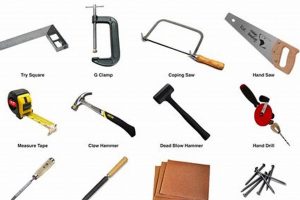
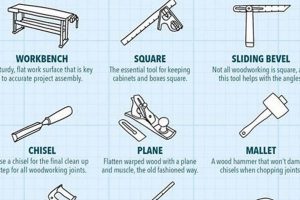
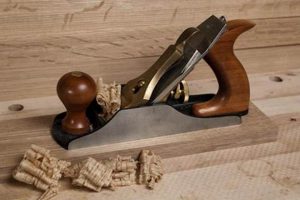
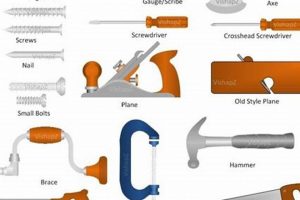
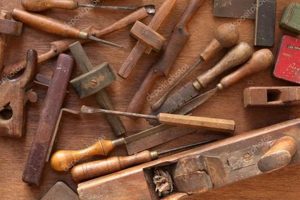
Wood shaping implements that rely solely on human force for operation encompass a wide array of devices. These instruments, ranging from saws and planes to chisels and hand drills, provide a means of manipulating wood without the need for electricity or other external power sources. A block plane used to smooth a surface or a brace and bit employed to bore a hole are typical examples.
Their enduring relevance stems from several advantages. The precision and control afforded by manual operation are often superior for detailed work. The absence of electrical cords provides enhanced portability and accessibility in environments lacking power. Historically, these implements represent the foundation of woodworking, forming the basis of craftsmanship for centuries and continuing to be valued for their reliability and the tactile connection they offer to the material.
The subsequent sections will delve into specific categories of these implements, examining their functionality, maintenance, and optimal application within various woodworking projects. Further discussion will address techniques for achieving optimal results and selecting appropriate instruments for particular tasks.
Essential Guidance for Manual Woodworking Instruments
The following recommendations provide valuable insights into effectively utilizing implements powered by hand for shaping wood.
Tip 1: Sharpening is Paramount: The efficacy of any manual woodworking instrument hinges on its sharpness. Regular honing and sharpening of blades and edges are essential for clean cuts and reduced user fatigue. Dull tools require excessive force, leading to inaccurate results and potential injury.
Tip 2: Wood Grain Awareness: Understanding the direction of the wood grain is critical. Planing or chiseling against the grain can result in tear-out and uneven surfaces. Always work with the grain to achieve smooth and controlled cuts.
Tip 3: Proper Tool Selection: Choosing the correct instrument for the task at hand is crucial. Using a drawknife for stock removal is more efficient than a chisel, while a block plane is better suited for smoothing small surfaces than a jointer plane.
Tip 4: Secure Workholding: Employing vises, clamps, and other workholding devices is essential for stability and safety. A securely held workpiece minimizes movement and allows for precise execution.
Tip 5: Practice and Patience: Mastering the use of these implements requires dedication and persistent practice. Beginners should start with simpler projects and gradually progress to more complex designs. Patience is essential for developing the necessary skills and muscle memory.
Tip 6: Implement Proper Stance: A stable stance enhances control and reduces strain. Position oneself directly behind the tool, using body weight to drive the cut while maintaining balance.
Tip 7: Regular Maintenance: Periodic cleaning, lubrication, and rust prevention are essential for extending the lifespan. Wipe down tools after each use and apply a thin coat of oil to exposed metal surfaces.
Adhering to these guidelines enhances the precision, safety, and efficiency of manual woodworking operations, leading to superior results and increased satisfaction.
The next section will explore specific project ideas suitable for the application of hand operated woodworking tools.
1. Sharpness

In the realm of manual woodworking, sharpness transcends mere functionality; it is a foundational prerequisite for precision, efficiency, and safety. The degree of keenness possessed by a blade directly influences the outcome of any woodworking task.
- Reduced User Effort
A honed edge minimizes the force required to sever wood fibers. This reduction in effort translates to less physical strain on the user, enabling prolonged work periods and improved control over the tool. For instance, a dull plane iron necessitates significant downward pressure to remove shavings, increasing the risk of errors.
- Clean and Precise Cuts
A sharp blade produces clean, crisp cuts with minimal tear-out. This is particularly crucial for joinery, where tight-fitting joints are paramount. A dull chisel, conversely, can crush or splinter wood fibers, resulting in ill-fitting joints and compromised structural integrity.
- Enhanced Tool Control
Sharpness directly impacts the user’s ability to control the tool. A keen edge allows for precise movements and the ability to follow grain patterns accurately. Conversely, a dull blade tends to wander or skip, leading to inaccuracies and potential damage to the workpiece.
- Improved Safety
Paradoxically, sharper tools are generally safer than dull ones. A sharp tool is more predictable and requires less force, reducing the likelihood of slips and accidents. A dull tool, requiring excessive force, increases the risk of losing control and causing injury.
Therefore, maintaining an acute edge on all manual woodworking implements is not merely a matter of convenience but a fundamental requirement for achieving quality results, ensuring user safety, and maximizing the potential of these traditional tools. Regular honing and sharpening are indispensable practices in the manual woodworking discipline.
2. Control

In woodworking with implements reliant on manual power, control is not merely a desirable attribute, but an essential determinant of precision and the final outcome. It encompasses the degree to which the user directs the implement’s movement and its interaction with the material.
- Force Modulation
The ability to vary applied force is paramount. A delicate touch might be necessary for paring thin shavings, while substantial pressure is required for stock removal. Consistent force application prevents gouging or uneven surfaces. Mastering this aspect involves understanding wood density and grain direction to adapt force levels accordingly. Examples include controlled chisel strikes for precise mortise creation versus heavier, sweeping motions with a hand plane for rapid flattening.
- Path Deviation Management
Maintaining a straight line or following a curved template demands focused attention and corrective adjustments. Drifting from the intended cut line can result in inaccuracies and material waste. This is particularly apparent when sawing by hand, where visual alignment and constant correction are necessary to achieve a square cut. Experienced woodworkers use body position and consistent motion to mitigate path deviation.
- Depth Regulation
Consistent depth of cut is vital for achieving uniform surfaces and precise joinery. Excessive depth can lead to tear-out or overcutting, while insufficient depth necessitates multiple passes. Setting the depth stop on a hand plane and maintaining consistent pressure are essential for accurate material removal. Controlling the depth prevents removing too much material and ruining the workpiece.
- Tool Angle Maintenance
Sustaining the correct angle of attack between the implement and the material is essential for efficient cutting and preventing chatter or binding. Incorrect angles can cause the tool to skip, dig in, or produce rough surfaces. When using a chisel, maintaining the proper bevel angle ensures clean shearing of wood fibers. This skill requires a feel for the tool’s interaction with the wood and the ability to adjust the angle instinctively.
These facets of control, when mastered, enable the woodworker to coax precise forms and joinery from raw materials. The absence of automated assistance inherent in manual woodworking necessitates a deep understanding and intuitive application of these control principles, underscoring their central role in the craft.
3. Material

The selection of material is intrinsically linked to the effectiveness and longevity of woodworking implements operated by human power. The properties inherent to different woods dictate the force required for shaping, the cutting angles necessary for clean results, and the overall suitability of a specific tool for the task. For instance, working with dense hardwoods like oak or maple demands implements constructed from high-carbon steel, meticulously sharpened to withstand the increased resistance. Conversely, softer woods such as pine or cedar may be effectively shaped with tools of less robust construction, minimizing the physical exertion needed.
Furthermore, the presence of knots, grain orientation, and moisture content significantly impact the performance of these implements. Knots introduce localized areas of increased density and irregular grain, requiring careful tool manipulation to avoid tear-out or blade damage. Understanding grain direction is paramount when using planes and chisels, ensuring cuts are made with, rather than against, the grain to achieve smooth, even surfaces. Excessively wet or dry wood can similarly affect tool performance; wet wood may clog blades, while excessively dry wood may splinter or crack under pressure. Experienced woodworkers choose their material considering its working properties.
Ultimately, a deep understanding of the interaction between tool and material is essential for achieving successful outcomes when employing manual woodworking methods. The correct choice of timber and careful consideration of its unique characteristics allow the woodworker to optimize tool performance, minimize physical strain, and produce high-quality results. Ignoring these factors can lead to inefficiency, substandard workmanship, and potential damage to both the material and the tools themselves.
4. Technique

The proficiency with which implements powered solely by human force are employed, designated here as ‘technique,’ is a critical determinant of both efficiency and the quality of the resulting woodwork. Mastery of technique extends beyond mere manipulation of the tools; it encompasses an understanding of material properties, applied force modulation, and the optimization of each tool’s intended function.
- Stance and Body Mechanics
Optimal posture and biomechanics are fundamental. Utilizing the body’s core strength, rather than relying solely on arm muscles, reduces fatigue and enhances control. A stable stance, with weight distributed evenly, provides a solid foundation for executing controlled cuts. For example, when using a hand plane, aligning the body’s axis with the direction of the cut allows for consistent pressure and minimizes lateral movement, leading to a smoother, more uniform surface. Incorrect posture leads to instability and inaccurate cuts.
- Sharpening and Honing Regimen
The execution of proper sharpening and honing is crucial. Maintaining a consistent bevel angle and achieving a burr-free edge dramatically improves cutting performance and reduces the effort required. The effectiveness of a hand plane, chisel, or saw is contingent upon the keenness of its edge. A dull implement necessitates increased force, leading to reduced control and potential for injury. Skillful honing optimizes material removal.
- Grain Awareness and Tool Selection
Understanding wood grain orientation and selecting the appropriate tool for a specific task are essential components. Attempting to plane against the grain will result in tear-out and a rough surface. Choosing a smoothing plane for finishing tasks, rather than a jack plane intended for stock removal, ensures a refined result. Knowing when to use a rip saw versus a crosscut saw is crucial for efficient and accurate cutting along or across the grain. Using the wrong implement increases workload and risks damage to the material.
- Work Holding Methodologies
Employing appropriate work-holding strategies ensures stability and prevents movement during the cutting process. Vises, clamps, and bench dogs provide secure support, allowing the woodworker to focus on precise tool manipulation. An unstable workpiece leads to inaccurate cuts, increased risk of injury, and compromised final product quality. Proper setup and secure fixations are essential.
These facets of technique, when integrated and meticulously practiced, empower the woodworker to harness the full potential of instruments powered by human energy. The pursuit of refined technique transforms the act of shaping wood from a mere physical endeavor into a skilled art, resulting in enhanced precision, efficiency, and enduring satisfaction.
5. Maintenance

The operational lifespan and sustained performance of woodworking implements driven solely by human force are inextricably linked to consistent and appropriate maintenance practices. Without regular attention to critical components, the cutting edges dull, mechanisms bind, and structural integrity diminishes, ultimately rendering the tools ineffective or, worse, unsafe. The cause-and-effect relationship is direct: neglected tools perform poorly, while well-maintained tools deliver consistent, precise results. For example, a hand plane with a rusty sole requires significantly more force to operate and leaves an uneven surface, whereas a clean and waxed sole allows for smooth, effortless gliding and a superior finish. This extends beyond the mere presence of rust; proper lubrication, wood component care, and timely replacement of worn parts are all vital.
The importance of maintenance as a component of this class of tools cannot be overstated. Unlike power tools, which may mask performance degradation with brute force, manual tools rely entirely on the sharpness of their blades and the precision of their mechanical movements. A dull saw, for instance, demands excessive physical exertion and produces a ragged cut, increasing the risk of binding and potential injury. Regular sharpening, proper blade set, and periodic cleaning are essential to maintain the tool’s cutting efficiency and accuracy. Similarly, wooden-bodied planes require seasonal adjustments to compensate for changes in humidity, preventing warping and ensuring a flat, consistent sole. The absence of these maintenance routines negates the inherent advantages of manual tools, such as their refined control and tactile feedback.
In summary, a commitment to regular maintenance is not simply a desirable practice but a fundamental requirement for those who employ implements powered by human force for woodworking. The challenges lie in dedicating the time and acquiring the knowledge necessary to perform these tasks effectively. However, the rewards enhanced performance, extended tool life, improved safety, and a deeper connection with the craft far outweigh the investment. By prioritizing maintenance, woodworkers ensure that their hand tools remain reliable partners in their creative endeavors, capable of delivering precise and satisfying results for years to come.
6. Safety
The operation of implements powered by human force in woodworking necessitates a rigorous adherence to safety protocols. These protocols, designed to mitigate inherent risks, form the bedrock of responsible woodworking practice. The absence of external power sources does not diminish the potential for injury; rather, it shifts the focus to understanding and managing the specific hazards associated with manual tool operation.
- Sharpness Management
The paradox of sharpness dictates that well-honed edges are inherently safer than dull ones. Sharp tools require less force, reducing the likelihood of slips and uncontrolled movements. Regular sharpening, combined with appropriate storage to protect cutting edges, is paramount. A dull chisel, requiring excessive force, poses a greater risk of sudden, uncontrolled movement than a sharp one that cleanly severs wood fibers. Sheathed storage prevents accidental contact with the sharpened edge.
- Secure Workholding
Effective workholding is essential for maintaining stability and preventing workpiece movement during tool application. Vises, clamps, and bench dogs provide secure anchoring, allowing the woodworker to focus on precise tool manipulation. A workpiece that shifts or vibrates during cutting increases the risk of misdirection and potential injury. Proper clamping techniques ensure the workpiece remains stationary, facilitating controlled and accurate cuts.
- Body Positioning and Ergonomics
Adopting correct body posture and utilizing ergonomic principles minimizes strain and reduces the risk of musculoskeletal injuries. Maintaining a stable stance, distributing weight evenly, and avoiding awkward or repetitive movements are crucial. Overreaching or straining to apply force can lead to muscle fatigue and potential accidents. Proper body positioning and leveraging body weight to assist in the cutting process distributes strain and enhances control.
- Personal Protective Equipment (PPE)
The consistent use of appropriate PPE safeguards against common woodworking hazards. Safety glasses protect against flying debris, while gloves provide enhanced grip and minimize the risk of cuts or abrasions. Respirators or dust masks prevent the inhalation of fine wood particles. Neglecting PPE exposes the user to unnecessary risks. Eye protection prevents splinters from causing injuries.
These facets of safety, when diligently observed, collectively minimize the risks associated with manual woodworking. The absence of powered assistance necessitates a heightened awareness of potential hazards and a proactive approach to implementing safety measures. Consistent adherence to these principles fosters a safe and productive woodworking environment.
7. Project

The selection and execution of a woodworking project using implements powered exclusively by human force are contingent upon a variety of interconnected factors. The project’s scale, complexity, and intended function dictate the necessary skill level, tool selection, and time commitment. A thorough understanding of these elements is crucial for ensuring a successful and satisfying outcome.
- Project Complexity and Skill Level
The intricacy of a project should align with the woodworker’s existing expertise and willingness to learn. A novice might begin with a simple box or small shelf, while an experienced craftsman could undertake more elaborate constructions such as chairs or cabinets. Attempting a project beyond one’s skill level can lead to frustration, material waste, and potential injury. Successful manual woodworking hinges on incremental skill development through progressively challenging projects.
- Tool Selection and Project Requirements
The specific tools required for a given project are determined by the types of cuts, joinery, and surface treatments involved. A project involving intricate carving necessitates specialized carving tools, while one focused on precise joinery requires accurate measuring and marking tools, along with appropriate saws and chisels. Prior to commencing work, a comprehensive inventory of necessary tools is essential to ensure smooth execution and avoid interruptions. Inadequate or inappropriate tool selection compromises efficiency and precision.
- Material Considerations and Project Design
The chosen material must be suitable for both the intended function of the project and the capabilities of implements powered by human force. Dense hardwoods may present challenges for beginners, while softer woods are more forgiving. The project’s design should account for the wood’s grain orientation, structural properties, and potential for movement due to changes in humidity. Thoughtful material selection and design minimize the risk of warping, cracking, or joint failure.
- Time Commitment and Project Planning
Manual woodworking inherently requires a significant time investment compared to using power tools. Accurate estimation of the time required for each phase of the project, from material preparation to finishing, is crucial for effective planning and avoiding unrealistic expectations. Complex joinery and intricate details demand patience and meticulous execution. Rushing the process often leads to errors and a compromised final product. A realistic project plan allows for efficient workflow and minimizes potential delays.
The successful completion of a woodworking project using solely manual implements represents a tangible demonstration of skill, patience, and a deep understanding of the craft. Careful consideration of complexity, tool selection, material properties, and time commitment significantly increases the likelihood of a positive outcome and fosters a lasting appreciation for the art of manual woodworking.
Frequently Asked Questions
The following addresses common inquiries regarding woodworking instruments operated solely by human power, providing concise and informative answers.
Question 1: What are the primary advantages of employing manual woodworking tools compared to power tools?
Manual implements offer enhanced control, particularly in detailed work. The absence of electrical cords enhances portability, and their operation is generally quieter. These devices provide a tactile connection to the material, fostering a deeper understanding of woodworking principles.
Question 2: How does one ensure the longevity of manual woodworking tools?
Regular maintenance is crucial. Sharpening blades, cleaning and lubricating metal parts, and properly storing implements in a dry environment prevent rust and ensure optimal performance. Wooden components may require occasional treatment with linseed oil or wax.
Question 3: What types of wood are best suited for use with manual implements?
While most wood types can be worked with manual instruments, softer woods such as pine or basswood are generally easier to shape, particularly for beginners. Hardwoods like oak or maple require sharper tools and more physical exertion.
Question 4: Are manual woodworking tools inherently safer than power tools?
Safety depends on operator skill and adherence to safety protocols. Sharp, well-maintained manual implements are generally safer than dull ones, as they require less force. However, all woodworking tools present a risk of injury if used improperly.
Question 5: What is the importance of understanding wood grain when using manual woodworking tools?
Understanding grain direction is critical for achieving smooth cuts and preventing tear-out. Planing or chiseling against the grain can result in uneven surfaces and splintering. Working with the grain ensures clean, controlled material removal.
Question 6: What are some essential manual woodworking tools for a beginner?
A basic set should include a hand saw (rip and crosscut), a smoothing plane, a set of chisels, a marking gauge, a combination square, and sharpening stones. These tools provide a foundation for various woodworking tasks.
In essence, effective utilization of woodworking devices powered solely by human action necessitates diligence, proper maintenance, and a comprehensive understanding of material properties.
The next section will discuss resources for learning more about working with hand-powered tools.
Conclusion
The preceding exploration has underscored the multifaceted nature of hand powered woodworking tools. Their efficacy relies not only on the quality of the implements themselves, but also on the operator’s skill, knowledge of materials, and commitment to safety and maintenance. Sharpness, control, and an understanding of wood grain are paramount for achieving accurate and aesthetically pleasing results. The inherent limitations of manual operation necessitate a deliberate and patient approach, fostering a deeper connection with the craft.
While technological advancements have introduced power-driven alternatives, the enduring relevance of these implements resides in their precision, portability, and the unique tactile experience they provide. Continued exploration and refinement of techniques associated with hand powered woodworking tools ensure the preservation of a valuable skill set and the creation of enduring works of craftsmanship. Further investment in education and training can foster broader appreciation and effective utilization.