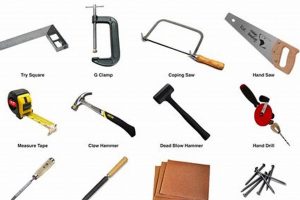
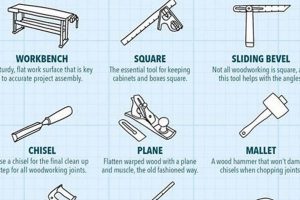
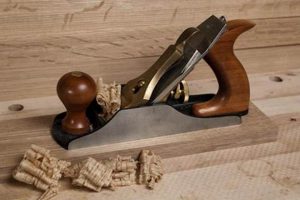
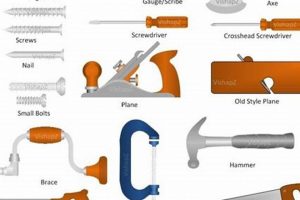
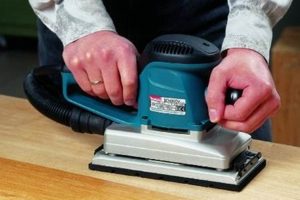
The practice involves shaping wood using manually operated implements rather than power machinery. This approach necessitates a different skill set and emphasizes precision and control achievable through direct contact with the material. Examples include sawing with a handsaw, planing a surface smooth with a hand plane, or joining pieces using chisels and hand-drills.
This method of woodworking fosters a deeper understanding of wood properties and grain direction, promoting efficient material usage and minimizing waste. Historically, it represents the foundation of the craft, predating widespread electrification and offering a quieter, more sustainable approach to creation. The results often exhibit a unique character reflecting the artisan’s touch.
Subsequent sections will delve into specific types of essential implements, techniques for achieving accuracy and efficiency, and considerations for selecting appropriate timber for different projects. Furthermore, aspects of sharpening and maintaining equipment, along with relevant safety precautions, will be addressed.
Essential Guidance for Hand Tool Woodworking
The following guidance aims to enhance the execution of woodworking projects relying on manual implements. Adherence to these principles will improve accuracy, efficiency, and the quality of the final product.
Tip 1: Sharpen Tools Meticulously: Sharpness is paramount. Dull tools require excessive force, increasing the risk of errors and injury. Utilize appropriate sharpening stones and honing techniques to maintain optimal cutting edges.
Tip 2: Prioritize Wood Selection: Different species exhibit varying characteristics. Choose timber based on its density, grain pattern, and suitability for the intended application. Hardwoods are generally preferred for joinery, while softwoods are appropriate for carcasses or less demanding tasks.
Tip 3: Master the Fundamentals of Layout: Accurate marking is critical. Employ precise measuring tools, such as marking gauges and squares, to ensure correct dimensions and angles before any material removal begins.
Tip 4: Respect Grain Direction: Cutting against the grain results in tear-out and splintering. Analyze the grain orientation and adjust the cutting direction accordingly to achieve a clean surface.
Tip 5: Practice Controlled Material Removal: Avoid aggressive cutting. Remove small amounts of material with each pass to maintain control and prevent errors. Develop a consistent rhythm for sawing and planing.
Tip 6: Utilize Bench Holding Methods Effectively: Secure the workpiece firmly to the bench using vises, dogs, or other holding devices. A stable platform enables accurate and efficient work.
Tip 7: Maintain a Clean Workspace: Regularly remove shavings and debris from the bench and the surrounding area. A clean environment promotes safety and allows for unimpeded movement.
Key takeaways include the importance of sharp tools, careful planning, and controlled execution. Success in the discipline depends on mastering fundamental skills and developing a patient, deliberate approach.
The subsequent section will provide insights into advanced techniques and project-specific applications.
1. Sharpening Skill

The ability to effectively sharpen cutting implements constitutes a foundational skill in this realm. The sharpness of these tools dictates the ease and precision with which wood can be shaped and joined. Dull tools necessitate increased force, leading to reduced control and a higher likelihood of errors, while a keen edge allows for clean, effortless cuts that minimize splintering and tear-out. The acquisition of this ability is thus inseparable from successful practice.
Consider the task of creating a dovetail joint. A sharp chisel enables precise paring of the tail and pin sockets, crucial for a tight-fitting and aesthetically pleasing joint. Conversely, a dull chisel will crush wood fibers rather than severing them cleanly, resulting in a sloppy and weak joint. Similarly, a hand plane with a razor-sharp blade produces a smooth, glass-like surface, eliminating the need for extensive sanding. The efficacy of virtually every operation performed in this discipline relies heavily on the condition of the cutting edge.
The time invested in mastering sharpening techniques yields significant returns. Not only does it improve the quality of the finished product, but it also enhances safety and reduces fatigue. Proficiency demands understanding of various sharpening methods, including the use of water stones, oil stones, and diamond stones. Regular maintenance of tool edges is crucial. Developing a consistent sharpening routine is essential for anyone seeking to excel in manual woodworking.
2. Wood Selection

Material choice fundamentally impacts the success of projects executed with manual implements. Wood properties, such as hardness, grain direction, and stability, directly influence the ease and quality of shaping, joining, and finishing. Therefore, informed wood selection becomes a paramount consideration.
- Hardness and Workability
Hardwoods like maple or oak demand greater force and sharper tools but offer increased durability for items such as mallets or workbench components. Conversely, softwoods like pine or fir are easier to shape but may be less suitable for high-stress applications. Selection should align with the tool’s capabilities and the intended purpose.
- Grain Direction and Splitting
Wood grain dictates how the tool interacts with the material. Straight-grained wood splits predictably, useful for making wedges. Wild grain, however, requires careful planing to avoid tear-out. Selection and orientation during layout must consider grain to ensure structural integrity and aesthetic quality.
- Moisture Content and Stability
Wood expands and contracts with changes in moisture. Air-dried or kiln-dried lumber is preferred to minimize movement after the project is complete. Understanding moisture content is essential for constructing durable joinery that withstands seasonal fluctuations.
- Figure and Aesthetic Properties
Figure refers to the visual pattern of the wood grain. Curly maple, for example, possesses an undulating figure prized for decorative applications. Selection based on figure allows for the enhancement of the final products visual appeal while requiring awareness of potential challenges during shaping.
These considerations are critical to manual processes where the feedback between artisan and material is immediate. Unlike power tools that can force their way through unsuitable materials, manual implements require a more nuanced approach. Wood selection directly affects efficiency, the likelihood of success, and the ultimate longevity of objects crafted by hand.
3. Joinery Techniques

The assembly of wooden components using manual implements is intrinsically linked to joinery techniques. The methods employed dictate the structural integrity, aesthetic appeal, and overall longevity of the completed project. A mastery of various joining strategies is paramount for successful manual construction.
- Dovetail Joints
Dovetail joints, characterized by interlocking pins and tails, provide exceptional tensile strength and resistance to racking forces. Commonly used in drawer construction and case goods, their creation necessitates precision layout and careful paring with chisels. Variations include through dovetails, half-blind dovetails, and sliding dovetails, each suited to specific applications.
- Mortise and Tenon Joints
A mortise and tenon joint features a projecting tenon inserted into a corresponding mortise. This robust connection, employed in frame-and-panel construction and furniture making, offers considerable strength and stability. Variations include through mortise and tenons, blind mortise and tenons, and wedged mortise and tenons, each optimized for different load-bearing requirements and visual aesthetics.
- Rabbet and Dado Joints
Rabbet joints, created by cutting a recess along the edge of a board, and dado joints, formed by cutting a groove across the face of a board, provide simple yet effective methods for joining panels and shelves. These joints, often reinforced with fasteners or glue, offer ease of construction and reliable performance in a variety of applications.
- Bridle Joints
The bridle joint is characterized by one piece of wood (the bridle) having two shoulders that fit around a mortise on the second piece (the tongue). This joint is most common in chair legs, table legs, and frame corners, where its high tensile strength is valued. Creating this joint by hand needs precision and skilled use of hand tools to ensure a tight, robust fit.
These techniques, while diverse in their application and complexity, share a common reliance on the precision, control, and understanding afforded by manual implementation. The resulting joints, when executed with skill and care, represent a lasting testament to the craftsman’s expertise and the enduring qualities of hand tool woodworking.
4. Layout Accuracy

Layout accuracy is not merely a preliminary step; it constitutes an integral component of hand tool woodworking. The precision with which dimensions are transferred to the workpiece directly dictates the success or failure of subsequent operations. Errors introduced during layout compound throughout the construction process, leading to misaligned joinery, ill-fitting components, and ultimately, a compromised final product. Therefore, the significance of exact marking cannot be overstated.
Consider the creation of a dovetailed drawer. If the tail and pin dimensions are inaccurately transferred, the resulting joint will be either too tight, requiring excessive force and potentially damaging the wood, or too loose, compromising the joint’s structural integrity. Similarly, when constructing a mortise and tenon joint for a table leg, even slight deviations from the intended dimensions can result in a wobbly and unstable structure. These examples illustrate the cause-and-effect relationship between layout accuracy and the quality of the finished piece. Meticulous layout involves the use of precise measuring instruments, such as marking gauges, squares, and knives, and the application of careful techniques to ensure that lines are crisp, clean, and accurately positioned. The practical significance lies in the transformation of raw materials into functional and aesthetically pleasing objects.
In summary, layout accuracy serves as the bedrock upon which all other aspects of hand tool woodworking rest. Challenges in achieving perfect precision are inherent, demanding diligent practice, consistent technique, and an unwavering commitment to accuracy. A thorough understanding of this interconnectedness enhances the craftsman’s ability to produce work of exceptional quality, reinforcing the enduring value of this traditional craft.
5. Surface Finishing

Surface finishing in manual woodworking represents the culmination of the shaping and joining processes. It is during this stage that the tactile and visual qualities of the wood are refined, enhancing the overall aesthetic appeal and protecting the material from environmental factors. The techniques employed in surface finishing are intrinsically linked to the characteristics of the wood and the desired outcome, requiring a nuanced understanding of both materials and processes.
- Planing and Scraping
Planing, using hand planes with meticulously sharpened blades, represents the initial stage of surface preparation. This method removes imperfections and creates a smooth, flat surface. Scraping, using a card scraper, refines the surface further, eliminating minute irregularities and burnishing the wood. For example, when preparing a table top, planing and scraping minimize the need for sanding, preserving the wood’s natural texture and avoiding the introduction of swirl marks.
- Sanding Techniques
Sanding, while often minimized in hand tool woodworking, plays a role in refining surfaces and preparing them for finishing. Careful selection of abrasive grits and controlled sanding strokes prevent scratching and unevenness. Using sandpaper on a contoured surface requires understanding its flexibility and the importance of backing blocks. An example is the process of smoothing curved chair spindles with progressively finer grits to achieve a tactilely pleasing finish.
- Application of Finishes
The application of finishes, such as oils, waxes, varnishes, or shellac, protects the wood and enhances its natural beauty. Each finish possesses unique properties regarding durability, sheen, and ease of application. Understanding these properties is crucial for selecting the appropriate finish for a given project. An example is the application of multiple coats of varnish to a tabletop, providing a durable and water-resistant surface.
- Rubbing Out Finishes
Achieving a flawless finish involves refining the applied finish layer by removing surface imperfections like dust nibs or brush strokes. Techniques such as wet sanding with fine abrasives and polishing compounds create a smooth, reflective sheen. For example, after applying shellac to a cabinet door, rubbing out the finish with fine steel wool and paste wax results in a hand-rubbed appearance that highlights the wood grain.
These elements of surface treatment are indispensable to hand tool woodworking. Whether the intent is to protect, highlight, or alter the natural aesthetic, attention to these fine points significantly influences the overall result. The success of manual surface finishing hinges on understanding the properties of wood and the skillful application of these refined techniques.
6. Tool Maintenance
Tool maintenance is not a peripheral activity but a core tenet within the discipline of manual woodworking. The longevity, efficacy, and safety of implements are directly contingent upon diligent and consistent upkeep. Neglecting tool maintenance compromises the precision of the work, increases the risk of injury, and ultimately diminishes the quality of the finished product.
- Sharpening Regimen
Maintaining sharp cutting edges on planes, chisels, and saws is paramount. Dull edges necessitate increased force, leading to reduced control and an elevated risk of accidents. Regular honing and sharpening using appropriate stones or sharpening systems are essential. For instance, a hand plane used to flatten a large surface requires frequent sharpening to maintain a consistent and accurate cut. Neglecting this regimen results in a rough surface and increased physical exertion.
- Rust Prevention
Corrosion poses a significant threat to tools, diminishing their performance and lifespan. Applying protective coatings, such as oil or wax, to exposed metal surfaces prevents rust formation. In humid environments, increased vigilance is required. An example would be wiping down tools with a rust-inhibiting oil after each use to prevent surface oxidation.
- Handle Care and Repair
Wooden handles on tools such as mallets, chisels, and planes are subject to wear and tear. Regular inspection for cracks, loose fittings, or damage is crucial. Replacement or repair of handles ensures safe and comfortable operation. As an example, a loose chisel handle can cause misdirection and potential injury; therefore, proper re-fitting or handle replacement is essential.
- Adjustment and Calibration
Tools, particularly planes and measuring instruments, require periodic adjustment and calibration to maintain accuracy. Checking the sole of a plane for flatness or verifying the accuracy of a square ensures that the tool performs as intended. Using a skewed plane to flatten a board when the tool is out of alignment will create an uneven surface, impacting joinery and overall quality.
These facets of tool maintenance, while seemingly distinct, are interconnected and collectively contribute to the success of woodworking endeavors. These activities transcend mere preventative measures; they represent an investment in the craft, ensuring the continued availability of functional and reliable implements for years to come. Skillful execution depends on both aptitude and the availability of well maintained tools.
Frequently Asked Questions Regarding Manual Woodworking Techniques
The following section addresses common inquiries pertaining to the practice of manual woodworking. The information presented is intended to clarify uncertainties and promote a deeper understanding of the craft.
Question 1: Is manual woodworking inherently slower than using power tools?
The speed of execution depends heavily on the complexity of the project and the skill level of the artisan. While power tools excel at rapid material removal, manual methods afford greater control and precision, potentially reducing errors and rework, particularly on intricate tasks. Overall, the process is influenced by project specifics rather than solely on tool type.
Question 2: Does manual woodworking require exceptional physical strength?
While a baseline level of physical fitness is beneficial, it does not demand extraordinary strength. Proper technique, sharp tools, and efficient workflow strategies are of far greater importance. Leverage, body mechanics, and the intelligent application of force are key factors, overshadowing brute strength.
Question 3: Is specialized training required to begin manual woodworking?
While formal training can accelerate the learning process, it is not strictly mandatory. Numerous resources, including books, online tutorials, and workshops, are available to provide instruction in fundamental techniques. Self-directed learning, coupled with consistent practice, can lead to proficiency.
Question 4: Are manual woodworking tools significantly more expensive than power tools?
The initial investment in quality manual tools can be substantial; however, a comprehensive set of power tools often represents a greater overall expense. Furthermore, manual tools, when properly maintained, possess a significantly longer lifespan and lower operating costs compared to their powered counterparts.
Question 5: Is manual woodworking suitable for large-scale projects?
While manual woodworking is certainly applicable to large projects, the time investment increases considerably. Power tools remain the preferred option for high-volume production. Manual methods are most advantageous for custom projects, intricate details, or when a greater degree of artisan control is desired.
Question 6: Does the use of manual tools limit the range of possible projects?
The limitations of manual processes are not inherently restrictive, but rather dependent on the resourcefulness and skill of the craftsman. While certain operations may be more challenging without power assistance, manual techniques can be adapted to create a wide array of projects, from simple boxes to complex furniture pieces.
In summary, manual woodworking presents unique advantages and challenges. Understanding these factors enables practitioners to make informed decisions regarding tool selection, project scope, and execution strategy.
The subsequent section will explore the historical context and evolution of this ancient craft.
Conclusion
This exploration has detailed facets of hand tool woodworking, including core skills such as sharpening, material selection, joinery techniques, layout accuracy, surface finishing, and the necessity of consistent tool maintenance. Proficiency depends on mastering these elements, contributing to the creation of functional and aesthetically pleasing wooden objects.
The practice of hand tool woodworking embodies a commitment to precision, sustainability, and mindful creation. Further exploration and dedicated practice will yield both tangible results and a deeper appreciation for the enduring qualities of this time-honored craft.