



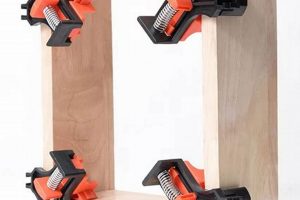
These are specialized tools utilized in woodworking to hold pieces together at a 90-degree angle while adhesives dry or fasteners are applied. They ensure accuracy and stability during the assembly of boxes, frames, and other right-angled structures. A common application includes securing the corners of a picture frame during gluing.
Accuracy in woodworking joinery is crucial for structural integrity and aesthetic appeal. These tools provide a mechanical advantage, allowing for precise alignment and consistent pressure across the joint. Their use contributes to stronger, more professional-looking finished projects. While rudimentary forms may have existed for centuries, modern iterations offer enhanced adjustability and ease of use.
The following sections will delve into various types, selection criteria, usage techniques, and maintenance tips regarding these essential woodworking aids.
Woodworking Corner Clamp Tips
This section provides guidance for maximizing the effectiveness and lifespan of these tools, ensuring accurate and reliable corner joints in woodworking projects.
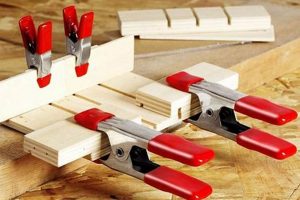
Tip 1: Select the Appropriate Type: Different designs cater to specific project needs. Spring clamps are suitable for light-duty tasks, while right-angle clamps with adjustable jaws provide greater precision and clamping force for larger or more complex assemblies. Consider the material thickness and joint type when selecting a clamp.
Tip 2: Protect Workpiece Surfaces: Utilize padding, such as thin wood shims or rubber caps, between the clamp jaws and the workpiece. This prevents marring or indentation of the wood surface, particularly with softer materials. Consistent use of protection will result in more aesthetically pleasing finished products.
Tip 3: Apply Even Clamping Pressure: Avoid over-tightening. Excessive force can distort the joint or damage the wood fibers. Distribute pressure evenly across the joint by using multiple clamps or adjusting the clamp placement to minimize stress concentration. Monitor the joint for signs of bowing or misalignment during clamping.
Tip 4: Ensure Squareness Before Clamping: Prior to applying clamping pressure, verify that the pieces are aligned at a true 90-degree angle. Use a square or combination square to confirm accuracy. Adjust the workpiece positioning as necessary before tightening the clamps to prevent skewed joints.
Tip 5: Clean After Each Use: Remove adhesive residue or sawdust from the clamp threads and jaws after each project. This prevents buildup that can impede smooth operation and reduce clamping force. A wire brush and solvent can be used to effectively clean affected areas.
Tip 6: Lubricate Moving Parts: Periodically apply a light lubricant, such as machine oil or silicone spray, to the clamp threads and pivot points. This ensures smooth and consistent operation, preventing rust and corrosion and extending the lifespan of the tool.
Tip 7: Store Properly: Store clamps in a dry environment to prevent rust and corrosion. Hanging clamps on a rack or storing them in a dedicated toolbox prevents damage and ensures easy access when needed. Proper storage contributes to the longevity and reliability of the tools.
Applying these guidelines enhances precision, reduces the risk of damage to workpieces, and extends the usability of these invaluable woodworking accessories. Consistent application of best practices leads to superior project outcomes.
The subsequent sections will address advanced techniques and troubleshooting common issues encountered when employing woodworking corner clamps.
1. Alignment

Alignment, in the context of woodworking corner clamps, refers to the precise positioning of workpieces at a 90-degree angle prior to and during the fastening process. Proper alignment is paramount to achieving strong, visually appealing joints and is intrinsically linked to the functionality of these clamps.
- Initial Setup Accuracy
Woodworking corner clamps facilitate the establishment of accurate alignment during the initial setup phase. They provide a stable platform for holding pieces together while adjustments are made, ensuring the joint starts at the desired 90-degree angle. Failure to achieve accurate initial alignment results in skewed joints, impacting structural integrity and aesthetics.
- Maintaining Alignment During Fastening
The application of fasteners, such as screws or nails, can inadvertently shift the position of the workpieces. Clamps maintain alignment throughout this process by applying consistent pressure, preventing movement and ensuring the joint remains square as it is secured. This is particularly important with softer woods that are more prone to deformation.
- Compensating for Material Imperfections
Wood is a natural material and can exhibit imperfections such as warping or cupping. Woodworking corner clamps, especially adjustable models, can compensate for minor material irregularities, forcing the pieces into proper alignment and minimizing the impact of these imperfections on the final joint. This requires careful assessment and adjustment during the clamping process.
- Verification and Correction
Even with careful setup and clamping, verifying alignment with a square is crucial. Clamps allow for minor adjustments to be made after initial setup and during the fastening process, enabling correction of any deviations from the desired 90-degree angle. Regular verification ensures the finished product meets the required specifications.
The consistent application of these alignment principles, facilitated by the use of woodworking corner clamps, contributes significantly to the quality and longevity of woodworking projects. Achieving and maintaining accurate alignment is a foundational element of sound woodworking practice and a testament to the value of these specialized tools.
2. Pressure
Pressure, when considering woodworking corner clamps, pertains to the force exerted by the tool to hold workpieces together during the assembly process. The magnitude and distribution of this pressure are critical factors influencing the strength, integrity, and appearance of the resulting joint. Insufficient pressure can lead to weak bonds and misalignment, while excessive pressure can cause deformation of the wood fibers, potentially compromising the structural integrity or marring the surface. The appropriate application of pressure, therefore, constitutes a vital aspect of successful woodworking.
The type of adhesive used also influences the optimal pressure. Certain adhesives require higher clamping pressure to achieve maximum bond strength, while others perform best under lighter pressure. For instance, epoxy resins typically require firm, consistent pressure to ensure proper bonding and minimize the risk of air pockets. Conversely, softer woods or delicate joints might necessitate the use of spring clamps to avoid crushing the fibers. The geometry of the joint also plays a significant role. Mitered corners, for example, often require more precise pressure distribution compared to butt joints due to their increased surface area and vulnerability to slippage.
Mastery of pressure application with woodworking corner clamps represents a balance between ensuring adequate adhesion and preventing damage to the workpiece. Consistent monitoring of the joint during the clamping period, coupled with an understanding of the materials and adhesives involved, is crucial. The resulting improvement in joint quality directly contributes to the longevity and aesthetic appeal of the finished woodworking project, solidifying the practical significance of this element.
3. Material

The composition of both the workpiece and the woodworking corner clamps significantly influences the outcome of any joinery project. Material considerations extend beyond the wood species being joined and encompass the clamp’s construction, affecting clamping force, potential for damage, and overall suitability.
- Workpiece Hardness
The hardness of the wood being joined dictates the type of clamp best suited for the task. Softer woods, such as pine or cedar, require clamps with gentler pressure to avoid indentation or crushing of the fibers. Conversely, hardwoods like oak or maple necessitate clamps with greater clamping force to ensure a tight, secure joint. Incorrect clamp selection can result in either a weak bond or damage to the workpiece.
- Material Thickness
The thickness of the materials being joined dictates the jaw capacity of the clamp required. Attempting to clamp materials exceeding the clamp’s capacity will result in insufficient clamping pressure and a compromised joint. Clamps are typically rated for a maximum material thickness, and adherence to these specifications is crucial for effective clamping.
- Clamp Construction Material
Woodworking corner clamps are manufactured from various materials, including metal (steel, aluminum), plastic, and composites. Metal clamps offer greater durability and clamping force, making them suitable for heavy-duty applications. Plastic clamps are lighter and less prone to marring softer woods but may lack the strength required for hardwoods. Composite clamps offer a balance of strength and weight.
- Surface Texture of Workpiece
The surface texture of the wood also has an effect on the right woodworking corner clamps. Smooth surface workpieces requires woodworking corner clamps that prevent the workpiece from slippery while rough workpiece may require an abrasive surface. Thus, surface texture also needs to be considered in selecting the clamps.
Therefore, careful consideration of both the workpiece and clamp materials is paramount to achieving a strong, aesthetically pleasing joint. Selection should be based on the specific requirements of the project, taking into account wood species, thickness, and the desired level of clamping force. Proper material selection minimizes the risk of damage and ensures the creation of durable, high-quality woodworking projects.
4. Angle

The primary function of woodworking corner clamps is to establish and maintain a precise 90-degree angle between joined pieces. Deviation from this ideal angle compromises both the structural integrity and the aesthetic appeal of the finished product. For example, a slightly off-square frame will exhibit noticeable asymmetry, while a cabinet assembled with inaccurate angles may lack stability. The clamp’s design directly facilitates the creation of accurate corners by providing a fixed reference and applying consistent pressure.
Different types of woodworking corner clamps address angle accuracy in varied ways. Fixed 90-degree clamps inherently ensure a right angle, while adjustable clamps allow for fine-tuning to compensate for slight material imperfections or to achieve angles other than 90 degrees, if intentionally designed. The choice of clamp depends on the project’s requirements. For instance, constructing a perfect cube necessitates high-precision, fixed-angle clamps, whereas building a trapezoidal frame might require adjustable clamps or specialized angled clamping blocks in conjunction with standard corner clamps.
In summary, maintaining a precise angle is fundamental to successful woodworking joinery, and corner clamps are indispensable tools for achieving this goal. Understanding the relationship between clamp design, material properties, and desired angle is critical for selecting the appropriate clamp and ensuring the creation of structurally sound and visually appealing woodworking projects. Challenges can arise from warped materials or poorly calibrated clamps, underscoring the need for careful inspection and setup before commencing any assembly.
5. Size
The dimension of woodworking corner clamps is a critical factor influencing their utility and effectiveness in various woodworking projects. Proper sizing ensures adequate clamping force and compatibility with workpiece dimensions, directly impacting joint integrity and overall project quality.
- Jaw Capacity
Jaw capacity refers to the maximum thickness of material the clamp can accommodate. Insufficient capacity prevents secure clamping, while excessive capacity may lead to instability, particularly with thinner materials. Selection should align with the typical material thicknesses used. For example, a clamp with a 3-inch capacity is unsuitable for securing half-inch stock.
- Clamp Body Size
The overall size and shape of the clamp body can affect its accessibility and maneuverability within a project. Larger clamps may be cumbersome in confined spaces, while smaller clamps might lack the necessary clamping force for larger projects. The physical dimensions of the clamp must be considered in relation to the project’s geometry.
- Throat Depth
Throat depth determines how far the clamp can reach from the edge of the workpiece to apply pressure. Deeper throats are necessary for clamping wider boards or reaching into recessed areas. Insufficient throat depth restricts clamping options and may necessitate alternative joinery methods. The clamp must be long enough to allow the placement of fasteners from the edge of the workpiece.
- Weight and Handling
The weight of the clamp impacts ease of use and fatigue during extended clamping operations. Heavier clamps provide greater stability and clamping force, but can be tiring to manipulate. Lighter clamps are more manageable for smaller projects or delicate materials. Selecting a weight appropriate for the project duration and material sensitivity is essential.
Thus, selecting woodworking corner clamps requires careful consideration of size-related factors to ensure compatibility with project dimensions and material characteristics. Proper size selection optimizes clamping force, accessibility, and ease of use, contributing to stronger, more accurate joints and improved project outcomes.
6. Adjustment
Adjustment, in the context of woodworking corner clamps, refers to the capacity to fine-tune the clamp’s settings to accommodate variations in material thickness, compensate for slight inaccuracies in cuts, or achieve specific angles beyond a standard 90 degrees. This feature enhances the versatility and precision of the tool, enabling its use in a wider range of woodworking applications.
- Compensation for Material Variance
Dimensional lumber often exhibits slight deviations from its nominal size. Adjustable woodworking corner clamps allow users to compensate for these variances, ensuring that the joint remains square and flush despite inconsistencies in material thickness. Without this adjustability, achieving accurate joints requires more precise cuts and potentially more extensive sanding or planing post-assembly.
- Accommodation of Non-Standard Angles
While primarily designed for 90-degree corners, certain adjustable corner clamps can be set to angles slightly above or below this standard. This is particularly useful in projects involving trapezoidal or polygonal shapes where precise angular alignment is essential. The ability to adjust the angle of the clamp eliminates the need for specialized jigs or fixtures in these scenarios.
- Mitigation of Cut Inaccuracies
Even with careful measurement and cutting, minor inaccuracies can occur. Adjustable corner clamps provide a means to mitigate these errors by allowing the user to slightly manipulate the position of the workpieces during clamping. This corrective capability reduces the likelihood of gaps or misalignments in the finished joint, enhancing both its structural integrity and aesthetic appeal.
- Precise Pressure Regulation
Adjustment features often extend to the clamping pressure exerted on the workpieces. Variable pressure settings allow the user to apply the appropriate force based on the material being joined. Softer woods might require lighter pressure to prevent crushing, while hardwoods necessitate greater force for a secure bond. Fine-tuning the pressure ensures optimal adhesion without damaging the wood.
In conclusion, the adjustability inherent in certain woodworking corner clamps significantly broadens their applicability and enhances the precision of woodworking projects. The capacity to compensate for material variations, accommodate non-standard angles, mitigate cut inaccuracies, and regulate clamping pressure contributes to stronger, more accurate joints and an overall improvement in the quality of the finished product. The presence and extent of adjustability are therefore crucial factors to consider when selecting corner clamps for specific woodworking needs.
7. Durability
Durability, in the context of woodworking corner clamps, directly influences their longevity and return on investment. The materials and construction techniques employed dictate the clamp’s ability to withstand repeated use, exposure to environmental factors, and the forces generated during clamping. A durable clamp resists deformation, maintains clamping pressure over time, and resists corrosion or degradation, ensuring consistent performance across numerous projects. The initial cost of a more durable clamp may be higher, but its extended lifespan typically offsets this expense compared to frequently replacing less robust alternatives.
Several factors contribute to the robustness of these tools. High-quality steel alloys, particularly in threaded components and clamping jaws, resist wear and prevent stripping. Protective coatings, such as powder coating or plating, minimize rust and corrosion, especially in humid shop environments. Solid construction, with reinforced joints and durable pivot mechanisms, withstands the stresses of repeated tightening and loosening. Conversely, clamps manufactured with inferior materials or flimsy construction are prone to failure, potentially damaging workpieces or compromising joint integrity. For example, a plastic clamp subjected to excessive pressure might crack, rendering it unusable and potentially requiring the project to be restarted.
Selecting woodworking corner clamps with a focus on durability is a practical investment that promotes consistent and reliable performance, reduces the frequency of replacements, and contributes to the overall efficiency and cost-effectiveness of woodworking operations. Compromising on durability often leads to diminished performance and increased long-term expenses. An understanding of the materials and construction techniques that contribute to durability allows for informed purchasing decisions, ensuring that the selected clamps provide lasting value.
Frequently Asked Questions About Woodworking Corner Clamps
This section addresses common inquiries concerning the selection, application, and maintenance of woodworking corner clamps. The information presented aims to provide clarity and promote effective utilization of these tools.
Question 1: What are the primary advantages of using woodworking corner clamps compared to alternative methods of securing corners during glue-up?
Woodworking corner clamps offer superior precision in maintaining 90-degree angles, provide even clamping pressure, and facilitate hands-free operation during the fastening process. These advantages contribute to stronger, more accurate joints than can be achieved with manual methods or improvised clamping solutions.
Question 2: What factors should be considered when selecting woodworking corner clamps for specific project requirements?
Key considerations include the maximum material thickness the clamp can accommodate, the type of joint being created (e.g., butt joint, miter joint), the clamping force required based on the wood species, and the adjustability features needed to compensate for material variations or non-standard angles.
Question 3: How can damage to the workpiece surface be prevented when using woodworking corner clamps?
The application of padding between the clamp jaws and the workpiece surface is recommended. Suitable padding materials include thin wood shims, rubber caps, or felt pads. This prevents indentation or marring, especially with softer wood species. Consistent use of protective padding is essential for preserving the aesthetic quality of the finished project.
Question 4: What is the recommended procedure for cleaning and maintaining woodworking corner clamps to ensure optimal performance and longevity?
After each use, remove any adhesive residue or sawdust from the clamp threads and jaws. Periodically lubricate moving parts with a light machine oil or silicone spray. Store clamps in a dry environment to prevent rust and corrosion. This routine maintenance ensures smooth operation and extends the lifespan of the tools.
Question 5: Is it possible to overtighten woodworking corner clamps, and what are the potential consequences?
Overtightening is possible and can result in deformation of the wood fibers, leading to weakened joints or surface damage. Excessive pressure can also cause misalignment of the workpieces. Apply sufficient pressure to secure the joint but avoid exceeding the material’s capacity.
Question 6: Are there specific types of woodworking corner clamps designed for particular applications or joint types?
Yes, there are various designs tailored to specific needs. Spring clamps are suitable for light-duty tasks, while right-angle clamps with adjustable jaws provide greater precision for larger assemblies. Miter clamps are specifically designed for securing mitered corners. Selecting the appropriate type for the task at hand is crucial for achieving optimal results.
The efficient use of woodworking corner clamps depends on careful selection, proper application, and diligent maintenance. Adherence to best practices maximizes the benefits these tools offer in achieving accurate and durable woodworking joints.
The subsequent sections will address advanced techniques and troubleshooting common issues encountered when employing woodworking corner clamps.
Conclusion
This exploration has illuminated the critical role woodworking corner clamps play in achieving precise and durable joinery. Essential aspects such as alignment, pressure, material compatibility, angle accuracy, appropriate sizing, adjustability, and overall durability have been thoroughly examined. A clear understanding of these elements enables woodworkers to select and utilize these tools effectively.
The pursuit of quality woodworking demands attention to detail and a commitment to employing appropriate tools and techniques. The ongoing refinement of woodworking practices, combined with the informed use of woodworking corner clamps, contributes to the creation of enduring and aesthetically pleasing projects. Continue to refine your woodworking skills.
![Top-Rated: Best Quick Clamps for Woodworking Projects [2024] | Step-by-Step Guides, Tools & Inspiration to Build Beautiful Wooden Decor on a Budget](https://woodfromhome.com/wp-content/uploads/2026/04/th-264-300x200.jpg "Top-Rated: Best Quick Clamps for Woodworking Projects [2024] Step-by-Step Guides, Tools & Inspiration to Build Beautiful Wooden Decor on a Budget")