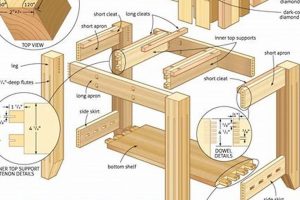
The creation of functional and aesthetic objects for interior spaces using wood as the primary medium is a craft with a long and storied history. It encompasses a wide array of skill levels and project scopes, ranging from simple shelves to intricate cabinets and tables. The tangible outcome is often both practical and visually appealing, adding value to the living environment.
Engaging in this craft offers numerous advantages, fostering creativity, problem-solving abilities, and a deeper understanding of material properties. Historically, these endeavors were essential for providing households with necessary amenities. Today, they provide an avenue for personalized expression, self-sufficiency, and a connection to traditional artisanal practices. The results often serve as lasting heirlooms, imbued with personal significance and craftsmanship.
The subsequent discussion will delve into various aspects of this discipline, covering essential tools and techniques, fundamental joinery methods, design considerations, and approaches to finishing, all vital for successful completion.
Essential Guidance for Undertaking Projects
The successful execution of woodworking endeavors hinges on careful planning, precise execution, and a thorough understanding of materials and techniques. The following recommendations aim to optimize the process, mitigate potential errors, and enhance the final product.
Tip 1: Prioritize Accurate Measurement and Layout: Precise measurements are paramount. Employ quality measuring tools and double-check all dimensions before cutting any material. A well-defined layout minimizes errors and ensures accurate component assembly.
Tip 2: Select Appropriate Wood Species: Different wood species possess varying characteristics in terms of hardness, grain pattern, and workability. Choose a species suitable for the intended purpose and aesthetic requirements. Consider factors such as moisture resistance and structural integrity.
Tip 3: Master Fundamental Joinery Techniques: Strong and durable joints are crucial for structural stability. Practice essential joinery techniques, such as mortise and tenon, dovetail, and rabbet joints, to ensure robust connections between components.
Tip 4: Utilize Sharp Tools: Sharp tools are safer and more efficient. Dull blades require more force, increasing the risk of slippage and injury. Maintain sharp edges on all tools through regular honing and sharpening.
Tip 5: Apply Finishes Methodically: A well-applied finish protects the wood and enhances its appearance. Prepare the surface properly through sanding and cleaning. Apply finishes in thin, even coats, allowing adequate drying time between coats.
Tip 6: Practice Safe Workshop Practices: Maintain a clean and organized workspace. Wear appropriate safety gear, including eye protection and hearing protection. Familiarize yourself with the safe operation of all power tools.
Tip 7: Plan in Advance: Create a detailed plan before commencing. Develop a cut list, and consider the best order of operations for maximum efficiency and minimal waste.
Adhering to these recommendations will increase the likelihood of successful project completion, yielding durable and aesthetically pleasing results, demonstrating the reward of meticulous preparation and skillful execution.
The subsequent sections will explore specific techniques and advanced considerations to further refine woodworking skills.
1. Material Selection

The selection of appropriate materials is a foundational element in any woodworking furniture project. The choice directly influences the project’s structural integrity, aesthetic qualities, longevity, and overall suitability for its intended use. Informed decisions at this stage can significantly impact the project’s success or failure.
- Wood Species and Properties
The type of wood chosen dictates various characteristics of the finished piece. Hardwoods, such as oak or maple, offer superior durability and resistance to wear, making them suitable for high-use surfaces. Softwoods, like pine or cedar, are easier to work with but less resistant to dents and scratches. The selection should align with the furniture’s intended purpose and anticipated level of use. For example, a dining table would benefit from a hardwood top, while a decorative shelf could be constructed from softwood.
- Dimensional Stability and Moisture Content
Wood’s susceptibility to moisture absorption and expansion/contraction requires careful consideration. Kiln-dried lumber is generally preferred for woodworking furniture projects as it minimizes warping and cracking. The moisture content of the wood should be appropriate for the environment in which the furniture will reside. Failure to account for dimensional stability can lead to structural problems, such as joints loosening or surfaces buckling.
- Grain Pattern and Aesthetic Qualities
The grain pattern of the wood significantly contributes to the aesthetic appeal of the finished furniture. Different cutting methods, such as plain sawn, quarter sawn, or rift sawn, reveal distinct grain patterns. The choice of grain pattern should complement the overall design of the piece. For example, quarter sawn oak exhibits a striking ray fleck pattern, often preferred for traditional furniture styles. Similarly, the wood’s natural color and figure should align with the desired aesthetic.
- Cost and Availability
The cost and availability of different wood species can also be a deciding factor in material selection. Exotic hardwoods are typically more expensive and harder to source than readily available domestic species. Balancing the desired aesthetic and structural properties with budgetary constraints is an essential consideration in the planning phase of any woodworking furniture project. Sustainable sourcing is also an increasing concern for ethically responsible projects.
These facets of material selection are interwoven, and their combined impact determines the success of woodworking furniture projects. Ignoring these considerations can lead to compromised structural integrity, premature failure, or an undesirable aesthetic outcome. The responsible woodworker meticulously evaluates these factors to ensure a lasting and aesthetically pleasing result.
2. Joint Construction

Joint construction constitutes a critical element within woodworking furniture projects, dictating the structural integrity, durability, and longevity of the finished piece. The selection and execution of appropriate joinery methods directly influence the furniture’s ability to withstand stress, resist deformation, and maintain its aesthetic appeal over time. Sound joint construction is paramount for creating furniture that endures regular use and environmental changes.
- Strength and Stability
The primary function of joinery is to create robust connections between individual components, ensuring the furniture’s stability under load. Different joint types offer varying degrees of strength, with mortise-and-tenon joints providing exceptional resistance to racking forces, while simpler butt joints may suffice for lightly stressed applications. Proper joint selection and precise execution are crucial for preventing joint failure and maintaining the furniture’s structural integrity.
- Joint Aesthetics and Design Integration
Beyond structural considerations, joinery plays a significant role in the furniture’s aesthetic design. Exposed joinery, such as dovetail joints or pegged mortise-and-tenons, can serve as decorative elements, showcasing craftsmanship and adding visual interest. Concealed joinery, on the other hand, creates a seamless and minimalist appearance. The choice of joinery method should align with the furniture’s overall design style and desired aesthetic outcome.
- Material Compatibility and Wood Movement
Wood’s natural tendency to expand and contract with changes in humidity necessitates careful consideration in joint design. Joints must be designed to accommodate wood movement without compromising their structural integrity. Techniques like floating tenons or slotted screw holes allow for movement while maintaining a strong connection. Ignoring wood movement can lead to joint failure, cracking, or warping over time.
- Precision and Execution
Regardless of the chosen joint type, precision and accurate execution are essential for achieving a strong and reliable connection. Meticulous cutting, fitting, and gluing are required to ensure that the joint components mate perfectly and distribute stress evenly. Gaps or misalignments can significantly weaken the joint and compromise the furniture’s overall strength. High-quality tools and proper technique are indispensable for achieving optimal results.
The facets of joint construction, spanning strength, aesthetics, material compatibility, and precision, are intricately linked within woodworking furniture projects. Mastery of joint construction is essential for creating durable, aesthetically pleasing, and long-lasting furniture pieces. Proper consideration and execution ensure furniture that withstands the test of time.
3. Design Aesthetics

Design aesthetics serve as a foundational element in woodworking furniture projects, influencing not only the visual appeal but also the functional utility and perceived value of the finished piece. The aesthetic considerations employed during the design phase directly impact the furniture’s ability to harmonize with its intended environment, reflecting prevailing styles or individual preferences. The design dictates the form, proportion, and detailing of the piece, thereby shaping the user’s interaction with it. For example, a Shaker-style table, characterized by its clean lines and unadorned surfaces, embodies simplicity and functionality, while a Queen Anne chair, with its curved cabriole legs and ornate carvings, conveys elegance and sophistication. These contrasting examples underscore the profound influence of design aesthetics on the final product.
Understanding the principles of design, including balance, proportion, rhythm, and harmony, enables woodworkers to create pieces that are both visually pleasing and ergonomically sound. The selection of wood species, joinery techniques, and finishing methods must align with the desired aesthetic. A modern design, for instance, might favor minimalist joinery and a clear, natural finish to accentuate the wood’s inherent beauty, whereas a traditional design might incorporate intricate carvings and a rich, dark stain to evoke a sense of history and craftsmanship. The practical application of design aesthetics involves careful consideration of every detail, from the overall silhouette to the smallest hardware elements. Successfully integrating these elements requires a deep understanding of design history, material properties, and woodworking techniques.
In summary, design aesthetics are inextricably linked to woodworking furniture projects, shaping the outcome and influencing its perceived value and utility. A thoughtful approach to design, grounded in an understanding of aesthetic principles and practical woodworking considerations, is essential for creating furniture that is not only functional but also beautiful and enduring. While challenges may arise in translating conceptual designs into tangible forms, the pursuit of aesthetic excellence elevates woodworking from a mere craft to a true art form.
4. Finishing Techniques
Finishing techniques are integral to woodworking furniture projects, acting as both a protective measure and an enhancement of aesthetic qualities. The selected finishing process directly impacts the furniture’s durability, resistance to environmental factors (such as moisture and UV radiation), and overall appearance. The application of a finish transforms a raw wooden object into a refined and presentable piece. For instance, a carefully applied varnish on a mahogany desk protects the wood from scratches and spills, while also accentuating its natural grain and color, thus increasing its longevity and visual appeal. Without proper finishing, the wood remains vulnerable to damage and its aesthetic potential is unrealized.
The choice of finishing technique depends on several factors, including the type of wood used, the intended use of the furniture, and the desired aesthetic outcome. Oil finishes, such as linseed or tung oil, penetrate the wood, providing a natural look and feel while offering moderate protection. Film-forming finishes, such as lacquer or polyurethane, create a durable surface layer that is resistant to scratches and chemicals. Milk paint offers a traditional, matte appearance. The application method also plays a crucial role; spraying provides a smooth, even coating, while brushing or wiping may result in a textured finish. Sanding between coats is generally necessary to achieve a professional-quality result. Consider, for example, the use of shellac on antique reproductions; it provides an appropriate historical aesthetic while protecting the underlying wood.
In conclusion, finishing techniques are not merely cosmetic additions but essential components of woodworking furniture projects. They provide critical protection, enhance the wood’s natural beauty, and contribute significantly to the furniture’s overall value and longevity. Understanding the various finishing options and their application methods enables woodworkers to create furniture that is both functional and aesthetically pleasing, ensuring its durability and visual appeal for years to come. Challenges in application can be mitigated with practice and careful attention to detail, solidifying finishing as a skill crucial to successful woodworking.
5. Accurate Measurements

The precise dimensioning of materials and components is paramount to the success of woodworking furniture projects. Dimensional accuracy directly influences structural integrity, aesthetic harmony, and the ultimate functionality of the finished piece. Deviations from specified dimensions can result in flawed joinery, instability, and an unsatisfactory aesthetic outcome.
- Dimensional Stability and Fit
Accurate measurements ensure that individual components fit together seamlessly. Joinery methods, such as mortise and tenon or dovetail joints, rely on precise dimensions for optimal strength and aesthetic integration. A slight error in measurement can compromise the integrity of the joint, leading to instability and potential failure. This is particularly crucial in complex projects requiring multiple interconnected parts.
- Structural Integrity and Load-Bearing Capacity
In load-bearing elements, precise measurements are essential for ensuring structural integrity. For example, the dimensions of table legs or chair supports must be accurate to distribute weight evenly and prevent collapse. Errors in measurement can create weak points, compromising the furniture’s ability to support its intended load and posing a safety hazard. This principle applies to projects ranging from shelving units to structural frames.
- Aesthetic Harmony and Proportionality
Accurate measurements contribute to the overall aesthetic harmony of the finished piece. Maintaining correct proportions between different elements is crucial for achieving a visually pleasing design. Deviations from specified dimensions can result in an unbalanced or awkward appearance, detracting from the furniture’s aesthetic value. This is particularly important in projects where symmetry and visual balance are key design considerations.
- Material Utilization and Waste Reduction
Precise measurements contribute to efficient material utilization and minimize waste. Accurate cut lists, derived from precise measurements, enable woodworkers to optimize material usage, reducing the amount of scrap generated. Minimizing waste not only reduces material costs but also promotes environmentally responsible practices. Accurate measurements support sustainability in woodworking.
These facets underscore the significance of accurate measurements in woodworking furniture projects. Diligence in measurement ensures not only the structural soundness and aesthetic appeal of the finished product but also contributes to efficient material utilization and responsible environmental practices. The precision of measurement forms the foundation upon which successful woodworking projects are built.
6. Tool Proficiency

Effective execution of woodworking furniture projects hinges significantly on the operator’s competence in utilizing a range of hand and power tools. Proficiency encompasses not only the safe operation of these tools but also a nuanced understanding of their capabilities and limitations. This competency dictates the precision, efficiency, and ultimately, the quality of the finished product.
- Safe and Effective Operation
Proficiency begins with the safe and effective operation of each tool. This includes adhering to safety protocols, understanding the tool’s intended use, and employing correct techniques. For example, operating a table saw requires a thorough understanding of blade height adjustments, fence alignment, and safe feeding practices to prevent kickback and ensure accurate cuts. Mishandling power tools can result in injury and compromised project outcomes.
- Tool Selection for Specific Tasks
Proficiency extends to the ability to select the appropriate tool for a given task. Different tools offer varying levels of precision, efficiency, and suitability for specific materials. A hand plane, for instance, might be preferred for achieving a smooth, refined surface on hardwood, while a power sander might be more efficient for preparing a large surface for finishing. The informed selection of tools optimizes workflow and enhances the quality of the result.
- Maintenance and Sharpening
Maintaining tools in optimal condition is a critical aspect of tool proficiency. Sharp cutting edges are essential for clean, accurate cuts and reduced effort. Regular sharpening of blades, chisels, and plane irons ensures efficient operation and minimizes the risk of tool slippage. Proper lubrication and cleaning of power tools extend their lifespan and maintain their performance.
- Understanding Tool Capabilities and Limitations
True proficiency involves a deep understanding of each tool’s capabilities and limitations. Knowing when a tool is being pushed beyond its intended use or when a different tool might be more appropriate is crucial for preventing damage, ensuring safety, and achieving desired results. A router, for example, might be suitable for creating decorative edges but unsuitable for removing large amounts of material. This discernment is developed through experience and ongoing learning.
These facets of tool proficiency collectively contribute to the successful completion of woodworking furniture projects. Skilled tool operation, judicious tool selection, consistent maintenance, and a clear understanding of tool capabilities are fundamental to achieving precise, efficient, and safe woodworking outcomes. Ongoing development of these skills is essential for advancing one’s craft and producing high-quality furniture pieces.
7. Project Planning
In the realm of woodworking furniture projects, comprehensive project planning is not merely advisable but rather fundamentally requisite for successful outcomes. This initial phase dictates the subsequent trajectory of the entire undertaking, influencing factors ranging from material selection and resource allocation to time management and ultimately, the quality of the finished article. A lack of foresight and detailed planning invariably leads to inefficiencies, errors, and potential project failure.
The correlation between project planning and woodworking endeavors manifests across various project stages. For instance, the determination of precise material quantities, dimensions, and cuts is a direct result of meticulous planning, thereby minimizing material wastage and associated costs. Moreover, the sequencing of tasks, from rough milling to final finishing, is optimized through thorough planning, ensuring a logical and efficient workflow. Consider, for example, the construction of a complex cabinet: without a detailed plan encompassing component dimensions, joinery methods, and assembly sequence, the process becomes haphazard, increasing the likelihood of errors and rework. Another illustrative example involves intricate inlay work; adequate planning incorporating design layout, material selection, and execution techniques is imperative for achieving a refined and aesthetically pleasing result. The absence of such planning often results in misalignment, uneven surfaces, and a diminished overall aesthetic.
In summary, the significance of project planning within woodworking furniture projects cannot be overstated. It serves as the bedrock upon which successful outcomes are built, mitigating potential pitfalls, optimizing resource utilization, and ensuring adherence to design specifications. While unforeseen challenges invariably arise, a solid plan provides a framework for adaptation and problem-solving, ultimately increasing the probability of achieving the desired result. The integration of diligent planning practices elevates woodworking from a mere hobby to a disciplined and rewarding craft.
Frequently Asked Questions about Woodworking Furniture Projects
The following addresses common inquiries regarding undertaking woodworking furniture projects. It aims to clarify essential considerations and provide insights for successful execution.
Question 1: What factors determine the selection of wood for these projects?
Wood selection depends on multiple factors, including intended use, required durability, aesthetic preference, and budgetary constraints. Hardwoods offer greater resistance to wear, while softwoods are generally more workable. Grain pattern and color also influence aesthetic suitability.
Question 2: What are the most common types of joinery used in this domain?
Common joinery methods include mortise and tenon, dovetail, rabbet, and dado joints. The selection depends on the required strength, aesthetic considerations, and skill level of the woodworker. Proper execution is crucial for joint integrity.
Question 3: How critical is accurate measurement in woodworking furniture projects?
Accurate measurement is paramount. Even slight errors can compromise structural integrity and aesthetic harmony. Precise measurements are essential for ensuring proper fit, stability, and overall visual appeal.
Question 4: What safety precautions are essential when working on these projects?
Essential safety precautions include wearing appropriate eye and ear protection, using dust masks, and familiarizing oneself with the safe operation of all power tools. Maintaining a clean and organized workspace also contributes to safety.
Question 5: How important is the finishing process?
Finishing protects the wood from moisture, UV damage, and wear. It also enhances the wood’s natural beauty. Proper surface preparation and application techniques are crucial for achieving a durable and aesthetically pleasing finish.
Question 6: What are the initial steps in project planning?
Initial planning steps involve defining project goals, creating detailed designs, developing cut lists, and determining the sequence of operations. Thorough planning minimizes errors, optimizes material usage, and ensures efficient workflow.
The answers provided offer a foundation for understanding key aspects of woodworking furniture projects. Careful consideration of these points increases the likelihood of successful and satisfying results.
The subsequent article sections will explore specific techniques and advanced considerations to further refine woodworking skills.
Conclusion
This article has explored facets inherent to woodworking furniture projects, emphasizing the importance of material selection, joint construction, design aesthetics, finishing techniques, accurate measurements, tool proficiency, and project planning. Each element contributes to the structural integrity, aesthetic appeal, and overall success of the endeavor. A comprehensive understanding of these principles is essential for practitioners seeking to create durable and visually pleasing pieces.
The pursuit of excellence in woodworking furniture projects necessitates a commitment to continuous learning and refinement of skills. By integrating meticulous planning, precise execution, and a thoughtful approach to design, individuals can transform raw materials into functional art, thereby enriching their environment and preserving a valued craft for future generations. Mastering these techniques is crucial for success in this domain.