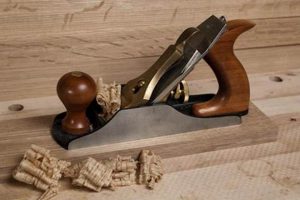
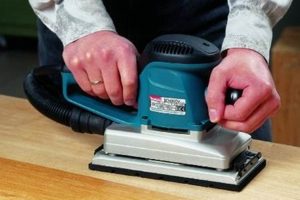
Manual dexterity is a critical attribute for artisans engaged in shaping wood. The skill involves the coordinated use of fingers, hands, and arms to manipulate tools and materials with precision and control. An example of this is the ability to accurately guide a hand plane along a surface to achieve a smooth, even finish.
Proficiency in this area offers several benefits, including increased accuracy, improved safety, and the capacity to execute intricate designs. Historically, the development of these abilities was central to the craftsmanship evident in furniture making, carving, and joinery. The value placed on these refined motor skills has remained constant through centuries of woodworking.
Understanding the techniques and practices that foster manual competence is essential for anyone seeking to advance in woodworking. Subsequent sections will explore specific hand tool techniques, ergonomic considerations, and exercises designed to enhance precision and control.
Refining Woodworking Hand Skills
The following guidance addresses the refinement of motor skills crucial for success in woodworking. Consistent application of these principles will contribute to improved accuracy, efficiency, and safety within the workshop environment.
Tip 1: Sharpen Tools Methodically: The use of honed tools is paramount. A keen edge minimizes the force required, thus enhancing control. Regularly sharpen chisels, planes, and knives to maintain optimal performance.
Tip 2: Practice Controlled Movements: Focus on deliberate, measured actions. Avoid rushing tasks. Slow, controlled movements reduce errors and promote precision. Execute practice cuts on scrap material to develop muscle memory.
Tip 3: Optimize Grip and Posture: Maintain a relaxed yet firm grip on tools. Ensure a stable and ergonomic posture to minimize strain and fatigue. Correct positioning allows for greater leverage and control.
Tip 4: Employ Guide Blocks and Jigs: Utilize auxiliary aids to increase accuracy. Guide blocks and jigs ensure consistent results, particularly when executing repetitive tasks. These tools enhance repeatability and minimize the risk of error.
Tip 5: Sand Progressively: When sanding, employ a series of grits, moving from coarse to fine. This approach ensures a smooth, uniform surface. Consistent sanding technique contributes to a professional finish.
Tip 6: Hone Marking Skills: Accurate marking is essential for precise joinery. Use sharp pencils or marking knives to create clear, distinct lines. Precise layout directly correlates with the final quality of the piece.
Tip 7: Regularly Inspect Tool Condition: Consistent inspection of tools for damage or wear is paramount to ensure safety and prevent accidents. Replace damaged components immediately. A tool in proper condition will greatly influence control.
Implementing these skills cultivates accuracy, control, and safetyqualities essential for excellence in woodworking. Mastering these skills lays a solid foundation for more intricate work.
The subsequent sections will delve into specific projects and advanced techniques, building upon the fundamental skills presented here.
1. Grip Strength

Grip strength, defined as the force exerted by the hand to hold or manipulate objects, is a foundational element in woodworking. It directly influences control, safety, and efficiency throughout the woodworking process. Insufficient grip strength compromises these factors, while adequate strength allows for nuanced tool handling and reduced risk of slippage.
- Tool Control Enhancement
A secure grip facilitates superior tool control, particularly with hand tools such as chisels, planes, and saws. The ability to maintain a firm hold allows for precise application of force and direction, resulting in cleaner cuts and improved accuracy. For example, maintaining a consistent grip on a hand plane prevents chatter and ensures a smooth, even surface.
- Fatigue Reduction
Adequate grip strength minimizes muscle fatigue. Woodworkers with weak grips tend to compensate by applying excessive force, leading to quicker exhaustion and a higher risk of repetitive strain injuries. A balanced grip, supported by sufficient strength, distributes the workload more evenly, promoting endurance during prolonged tasks.
- Safety Improvement
A secure grip is critical for preventing accidents. Slipping tools are a primary cause of injuries in woodworking shops. Adequate grip strength significantly reduces the likelihood of a tool slipping during operation, protecting the woodworker from potential harm. For instance, a strong grip on a carving knife ensures the blade remains under control, minimizing the risk of accidental cuts.
- Enhanced Jointing Precision
The creation of precise joinery, such as dovetails or mortise and tenon joints, necessitates exacting tool control. A stable grip enables the woodworker to make fine adjustments and execute intricate cuts with confidence. Insufficient grip compromises accuracy, leading to gaps, misalignments, and structurally weak joints.
The connection between grip strength and woodworking extends beyond mere physical capacity. It is an integral component of skill development, safety consciousness, and the overall quality of finished woodworking projects. Therefore, fostering and maintaining adequate grip strength should be a priority for all woodworkers.
2. Tool control

Effective tool control is a direct manifestation of proficiency in woodworking. The degree of tool control exhibited is fundamentally linked to the skills of the hand, shaping the quality and precision of the resulting work. When the hand possesses the strength, dexterity, and practiced coordination required to maneuver a tool with intention and accuracy, the outcome is a product of careful execution rather than mere chance. The relationship is causal: a skilled hand translates into superior tool management, leading to refined cuts, precise joinery, and the achievement of intended design outcomes. For example, a cabinetmaker precisely shaping a complex molding profile or a wood carver delicately executing a bas-relief both demonstrate the pivotal role of tool control derived from practiced hand skills.
The ability to harness momentum, apply controlled pressure, and make minute adjustments during tool operation represents a tangible skill. Tool control allows the user to compensate for material variations, grain direction, and other factors inherent to woodworking. Furthermore, the capacity to maintain sharp tool edges is a practical expression of this relationship, as a keen edge responds predictably to the skilled hand, enabling clean cuts and reducing the risk of tear-out. The effectiveness of woodworking techniques, such as dovetailing or carving, hinges directly on the capacity to control the tool’s trajectory, depth, and angle of attack.
In summary, mastery of tool control is essential for any woodworker. Comprehending this direct correlation between hand skills and accurate tool manipulation yields demonstrable results in both the functional integrity and the aesthetic appeal of woodworking projects. While technique and quality of materials affect the process, an individual’s ability to use the tools in an effective and efficient manner is the most important aspect of the work.
3. Precision

Precision, in the context of woodworking, refers to the degree of accuracy and exactness achieved in the execution of cuts, joinery, and overall construction. It is fundamentally linked to the capabilities of the woodworking hand, serving as a tangible metric of skill and proficiency.
- Joint Accuracy
Precise joinery is a cornerstone of durable and aesthetically pleasing woodworking. Dovetail joints, mortise and tenon joints, and other complex connections demand exacting cuts. The woodworking hand must guide tools to create perfectly fitting components. A deviation of even a fraction of a millimeter can compromise the integrity of the joint, leading to weakness or misalignment. For example, creating a flush surface on a mitered corner relies entirely on accurate cuts and consistent hand pressure.
- Dimensional Accuracy
Maintaining consistent dimensions is essential for the proper assembly and functionality of woodworking projects. The woodworking hand must measure, mark, and cut materials to precise specifications. Errors in dimension can result in gaps, uneven surfaces, or structural instability. Constructing a cabinet, for instance, requires all components to be cut to the correct size. If the width of the side panels are not the same, the cabinet will not be square.
- Surface Finish Quality
Achieving a smooth and uniform surface finish is a hallmark of high-quality woodworking. The woodworking hand must employ techniques such as planing, sanding, and scraping to remove imperfections and create a flawless surface. Inconsistent pressure or improper tool angles can result in gouges, scratches, or unevenness. Preparing a tabletop for finishing requires meticulous attention to surface quality, as any imperfections will be magnified by the finish.
- Detail Execution
Fine details, such as carvings, moldings, and inlays, require exceptional precision. The woodworking hand must possess the dexterity and control to execute intricate designs with accuracy. Errors in detail work can detract from the overall aesthetic appeal of the project. Carving a decorative element on a chair leg, necessitates precise movements to achieve the desired shape and texture.
The attainment of precision in woodworking is a direct consequence of the skills, knowledge, and experience embodied within the woodworking hand. Every facet demands keen attention to detail, a deliberate approach to tool usage, and a thorough comprehension of material properties. Consistent precision elevates woodworking from a craft to an art form.
4. Dexterity

Dexterity, defined as the skill in performing tasks, particularly with the hands, is a critical attribute of a proficient woodworking hand. It is a multifaceted ability encompassing fine motor control, hand-eye coordination, and the capacity to manipulate tools and materials with accuracy and efficiency. Dexterity is not merely an innate talent but a cultivated skill, honed through practice and experience. The effects of high dexterity manifest in cleaner cuts, tighter joinery, and more intricate designs. For example, executing complex dovetail joints, where each pin and tail must precisely interlock, demonstrates the direct impact of dexterity on the quality of the finished product. A lack of adequate dexterity limits the types of projects and techniques a woodworker can successfully undertake.
The relationship between dexterity and the woodworking hand is one of interdependence. Dexterity enables the execution of techniques that would otherwise be impossible or imprecise. Intricate carving, precise inlay work, and the shaping of delicate curves are all dependent on a high level of manual dexterity. Consider the creation of a cabriole leg for a Queen Anne-style chair. The flowing curves and subtle details demand a degree of dexterity that goes beyond mere strength or force. Effective use of hand tools, like chisels and carving knives, is highly dependent on the dexterity.
In summary, dexterity forms an essential component of the woodworking hand. Enhancing this skill through focused practice and targeted exercises directly translates to improved craftsmanship and expanded creative possibilities. Without the refined motor skills and coordination that constitute dexterity, a woodworker’s potential remains limited. This understanding is significant, as it highlights the importance of continuous skill development and the pursuit of mastery in the art of woodworking.
5. Sharpness maintenance

Sharpness maintenance represents a critical, ongoing component of effective woodworking. The degree to which cutting edges are honed and maintained directly influences the capabilities of the woodworking hand. A dull tool necessitates increased force to execute cuts, leading to reduced control, potential for slippage, and compromised precision. Conversely, a keenly sharpened tool responds predictably to minimal applied force, enabling the hand to guide the tool with accuracy and finesse. For instance, achieving a smooth, glass-like finish with a hand plane hinges on the sharpness of the blade. A dull blade tears the wood fibers, creating a rough surface that requires additional sanding or rework.
The practical significance of understanding this connection lies in the optimization of workflow, the reduction of physical strain, and the enhancement of safety within the workshop. Consistent sharpness maintenance minimizes the effort required for each cut, reducing fatigue and the likelihood of repetitive stress injuries. Moreover, sharp tools are inherently safer to use, as they are less prone to binding or kicking back. A well-maintained chisel, for example, allows for precise paring of joints without the need for excessive force, thus minimizing the risk of accidental slips and injuries. A regular sharpening routine ensures that tools are always performing at their peak, improving efficiency and safety.
In summary, consistent sharpness maintenance is not merely a preliminary step in woodworking but an integral and ongoing aspect of skilled craftsmanship. Its impact extends beyond the immediate task at hand, influencing the overall quality, efficiency, and safety of the woodworking process. While sharpness degrades naturally with use, a regimen of honing and sharpening should be prioritized as an investment in the woodworker’s skill and the excellence of their output.
6. Wood feel

The term “wood feel” encapsulates a woodworker’s intuitive sense of the material’s properties and behavior under various conditions. This tactile understanding, developed through direct interaction with wood, is crucial for the woodworking hand to execute precise and controlled operations.
- Grain Direction Recognition
A significant aspect of wood feel involves discerning the orientation of the wood grain. The woodworking hand must be able to identify the direction of the grain to minimize tear-out during planing or chiseling. For example, when hand-planing a surface, the woodworker adjusts the angle of attack based on the grain to achieve a smooth finish. Incorrect assessment of grain direction results in a compromised surface.
- Moisture Content Assessment
Wood feel extends to the ability to estimate moisture content. The woodworking hand discerns subtle variations in weight, temperature, and texture indicative of moisture levels. This understanding is critical for proper joint construction, as changes in moisture content after assembly lead to warping or joint failure. For instance, experienced woodworkers can often tell if wood is properly seasoned simply by feeling its weight and surface texture.
- Density and Hardness Perception
The woodworking hand develops a sensitivity to the density and hardness of different wood species. This allows for appropriate tool selection and adjustments in cutting techniques. For example, when carving hardwoods such as maple or oak, the woodworker applies more force and utilizes sharper tools compared to working with softer woods like pine or basswood.
- Vibration and Sound Feedback Interpretation
Wood feel involves the ability to interpret subtle vibrations and sounds generated during cutting operations. The woodworking hand recognizes the characteristic sounds and vibrations associated with clean cuts versus those indicative of tool binding or material stress. This feedback informs adjustments in pressure, angle, and cutting speed to optimize the process. For example, a skilled woodturner can discern irregularities in the cutting process based on the vibrations felt through the tool handle.
These facets of “wood feel” underscore the indispensable role of tactile and kinesthetic awareness in woodworking. The woodworking hand, guided by this intuitive understanding, achieves a level of precision and control unattainable through purely visual or mechanical means. The cultivation of “wood feel” is a hallmark of experienced craftsmanship, bridging the gap between technical skill and artistic expression.
7. Planned Movement

Planned movement in woodworking refers to the deliberate sequencing and execution of physical actions to achieve a desired outcome. This concept is integral to the skillful use of the woodworking hand, impacting precision, efficiency, and safety within the craft.
- Ergonomic Optimization
Planned movement involves adapting work practices to minimize physical strain and promote ergonomic efficiency. This includes arranging tools and materials within easy reach, maintaining proper posture, and using body weight effectively to power tool movements. For example, positioning a workbench at an appropriate height reduces the need to bend or stoop, minimizing back strain during prolonged tasks. Attention to these ergonomic considerations optimizes comfort, increases endurance, and reduces the risk of injury.
- Tool Path Previsualization
Effective planned movement necessitates the mental previsualization of tool paths prior to execution. The woodworking hand, guided by this mental map, executes cuts and shaping operations with greater accuracy and control. For example, before initiating a rip cut on a table saw, the woodworker visualizes the board’s trajectory through the blade. A lack of previsualization often results in errors, wasted material, and compromised outcomes.
- Efficient Workflow Sequencing
Planned movement encompasses the strategic sequencing of tasks to minimize wasted motion and optimize overall efficiency. This involves grouping related operations, streamlining material handling, and minimizing unnecessary transitions between tools and workstations. For example, batching multiple cuts of the same type before changing the saw blade reduces setup time and increases throughput. Thoughtful workflow sequencing significantly reduces project completion time and increases overall productivity.
- Risk Mitigation Strategies
Planned movement integrates safety considerations into every stage of the woodworking process. This includes selecting appropriate personal protective equipment, establishing clear safety zones around machinery, and executing operations in a manner that minimizes exposure to hazards. For example, securing a workpiece with clamps before sawing prevents movement and reduces the risk of kickback. This proactive approach to risk mitigation protects the woodworker from potential injuries and ensures a safer working environment.
In summary, planned movement is not merely a matter of physical dexterity, but rather a holistic approach to woodworking that emphasizes thoughtfulness, efficiency, and safety. The woodworking hand, operating within this framework, achieves a higher level of skill and produces work of superior quality and consistency. Therefore, planned movement should be viewed as a fundamental component of skilled woodworking practice.
Frequently Asked Questions
This section addresses common inquiries regarding the abilities and techniques associated with manual skill in woodworking. Clarification of these points is intended to enhance understanding and promote effective practice.
Question 1: What is the primary factor determining the accuracy of a woodworking hand?
Accuracy in woodworking is determined by the synthesis of multiple factors, including grip strength, tool control, and precision. Each facet contributes to the execution of precise cuts, joinery, and surface finishes. Inadequate preparation in any of these areas compromises accuracy.
Question 2: How does sharpness maintenance relate to the capabilities of the woodworking hand?
Sharpness maintenance is directly related to the force and control exerted by the woodworking hand. Keen edges allow for minimal applied force, reducing the risk of slippage and improving precision. Dull tools demand increased force, leading to fatigue and potential inaccuracies.
Question 3: What is the significance of “wood feel” in the context of manual woodworking skills?
“Wood feel” refers to the intuitive understanding of wood properties gained through tactile experience. The woodworking hand uses this understanding to discern grain direction, moisture content, and density, informing tool selection and technique adjustments.
Question 4: How does planned movement contribute to the efficiency of the woodworking hand?
Planned movement involves the deliberate sequencing of physical actions to optimize workflow and minimize wasted motion. This includes ergonomic optimization, tool path previsualization, and efficient workflow sequencing, leading to increased productivity and reduced physical strain.
Question 5: Is inherent talent a prerequisite for developing a skilled woodworking hand?
While inherent aptitude may provide an initial advantage, consistent practice and focused skill development are the primary drivers of proficiency. Dexterity, precision, and tool control are acquired skills, accessible to anyone committed to dedicated practice.
Question 6: What safety considerations are essential for the effective operation of the woodworking hand?
Safety considerations include the use of personal protective equipment, the establishment of clear safety zones around machinery, and the deliberate execution of operations to minimize exposure to hazards. Prioritizing safety reduces the risk of injury and promotes a secure working environment.
These FAQs highlight the multifaceted nature of manual skill in woodworking. Understanding and addressing these points contributes to the development of a competent and effective woodworking hand.
The subsequent section will explore advanced techniques and applications that build upon the foundations discussed herein.
Conclusion
This exploration has illuminated the multifaceted nature of the woodworking hand, extending beyond mere physical dexterity to encompass a synthesis of skills, knowledge, and intuitive understanding. The critical elements of grip strength, tool control, precision, dexterity, wood feel, and planned movement have been examined, each contributing significantly to the execution of refined woodworking. Emphasis has been placed on the importance of consistent practice, tool maintenance, and safety consciousness as fundamental tenets of the craft.
Continued advancement in woodworking necessitates a commitment to honing these interconnected attributes. Mastery is not a static endpoint but a continuous journey of skill refinement and knowledge expansion. Future generations of woodworkers are encouraged to embrace these principles, thereby preserving and elevating the art of woodworking for posterity.