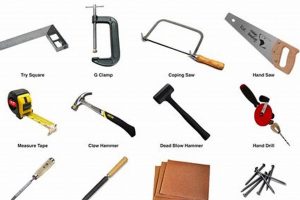
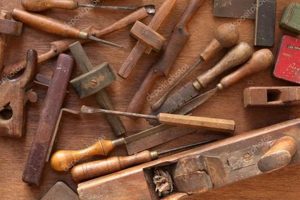
This manual tool is characterized by a rotating shaft with a cutting blade or bit at the end, employed to bore holes in timber. It relies on human power to advance the bit into the wood, removing material to create a cylindrical opening. A carpenter utilizing such a device to create pilot holes for screws in a cabinet serves as a practical illustration of its application.
Its significance resides in its portability, independence from electricity, and capacity for precise control, making it invaluable in situations where powered drills are unavailable or unsuitable. Historically, it represented a fundamental implement for construction and woodworking, predating electrical alternatives and offering a direct connection between the craftsman and the material.
The following sections will delve deeper into the specific types, proper usage techniques, maintenance procedures, and selection criteria associated with this essential woodworking instrument.
Woodworking Hand Auger
The effective and safe use of a manual boring tool enhances woodworking precision and efficiency. Adherence to the following guidelines will improve performance and extend the tool’s lifespan.
Tip 1: Bit Selection. Select the appropriate bit size and type for the intended application. A larger diameter bit creates a larger hole, while specialized bits cater to specific wood types or hole profiles.
Tip 2: Securing the Workpiece. Ensure the material is firmly clamped or held in place. This prevents movement during boring, promoting accuracy and minimizing the risk of injury.
Tip 3: Pilot Hole Initiation. Begin with a pilot hole using an awl or small nail. This guides the bit and prevents wandering, particularly on angled surfaces.
Tip 4: Controlled Rotation. Apply consistent, moderate pressure while rotating the handle. Avoid forcing the bit, as this can lead to breakage or a ragged hole.
Tip 5: Clearing Wood Shavings. Regularly remove wood shavings from the bit and the hole. Accumulated debris hinders progress and increases friction.
Tip 6: Consistent Sharpening. Maintain a sharp cutting edge on the bit. A dull bit requires excessive force and produces inferior results. Use a specialized file or sharpening stone.
Tip 7: Proper Storage. Store the tool in a dry environment to prevent rust and corrosion. Apply a light coat of oil to the bit after use.
Implementing these tips contributes to improved accuracy, reduced effort, and extended tool longevity. Consistent application of these principles elevates the quality of woodworking projects.
The subsequent sections will explore advanced techniques and considerations for specialized woodworking applications.
1. Bit Material
The material composition of the boring tool bit directly influences its performance characteristics. High-carbon steel bits, for instance, offer a balance of hardness and edge retention suitable for general woodworking applications. However, their susceptibility to corrosion necessitates meticulous maintenance. A practical consequence of selecting an inappropriate bit material is demonstrated when attempting to bore hardwood with a soft steel bit; the bit dulls quickly, resulting in inefficient material removal and potential damage to the tool.
The choice of bit material also affects the tool’s lifespan and applicability. Augers with hardened alloy steel bits exhibit increased resistance to wear and deformation, extending their utility in demanding environments. Conversely, cheaper bits manufactured from low-grade steel are prone to bending or breaking under stress, posing a safety hazard to the user and compromising the integrity of the woodworking project. The bore quality also directly affected to it.
In summary, bit material is a critical determinant of performance, durability, and safety. Selecting the appropriate material is paramount for efficient wood boring and extended tool longevity, particularly when considering the specific wood types and operational conditions encountered in woodworking projects. Therefore understanding the core connection can improve the work of the users.
2. Handle Ergonomics

Handle ergonomics represents a critical factor in the efficient and safe utilization of a manual wood boring tool. The design and properties of the handle directly influence the user’s ability to apply force, maintain control, and minimize fatigue during operation.
- Grip Circumference and Texture
Handle circumference impacts the ease with which a user can firmly grasp and rotate the tool. An excessively large circumference may strain smaller hands, while an inadequate circumference can reduce leverage. Textured surfaces, such as knurling or molded grips, enhance friction and prevent slippage, particularly when hands are sweaty or coated in sawdust. The lack of proper grip can lead to inaccurate boring or accidental injury.
- Handle Material and Vibration Dampening
The material composition of the handle influences vibration transmission and overall comfort. Wood handles, particularly those made of hardwoods like ash or hickory, offer inherent vibration dampening properties, reducing strain on the user’s hands and wrists during prolonged use. Synthetic materials, such as rubber or composite polymers, can provide superior grip and resistance to moisture, but may transmit more vibration if not properly designed.
- Handle Shape and Orientation
Handle shape affects the distribution of force and the user’s ability to maintain a consistent boring angle. T-handles provide a balanced grip and allow for greater torque application, while braced handles offer increased stability and control, particularly when boring larger holes. The orientation of the handle relative to the bit axis influences the user’s posture and reduces the risk of repetitive strain injuries. Angled handles can promote a more natural wrist position.
- Handle Length and Leverage
Handle length determines the amount of leverage the user can apply to the bit. A longer handle provides greater mechanical advantage, requiring less effort to bore through dense wood. However, an excessively long handle may reduce maneuverability and increase the risk of striking surrounding objects. The optimal handle length balances force requirements with workspace constraints.
In conclusion, the ergonomic design of the boring tool handle significantly impacts user comfort, efficiency, and safety. Careful consideration of grip circumference, material, shape, and length contributes to a more enjoyable and productive woodworking experience, mitigating the risk of fatigue and injury, and ultimately resulting in higher-quality workmanship.
3. Boring Angle
The angle at which a manual wood boring tool is presented to the workpiece significantly influences the precision and quality of the resulting hole. Deviation from the intended boring angle introduces several undesirable effects. For instance, an angled entry can cause the bit to wander, resulting in a hole that is not perpendicular to the surface. This is particularly problematic when creating joints where precise alignment is critical, such as mortise and tenon joinery. An incorrect angle also increases the likelihood of tear-out, especially when boring near the edge of the material. The required boring angle is directly depending to the material we work.
Maintaining the appropriate angle is crucial for achieving accurate and consistent results. The user’s skill and technique play a vital role in this process. Employing visual aids, such as a square or level, can assist in maintaining the correct orientation. Regular practice and attentive observation of the tool’s behavior provide feedback that allows for adjustments to the boring angle in real-time. Work piece clamping affects it too.
In summary, precise control of the boring angle is paramount for successful manual wood boring. Failure to maintain the correct angle compromises hole accuracy, increases the risk of material damage, and diminishes the overall quality of the woodworking project. Consistent attention to boring angle, combined with proper technique and the use of visual aids, ensures optimal outcomes. The proper boring angle can be determined before the actual work.
4. Chip Ejection

Effective chip ejection is intrinsically linked to the performance of manual wood boring tools. The auger bit’s primary function is to remove material from the bore hole. Accumulation of these wood chips within the hole impedes the bit’s cutting action, increasing friction and requiring greater physical exertion from the user. Insufficient chip ejection leads to slower boring speeds, reduced hole quality, and premature dulling of the cutting edge. For example, if the spiral flutes are packed, the efficiency significantly reduced.
The design of the bit’s flutes is paramount for effective chip removal. A well-designed flute profile efficiently channels the wood chips away from the cutting edge, facilitating continuous and unimpeded material removal. The shape and pitch of these flutes determine the rate at which the chips are extracted. In practice, auger bits with wider and deeper flutes tend to perform better in softer woods, while those with narrower and steeper flutes are more suited for harder, denser materials. The user must clean it manually.
Ultimately, the efficiency of chip ejection directly impacts the overall effectiveness of the manual wood boring process. Proper design of tool flutes allows it, which is very helpful for woodworking processes. By understanding this relationship, woodworkers can optimize their technique to ensure continuous and efficient material removal, resulting in cleaner holes, reduced effort, and extended tool longevity.
5. Sharpening Frequency
Sharpening frequency is a critical factor influencing the efficacy and longevity of any manual wood boring tool. The dulling of a bit’s cutting edge directly impacts its ability to efficiently sever wood fibers, necessitating more frequent application of sharpening techniques. Consequently, understanding the variables affecting sharpness retention is paramount for optimizing tool performance.
- Wood Density and Abrasiveness
The density and abrasive qualities of the wood being bored exert a direct influence on sharpness retention. Working with hardwoods, such as oak or maple, accelerates bit dulling compared to softer woods like pine or cedar. Similarly, wood containing mineral deposits or embedded debris will abrade the cutting edge more rapidly. Consistent assessment of wood properties allows for appropriate adjustments to sharpening intervals.
- Bit Material and Hardness
The material composition and hardness of the bit itself determine its resistance to wear and tear. High-carbon steel bits, while relatively easy to sharpen, tend to dull more quickly than bits constructed from hardened alloy steels. Understanding the inherent properties of the bit material enables informed decisions regarding sharpening schedules and appropriate sharpening techniques.
- Boring Technique and Force Application
Improper boring technique, characterized by excessive force or twisting motions, can accelerate bit dulling. Applying undue pressure forces the bit to compress rather than sever wood fibers, increasing friction and heat. Employing a controlled and deliberate boring action minimizes wear on the cutting edge and prolongs sharpening intervals. The correct speed is needed, too.
- Storage and Maintenance Practices
Proper storage and maintenance practices contribute significantly to sharpness retention. Storing bits in a manner that prevents contact with other tools or abrasive surfaces minimizes the risk of accidental damage to the cutting edge. Regularly cleaning and lubricating the bit further prevents corrosion and reduces friction during use, thereby extending sharpness.
Ultimately, a comprehensive understanding of these facets facilitates the establishment of an optimal sharpening frequency. Regular inspection of the cutting edge, coupled with consideration of wood properties, bit material, technique, and maintenance practices, ensures that the wood boring tool consistently performs at its peak, resulting in cleaner holes, reduced effort, and extended tool life. Knowing the right time to resharpen the bit will maintain the bit performance.
Frequently Asked Questions About Woodworking Hand Augers
This section addresses common inquiries regarding the usage, maintenance, and selection of manual wood boring tools, aiming to provide clarity and enhance understanding.
Question 1: What differentiates a woodworking hand auger from other boring tools?
The primary distinction lies in the manual operation. Unlike power drills, these tools rely solely on human force for rotation and material removal, offering enhanced control and portability in situations where electricity is unavailable.
Question 2: What types of wood are best suited for use with a manual boring tool?
Softer woods, such as pine or cedar, generally present less resistance and are easier to bore. Hardwoods, like oak or maple, require greater force and a sharper cutting edge for efficient material removal.
Question 3: How does one properly sharpen a boring tool bit?
Sharpening typically involves using a specialized file or sharpening stone to restore the cutting edge. The specific technique depends on the bit type and the extent of dulling. Consistent sharpening is crucial for optimal performance.
Question 4: What safety precautions should be observed when using a manual wood boring tool?
Securely clamping the workpiece is essential to prevent movement and potential injury. Maintaining a firm grip on the handle and applying controlled pressure reduces the risk of slippage and accidents. Eye protection is also recommended.
Question 5: How does handle design impact the usability of a woodworking hand auger?
Handle design significantly influences user comfort and control. Ergonomic handles reduce fatigue and enhance grip, while appropriate handle length provides leverage for efficient boring. Selection of a handle suited to the user’s hand size is recommended.
Question 6: What are the key indicators that a boring tool bit needs replacement?
Excessive dulling, chipped or broken cutting edges, and deformation of the bit body are all signs that the tool requires replacement. Attempting to use a damaged bit can compromise hole quality and pose a safety risk.
The provided answers offer foundational knowledge for individuals seeking to effectively utilize and maintain manual wood boring tools. Adherence to these principles contributes to improved woodworking outcomes and enhanced safety.
The subsequent section will delve into advanced applications and troubleshooting techniques associated with manual wood boring.
Conclusion
This exploration of the woodworking hand auger has illuminated its fundamental principles, practical applications, and essential maintenance. From understanding bit materials and handle ergonomics to mastering boring angles and chip ejection, a thorough grasp of these elements is paramount for effective utilization. Sharpening frequency, safety precautions, and proper storage further contribute to optimal tool performance and longevity.
The enduring relevance of the woodworking hand auger stems from its inherent simplicity, portability, and capacity for precise control. Whether employed in historical restoration projects, remote construction sites, or the creation of fine woodworking masterpieces, its value remains undiminished. Continued dedication to mastering its techniques and understanding its nuances will ensure its continued significance in the realm of woodworking.