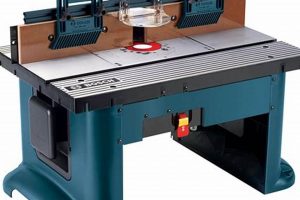
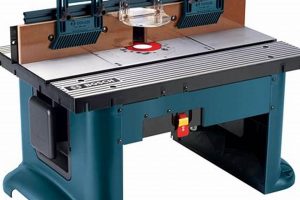
This stationary power tool enhances precision and versatility in woodworking. It essentially inverts a handheld router, mounting it beneath a flat surface. This configuration allows the operator to guide workpieces across the bit, enabling consistent and repeatable cuts. Examples of its use include creating decorative edge profiles, crafting raised panels, and joinery operations like creating tenons.
Its importance stems from improved accuracy and safety when compared to using a handheld router alone. The stability offered by the table allows for finer control, reducing the likelihood of errors and minimizing the risk of injury. This enhanced control facilitates intricate designs and consistent production runs. The device has evolved from simple homemade fixtures to sophisticated commercially manufactured units, reflecting the ongoing demand for precision in woodworking.
The following sections will delve into essential components, optimal selection criteria, and best practices for safe and effective use. Subsequent discussions will also cover maintenance, troubleshooting common issues, and exploring advanced techniques to maximize its capabilities.
Optimizing the Woodworking Router Table
Employing sound techniques maximizes the efficiency and safety when using this tool. The following guidelines offer practical strategies for achieving optimal results.
Tip 1: Secure Workpiece Fixture: Always ensure workpieces are firmly secured with clamps or featherboards. This prevents movement during operation, contributing to a cleaner cut and enhanced safety. Inadequate securing can result in material slippage and potential injury.
Tip 2: Gradual Material Removal: Avoid attempting to remove excessive material in a single pass. Multiple shallow passes reduce strain on the router and improve cut quality. Aggressive cuts can lead to tear-out and bit chatter.
Tip 3: Proper Bit Selection: Choosing the correct bit profile and material is crucial for achieving the desired result. Consider factors such as the type of wood being worked and the complexity of the design. Using an inappropriate bit can damage the workpiece or the bit itself.
Tip 4: Regular Inspection and Maintenance: Routinely inspect the router bit, fence, and table surface for wear or damage. Replace worn bits and ensure the fence is properly aligned. Periodic cleaning and lubrication will extend the tool’s lifespan.
Tip 5: Dust Collection Integration: Always utilize a dust collection system to minimize airborne particles. This protects the operator’s respiratory health and improves visibility during operation. Neglecting dust collection creates a hazardous work environment.
Tip 6: Controlled Feed Rate: Maintaining a consistent and controlled feed rate is essential for achieving a smooth, even cut. Feeding the workpiece too quickly can result in uneven cuts, while feeding it too slowly can cause burning. Practice on scrap material to determine the optimal feed rate for specific applications.
Tip 7: Fence Alignment Verification: Before beginning any operation, meticulously verify the fence alignment relative to the router bit. Misalignment will lead to inaccurate cuts and potentially damage the workpiece. Utilize precision measuring tools to ensure accuracy.
Adherence to these guidelines will enhance the precision, safety, and longevity of the device, resulting in superior woodworking outcomes.
The final segment will summarize key safety protocols and encourage continued exploration of advanced techniques.
1. Precision Control

Precision control is intrinsic to the functionality and value of a woodworking router table. The stationary nature of the device, in contrast to a handheld router, inherently provides a more stable platform, translating directly into increased accuracy. The ability to fix the router bit’s position and guide the workpiece along a fence or template allows for the execution of intricate cuts with minimal deviation. For example, crafting precisely fitting dovetail joints, crucial for strong and aesthetically pleasing drawer construction, relies on the enhanced control afforded by this setup.
The integration of adjustable fences, micro-adjustment knobs, and secure workpiece hold-downs further amplifies the precision achievable. These features enable fine-tuning of cut depths and positions, ensuring consistent results across multiple pieces. Consider the creation of raised panels for cabinet doors; maintaining uniform dimensions and profiles across all panels is essential for a professional finish. The router table, coupled with careful setup and execution, facilitates this repeatability. Moreover, consistent and repeatable cuts also translate to reduced material waste, improving overall efficiency.
Achieving precision control with the tool requires a thorough understanding of its components and meticulous setup procedures. Challenges may arise from fence misalignment, bit deflection, or inconsistent feed rates. Overcoming these challenges necessitates careful attention to detail and adherence to best practices. The relationship between precision control and the tool underscores its role in enabling high-quality woodworking, ultimately contributing to durable and visually appealing finished products.
2. Material Compatibility

Material compatibility represents a crucial consideration when utilizing a woodworking router table. The interaction between the workpiece material, router bit, and equipment settings directly influences cut quality, tool longevity, and operator safety. Selecting appropriate combinations of these elements is, therefore, paramount for successful woodworking projects.
- Wood Density and Bit Selection
The density of the wood being routed necessitates careful bit selection. Hardwoods like maple or oak require carbide-tipped bits to withstand the abrasive nature of the material and maintain sharpness over extended use. Conversely, softer woods, such as pine or cedar, can be effectively worked with high-speed steel bits. Using an inappropriate bit for the wood density can result in premature bit dulling, tear-out of the wood fibers, or even bit breakage, posing a safety hazard.
- Manufactured Wood Products and Dust Production
Manufactured wood products like MDF (Medium-Density Fiberboard) and plywood present unique challenges due to their composite nature. These materials tend to generate a significant amount of fine dust during routing. Efficient dust collection systems become critical when working with these materials, both to maintain visibility and to minimize the health risks associated with inhaling the fine particulate matter. Additionally, specialized router bits with optimized chip ejection can help manage the increased dust production.
- Material Thickness and Router Speed
The thickness of the material being routed influences the optimal router speed. Thicker materials typically require slower router speeds to prevent burning or excessive stress on the bit. Conversely, thinner materials may benefit from higher speeds to achieve a cleaner cut. Adjusting the router speed according to the material thickness helps ensure efficient and safe operation of the woodworking router table.
- Abrasive Materials and Bit Wear
Some wood species, and particularly manufactured wood products, contain abrasive components that accelerate bit wear. Laminates and certain tropical hardwoods can significantly reduce the lifespan of router bits. When working with these materials, it is essential to select bits specifically designed for abrasive applications and to inspect the bits frequently for signs of wear. Regular sharpening or replacement of worn bits will maintain cut quality and prevent potential safety hazards.
The interplay between material characteristics and router table operation dictates the success and safety of any woodworking endeavor. A thorough understanding of material properties, coupled with informed decisions regarding bit selection, router speed, and dust management, allows for the effective and efficient utilization of the woodworking router table across a wide range of projects.
3. Safety Protocols
The operation of a woodworking router table, while enhancing precision and efficiency, necessitates strict adherence to safety protocols to mitigate inherent risks. The high-speed rotation of the router bit and the potential for workpiece kickback demand a proactive approach to accident prevention.
- Eye and Face Protection
The expulsion of wood chips and debris during routing poses a significant threat to the eyes and face. Safety glasses or a face shield are mandatory to protect against these projectiles. Furthermore, wearing a full face shield offers added protection against larger debris and potential impact from workpiece kickback. Failure to utilize adequate eye and face protection can result in serious, irreversible injuries.
- Hearing Protection
The operation of a router, particularly within an enclosed workshop environment, generates considerable noise levels. Prolonged exposure to these elevated sound levels can lead to irreversible hearing damage. Consequently, the consistent use of hearing protection, such as earplugs or earmuffs with a suitable noise reduction rating (NRR), is crucial for safeguarding auditory health. The NRR rating should be appropriate for the noise level of the router being used.
- Safe Workpiece Handling
Securely holding the workpiece is paramount for safe router table operation. Clamps, featherboards, and push sticks are essential tools for maintaining control over the material and keeping hands safely away from the rotating bit. Failure to properly secure the workpiece can result in kickback, where the material is violently ejected from the table, posing a significant risk of injury. The use of these auxiliary tools enhances control and minimizes the potential for contact with the cutting tool.
- Router Maintenance and Inspection
Regular inspection and maintenance of the router table are critical for ensuring safe operation. This includes checking for loose components, frayed power cords, and dull or damaged router bits. Dull bits require more force to cut, increasing the risk of kickback. Damaged power cords present a shock hazard. Addressing these issues promptly prevents potential accidents and prolongs the lifespan of the equipment. Furthermore, ensure the router is unplugged from the power source before performing any maintenance or bit changes.
These safety protocols, when consistently applied, significantly reduce the risks associated with woodworking router table operation. Emphasizing a culture of safety within the workshop environment is essential for protecting both the operator and others who may be present. Regular training and reinforcement of these safety measures are vital for maintaining a safe and productive workspace.
4. Bit Selection

The selection of appropriate router bits is inextricably linked to the effective and safe operation of a woodworking router table. Bit profile, material composition, and intended application dictate the suitability for specific woodworking tasks undertaken using this tool.
- Profile and Application
Router bit profile directly determines the shape and design imparted to the workpiece edge. Edge-forming bits, such as Roman ogee or roundover bits, create decorative profiles. Joinery bits, including dovetail or mortise bits, facilitate the creation of structural joints. Selecting the correct profile ensures the desired aesthetic and functional outcome is achieved. The application, such as creating decorative molding versus constructing a cabinet frame, dictates the necessary profile.
- Material Composition and Durability
Router bits are commonly manufactured from high-speed steel (HSS) or carbide. HSS bits are suitable for softer woods and general-purpose use but dull relatively quickly when working with hardwoods or abrasive materials. Carbide-tipped bits offer superior durability and heat resistance, making them appropriate for hardwoods, manufactured wood products, and prolonged use. Selecting carbide bits for demanding applications extends bit life and maintains cut quality.
- Size and Shank Diameter
Router bits are available in various sizes, with larger bits requiring more powerful routers and potentially slower feed rates. Shank diameter, typically 1/4 inch or 1/2 inch, must match the collet size of the router. Larger shank diameters provide greater stability and reduce vibration, particularly when using larger or heavier bits. Using the appropriate shank diameter ensures secure bit retention and minimizes the risk of bit slippage or breakage.
- Chip Load and Feed Rate
Chip load, the amount of material removed per cutting edge per revolution, is influenced by bit design, router speed, and feed rate. Maintaining an appropriate chip load is crucial for achieving a clean cut and preventing bit overheating. Excessive chip load can lead to tear-out and bit chatter, while insufficient chip load can cause burning and premature bit dulling. Adjusting feed rate and router speed based on bit design and material properties optimizes chip load and cut quality.
The careful consideration of bit profile, material composition, size, and chip load, in conjunction with appropriate feed rate and router speed, enables the woodworker to maximize the capabilities of the woodworking router table, achieving precise, clean, and safe cuts across a range of woodworking projects.
5. Fence Adjustment

Fence adjustment on a woodworking router table dictates the precision and accuracy of cuts performed. The fence serves as a guide against which the workpiece is moved, and its position relative to the router bit directly influences the dimensions and profile of the finished cut. Inaccurate fence settings result in dimensional errors, inconsistent edge profiles, and potential safety hazards. For instance, creating a precisely sized groove for a cabinet back requires meticulous fence alignment to ensure the back fits snugly and securely within the cabinet frame. A misaligned fence leads to a groove that is either too narrow, preventing insertion, or too wide, compromising structural integrity.
The ability to make fine adjustments to the fence is essential for achieving repeatable and accurate results. Many router tables incorporate micro-adjustment mechanisms that allow for minute changes to the fence position. This is particularly crucial when performing operations that require high precision, such as creating dadoes for shelving or rabbets for joining boards. Without the capacity for fine-tuning, achieving consistent and accurate cuts becomes significantly more challenging, leading to increased material waste and rework. For example, constructing a multi-drawer chest requires precise dado placement to ensure drawers slide smoothly and evenly; inaccurate fence settings can lead to binding or misalignment.
Effective fence adjustment is a fundamental skill for woodworking with a router table. While seemingly straightforward, mastering this aspect requires understanding the mechanics of the table, the characteristics of the materials being used, and the specific requirements of the project at hand. Challenges arise from fence deflection, inconsistent clamping pressure, and inaccuracies in measurement. Overcoming these challenges involves using high-quality measuring tools, ensuring the fence is securely clamped, and employing techniques to minimize deflection. Ultimately, proper fence adjustment is essential for maximizing the capabilities of the router table and producing high-quality woodworking projects.
6. Dust Management
The utilization of a woodworking router table inherently generates substantial quantities of fine dust particles. The high-speed rotation of the router bit against wood or composite materials produces airborne particulate matter that poses significant risks to operator health and degrades the working environment. Effective dust management becomes a critical component, not merely an accessory, for safe and efficient router table operation. The absence of adequate dust control measures leads directly to respiratory irritation, reduced visibility, and an increased risk of fire due to the accumulation of combustible dust. For instance, prolonged exposure to MDF dust, common in cabinet making, can cause chronic respiratory problems and exacerbate existing conditions like asthma. The integration of dust management systems mitigates these risks and ensures a cleaner, healthier workspace.
Practical implementation of dust management involves several strategies. The primary method utilizes a dust collection system connected directly to the router table enclosure and, potentially, to the router itself. These systems employ high-efficiency particulate air (HEPA) filters to capture fine dust particles, preventing their recirculation into the air. Secondary methods include the use of air filtration units within the workshop to remove residual airborne dust. Furthermore, employing personal protective equipment (PPE) such as respirators or dust masks provides an additional layer of protection for the operator. Regularly cleaning the router table and surrounding area also minimizes dust accumulation and reduces the risk of fire. A practical example includes the construction of a router table enclosure with integrated dust ports connected to a shop vacuum or dedicated dust collector, significantly reducing airborne dust during operations like shaping edges or cutting grooves.
In summary, effective dust management is indispensable for safe and productive woodworking router table operation. Neglecting dust control compromises operator health, reduces visibility, and increases fire hazards. Implementing comprehensive dust collection systems, utilizing personal protective equipment, and maintaining a clean workspace are essential for mitigating these risks. Adherence to these practices not only safeguards the operator but also contributes to a higher quality finished product by reducing dust contamination during the woodworking process, creating a more sustainable and professional environment.
7. Workpiece Stability

Workpiece stability is a crucial factor in woodworking router table operation, directly influencing the precision, safety, and quality of finished projects. The primary function of the router table is to provide a stable platform for controlled material removal, and the degree to which the workpiece is secured determines the success of the process. Instability introduces inaccuracies, increases the risk of kickback, and compromises the integrity of the cut. Therefore, ensuring consistent and reliable workpiece support is not merely a suggestion but a fundamental requirement for effective router table use. For example, when creating a raised panel door, the panel must remain perfectly still as it passes across the bit to avoid variations in the profile.
Several methods contribute to achieving adequate workpiece stability. Featherboards, strategically positioned to apply consistent pressure against the fence and table surface, prevent lateral movement and reduce the likelihood of kickback. Clamps, particularly useful for larger workpieces, rigidly secure the material to the table, eliminating any possibility of shifting during the cutting process. Push sticks or push blocks, used to guide the workpiece past the bit, maintain a safe distance between the operator’s hands and the cutting tool while ensuring consistent feed pressure. An application of these methods could be the creation of long, thin strips for decorative trim; without proper support and consistent pressure, these strips may flex, leading to uneven cuts and a final product that is unusable. The selection of appropriate stabilization techniques depends on the size, shape, and material of the workpiece, as well as the type of cut being performed.
In conclusion, the relationship between workpiece stability and router table operation is inseparable. Instability negatively impacts both safety and precision, while adequate support promotes clean, accurate cuts and minimizes the risk of accidents. The employment of appropriate workholding techniques, such as featherboards, clamps, and push sticks, is essential for maximizing the potential of the tool and producing high-quality woodworking projects. Maintaining a focus on stability throughout the process, from initial setup to final cut, is a cornerstone of safe and effective router table usage.
Frequently Asked Questions
The following addresses common inquiries regarding proper operation, safety concerns, and effective utilization of the subject tool.
Question 1: What distinguishes a woodworking router table from a handheld router?
A stationary configuration in which the router is inverted and mounted beneath a table surface characterizes a woodworking router table. This arrangement allows for improved stability, accuracy, and repeatability compared to using a handheld router alone. Workpieces are moved across the bit instead of the bit being moved across the workpiece.
Question 2: What safety precautions are essential when operating a woodworking router table?
Mandatory safety precautions include wearing eye and ear protection, utilizing featherboards and push sticks to maintain a safe distance from the router bit, ensuring adequate dust collection to minimize respiratory hazards, and conducting regular inspections to identify and address potential mechanical issues.
Question 3: How does bit selection impact the performance of a woodworking router table?
Bit selection significantly influences cut quality, efficiency, and safety. Choosing the appropriate bit profile for the intended task, considering the material composition of the workpiece, and matching the shank diameter to the router’s collet are essential for achieving optimal results and preventing bit breakage or kickback.
Question 4: What is the function of the fence on a woodworking router table, and how is it properly adjusted?
The fence serves as a guide for the workpiece, ensuring consistent and accurate cuts. Proper fence adjustment involves aligning it parallel to the router bit, securing it firmly in place, and using micro-adjustment mechanisms for fine-tuning to achieve precise dimensions and profiles. Misalignment leads to inaccuracies and potential safety hazards.
Question 5: How does dust collection contribute to safe and effective operation of a woodworking router table?
Effective dust collection minimizes airborne particulate matter, improving visibility, reducing respiratory hazards, and preventing the accumulation of combustible dust. Connecting a dust collection system to the router table enclosure and utilizing air filtration units within the workshop are crucial for maintaining a clean and safe working environment.
Question 6: What workholding techniques are recommended for ensuring workpiece stability on a woodworking router table?
Recommended workholding techniques include using featherboards to apply consistent pressure against the fence and table surface, clamps to rigidly secure larger workpieces, and push sticks or push blocks to guide the workpiece past the bit while maintaining a safe distance between the operator’s hands and the cutting tool. These methods prevent movement and reduce the risk of kickback.
The woodworking router table demands respect and understanding for safe and optimal use.
The next article will address advanced techniques.
Conclusion
This exploration of the woodworking router table has illuminated its functionality, critical components, and essential operational techniques. The necessity of precision control, material compatibility considerations, strict adherence to safety protocols, judicious bit selection, accurate fence adjustment, diligent dust management practices, and unwavering commitment to workpiece stability has been emphasized. These elements collectively determine the effectiveness and safety of its use.
Mastery of the woodworking router table requires continuous learning and adaptation. Its potential extends beyond basic operations, allowing for complex joinery, intricate profiling, and the creation of bespoke woodworking projects. Continued exploration of advanced techniques and a dedication to safe practices will enable woodworkers to fully realize the capabilities of this tool, transforming raw materials into finished works with precision and artistry.
![Best Woodworking Plans Drafting Table [Guide] for Table | Step-by-Step Guides, Tools & Inspiration to Build Beautiful Wooden Decor on a Budget](https://woodfromhome.com/wp-content/uploads/2026/05/th-80-300x200.jpg "Best Woodworking Plans Drafting Table [Guide] for Table Step-by-Step Guides, Tools & Inspiration to Build Beautiful Wooden Decor on a Budget")