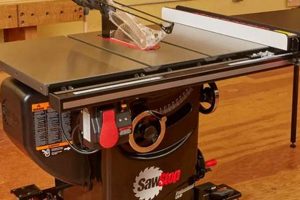
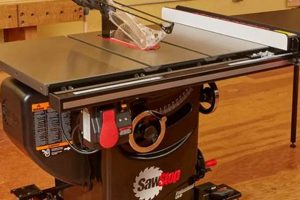
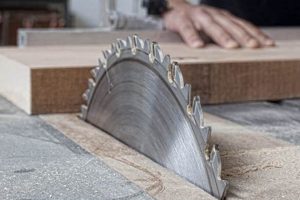
A stationary power tool featuring a circular blade projecting through a flat surface, frequently used in woodworking, serves as a fundamental device for performing accurate and efficient cuts on various types of lumber. This machine is typically employed to execute rip cuts, crosscuts, and angled cuts, allowing for the creation of precise components for furniture construction, cabinetry, and other woodworking projects. An example of its use involves accurately slicing a piece of oak to create a table leg, ensuring uniform dimensions and a smooth surface.
Its significance in woodworking stems from its capacity to deliver consistent and repeatable results, contributing to higher-quality finished products and reduced material waste. Historically, its adoption revolutionized woodworking processes, replacing hand tools for many cutting operations and enabling faster production speeds. The precision and control afforded by this tool directly translate to improved project outcomes, making it a staple in both professional workshops and hobbyist setups.
The subsequent sections will delve into crucial aspects such as selecting the appropriate model, understanding safety protocols, mastering various cutting techniques, and performing routine maintenance. These topics are designed to equip woodworkers with the knowledge necessary to safely and effectively utilize this essential piece of equipment.
Essential Guidance
The following guidance aims to enhance the safe and effective operation of the woodworking equipment in question, ensuring optimal performance and longevity.
Tip 1: Blade Selection. Employ the correct blade type for the specific material being processed. A blade designed for ripping hardwoods differs significantly from one intended for crosscutting softwoods or working with sheet goods. Utilizing the appropriate blade minimizes tear-out and enhances cut quality. For example, a blade with a lower tooth count and larger gullets is suitable for ripping thick hardwoods, while a blade with a higher tooth count provides a cleaner crosscut in plywood.
Tip 2: Fence Alignment. Verify the fence’s parallelism to the blade before each use. An improperly aligned fence can lead to binding, kickback, and inaccurate cuts. Utilize a precision square to ensure the fence is perfectly parallel to the blade. Misalignment, even by a fraction of an inch, can have significant consequences for the accuracy and safety of the cut.
Tip 3: Blade Height Adjustment. Adjust the blade height so that it extends no more than one-half inch above the material being cut. Excessive blade exposure increases the risk of kickback and reduces cut stability. Precisely setting the blade height minimizes the potential for the workpiece to lift or chatter during the cutting process.
Tip 4: Featherboard Utilization. Employ featherboards to maintain consistent pressure against the fence and table surface. Featherboards enhance cut accuracy and significantly reduce the risk of kickback by preventing the workpiece from drifting or lifting during the cut. Properly positioned featherboards act as a secondary safeguard, promoting safer and more controlled operations.
Tip 5: Push Stick Implementation. Always use a push stick when ripping narrow stock or performing cuts that bring the hand close to the blade. Push sticks provide a safe means of advancing the material through the blade while maintaining a safe distance between the hand and the cutting edge. Using a push stick is not optional; it is a critical safety precaution.
Tip 6: Regular Maintenance. Implement a routine maintenance schedule that includes cleaning the machine, lubricating moving parts, and inspecting the blade for sharpness and damage. A well-maintained machine operates more smoothly, accurately, and safely. Neglecting maintenance can lead to reduced performance, increased risk of accidents, and premature equipment failure.
Tip 7: Dust Collection. Consistently utilize a dust collection system to remove sawdust and debris from the work area. Effective dust collection not only improves visibility and reduces health hazards but also minimizes the risk of kickback by preventing sawdust buildup around the blade. A clean work area promotes a safer and more efficient working environment.
Adherence to these guidelines contributes significantly to enhanced safety, improved cut quality, and prolonged equipment lifespan.
The subsequent discussion will focus on advanced cutting techniques and troubleshooting common operational issues.
1. Precision Cutting

Precision cutting, a cornerstone of quality woodworking, is inextricably linked to the performance and capabilities of the subject stationary cutting machine. Achieving exacting dimensions and angles requires careful attention to several key elements of the tool itself and its operation.
- Blade Quality and Sharpness
The grade and condition of the circular blade directly influence the smoothness and accuracy of the cut. High-quality blades, constructed from hardened steel or carbide-tipped materials, maintain their sharpness longer and resist deflection, resulting in cleaner edges and more precise dimensions. Regular blade sharpening is essential for preserving optimal cutting performance. Using a dull blade increases the likelihood of tear-out, splintering, and inaccurate cuts.
- Fence Accuracy and Stability
The fence serves as a guide for the material being cut, dictating the width of the cut and ensuring straight, parallel edges. A robust and accurately aligned fence is crucial for achieving consistent and repeatable results. Misaligned or unstable fences introduce inaccuracies and can lead to angled or tapered cuts, compromising the precision of the workpiece. Calibrating and locking the fence securely is essential for reliable performance.
- Miter Gauge Precision
For angled cuts, the miter gauge guides the workpiece through the blade at a specific angle. A precise and well-adjusted miter gauge is essential for creating accurate miters and bevels. Sloppy or inaccurate miter gauges result in gaps and misalignments in assembled projects. Utilizing a digital angle gauge can further enhance the precision of miter cuts.
- Vibration Dampening and Stability
Excessive vibration during operation compromises the accuracy of the cut and can lead to inconsistencies in the finished product. A stable and well-dampened machine minimizes vibration, allowing for smoother and more controlled cuts. Mounting the machine on a solid, level surface and ensuring all components are properly tightened contribute to vibration reduction and enhanced precision.
These elements, when properly addressed, enable the woodworking tool to deliver the level of precision required for high-quality woodworking. The absence of any one of these factors undermines the tool’s capability to achieve accurate cuts, leading to flawed joinery and compromised finished products. Therefore, careful attention to blade maintenance, fence alignment, miter gauge adjustment, and vibration control are essential for realizing the full potential of the equipment.
2. Safety Mechanisms
The integration of safety mechanisms within a woodworking table saw is paramount to mitigating inherent risks associated with its operation. The high-speed rotation of the blade, coupled with the potential for material kickback, necessitates the implementation of features designed to protect the operator from injury. These mechanisms function as critical safeguards, reducing the likelihood of accidents and promoting a safer working environment. The presence and proper functioning of these elements directly correlate with the severity and frequency of potential incidents. For instance, a blade guard, when correctly positioned, serves as a physical barrier, preventing accidental contact with the rotating blade. Similarly, anti-kickback pawls engage the workpiece during instances of rearward movement, minimizing the risk of the material being forcefully ejected toward the operator.
Furthermore, the effectiveness of these safety devices hinges on operator adherence to recommended procedures. Real-world examples demonstrate the potential consequences of neglecting safety protocols. A missing or improperly adjusted blade guard, coupled with a moment of inattention, can result in severe lacerations. Conversely, consistent utilization of a push stick, in conjunction with functioning anti-kickback pawls, provides a significant buffer against potential hazards when processing smaller or irregularly shaped workpieces. Understanding the limitations of each safety component, and employing them in conjunction with safe operating practices, is crucial for minimizing risks.
In conclusion, the availability and correct implementation of safety mechanisms on the table saw directly contribute to a safer woodworking environment. While these devices provide a crucial layer of protection, they do not absolve the operator of the responsibility to exercise caution and adhere to established safety guidelines. Continuous education, regular equipment inspection, and consistent application of safety protocols are essential for mitigating risks associated with operating this woodworking tool. The understanding of these components is not merely theoretical, but carries practical significance in preventing injuries and ensuring the long-term safety of the operator.
3. Blade Selection

The selection of an appropriate cutting implement for a stationary woodworking machine is a decision of critical importance, directly influencing cut quality, efficiency, and operator safety. The characteristics of the selected blade must align with the material being processed and the desired outcome.
- Tooth Configuration and Material
The number of teeth, their shape, and the material from which they are constructed are primary determinants of blade performance. Blades with fewer teeth and larger gullets are suited for ripping solid wood, while blades with a greater number of teeth produce cleaner crosscuts. Carbide-tipped blades offer extended lifespan and enhanced durability when working with abrasive materials, whereas high-speed steel blades are typically less expensive but require more frequent sharpening. Selecting the correct tooth geometry minimizes tear-out and reduces the risk of kickback. For example, a blade with a flat-top grind is ideal for creating flat-bottomed grooves for joinery.
- Kerf Width Considerations
The width of the blade’s kerf (the material removed during the cut) impacts material usage and the precision of joinery. Full-kerf blades offer greater stability but remove more material, potentially reducing the yield from a given workpiece. Thin-kerf blades minimize material waste and require less power to operate but may be more prone to deflection, especially when cutting thicker stock. The choice between full-kerf and thin-kerf blades should be based on a balance between material conservation and cutting stability. Using a thin-kerf blade on an underpowered machine can improve cutting performance.
- Blade Diameter and Arbor Size Compatibility
Ensuring compatibility between the blade’s diameter and arbor size and the machine specifications is fundamental. Using a blade with an incorrect diameter can result in reduced cutting capacity or, in extreme cases, mechanical damage to the machine. Similarly, an improper arbor size can prevent the blade from being securely mounted, posing a significant safety hazard. Always verify that the selected blade adheres to the manufacturer’s recommendations for the specific woodworking tool. An undersized blade might not fully extend through thicker materials, while an oversized blade could interfere with machine components.
- Specialty Blade Types and Applications
Beyond general-purpose blades, a variety of specialty blades are available for specific applications. Dado blades are designed for creating wide grooves and rabbets, while molding blades are used for shaping decorative profiles. Veneer blades produce exceptionally clean cuts on thin materials, minimizing chipping and tear-out. The selection of a specialty blade should be based on the specific task at hand. Using a dedicated dado blade for cutting joinery joints, for example, can greatly improve precision and efficiency compared to using a standard blade and multiple passes.
In conclusion, the optimal blade selection for a given woodworking stationary cutting machine hinges upon a thorough understanding of the material characteristics, the desired cut quality, and the machine’s specifications. Careful consideration of these factors ensures safe and efficient operation, contributing to superior results in woodworking projects. Ignoring these facets introduces increased risk and reduced quality.
4. Fence Alignment

Fence alignment is a critical determinant of accuracy and safety when operating a stationary cutting machine. The fence, a guide running parallel to the blade, ensures consistent material positioning during cuts. Misalignment, even by a fraction of an inch, introduces angular deviations that compound across the length of the cut. This directly affects the precision of finished pieces, impacting joinery and overall project quality. Consider the example of constructing a rectangular frame: a fence out of alignment will result in non-parallel sides, leading to gaps and structural weakness. Precise fence alignment ensures consistent, repeatable cuts, which are essential for efficient and effective woodworking.
The consequences of poor fence alignment extend beyond mere dimensional inaccuracies. When the fence is not parallel to the blade, the workpiece can bind, leading to increased friction and the potential for dangerous kickback. Kickback occurs when the blade catches the workpiece and violently propels it back towards the operator. Proper fence alignment, therefore, serves as a crucial safety measure, minimizing the risk of this hazardous event. The use of precision measuring tools, such as dial indicators and precision squares, is vital for ensuring accurate fence positioning. Furthermore, regular inspection and calibration are necessary to maintain alignment over time, as vibrations and normal wear can gradually shift the fence out of true.
In summary, fence alignment represents a foundational element in the safe and accurate operation of a woodworking stationary cutting machine. The consequences of misalignment range from dimensional inaccuracies in finished products to increased risk of hazardous kickback. Addressing this aspect through meticulous measurement, calibration, and routine inspection is essential for realizing the full potential of the machine and ensuring the safety of the operator. Challenges in maintaining alignment, such as those arising from machine vibration or material warping, necessitate continuous vigilance and proactive adjustment to ensure consistent performance.
5. Power Requirements

The operational effectiveness of a stationary woodworking machine is inextricably linked to its power requirements. A causal relationship exists between sufficient power and the ability to efficiently and safely process diverse lumber types. Insufficient power results in reduced cutting capacity, increased risk of kickback due to blade stalling, and potential damage to the motor. The power requirement, measured in horsepower (HP) or amperage, dictates the machine’s capacity to maintain consistent blade speed under load, a critical factor in achieving clean and accurate cuts. For instance, processing thick hardwoods like oak or maple necessitates a higher horsepower motor compared to working with softer woods such as pine.
The understanding of power requirements translates directly into practical applications. Selecting a machine with adequate power prevents the user from overloading the motor, which can lead to overheating, premature failure, and unsafe operating conditions. Furthermore, matching the machine’s power needs to the available electrical supply is essential. Running a high-amperage tool on an inadequate circuit can trip breakers, interrupt workflow, and pose a fire hazard. Real-world examples illustrate the importance of this: a cabinetmaker routinely working with hardwoods requires a machine with at least 3 HP, while a hobbyist primarily cutting softwoods may find a 1.5 HP model sufficient. Neglecting these considerations leads to reduced productivity and compromised safety.
In conclusion, the power requirements represent a fundamental component that dictates its cutting performance and safety profile. Selecting an appropriately powered machine, ensuring compatibility with the available electrical supply, and understanding the relationship between power and material type are crucial for successful woodworking operations. The challenges lie in accurately assessing the intended use and selecting a machine that meets those demands without exceeding budget or available power resources. This informed approach mitigates risks, enhances productivity, and extends the tool’s lifespan.
Frequently Asked Questions
The following addresses common inquiries regarding the operational characteristics, safety protocols, and maintenance requirements associated with woodworking table saws. The intent is to provide clear and concise information to enhance user understanding and promote safe operating practices.
Question 1: What factors determine the appropriate horsepower for a woodworking table saw?
The optimal horsepower depends primarily on the type and thickness of the material being processed. Hardwoods and thicker stock require higher horsepower to maintain consistent blade speed and prevent stalling. Light-duty applications involving softwoods may suffice with lower horsepower models.
Question 2: How often should the blade on a woodworking table saw be sharpened?
Blade sharpening frequency is influenced by the type of material cut, the blade’s material composition, and the extent of use. A noticeable decline in cutting performance, such as increased resistance or tear-out, indicates the need for sharpening. Regular inspection for chipped or damaged teeth is also recommended.
Question 3: What are the key safety features to consider when purchasing a woodworking table saw?
Essential safety features include a blade guard, anti-kickback pawls, a riving knife, and a push stick. A magnetic switch that prevents automatic restart after a power interruption is also highly desirable. The presence and proper functioning of these features significantly reduce the risk of injury.
Question 4: What is the correct procedure for aligning the fence on a woodworking table saw?
Fence alignment involves ensuring that the fence is parallel to the blade and flat against the table surface. Precision squares and measuring tools are used to verify parallelism. Adjustments are typically made via set screws or cam mechanisms, following the manufacturer’s instructions.
Question 5: What maintenance tasks are essential for prolonging the life of a woodworking table saw?
Routine maintenance includes cleaning dust and debris, lubricating moving parts, inspecting belts and pulleys, and ensuring proper blade alignment. Regular maintenance optimizes performance, reduces wear, and enhances the machine’s lifespan.
Question 6: How does the choice of blade affect the quality of the cut?
Blade selection is paramount for achieving optimal cut quality. The number of teeth, tooth geometry, and blade material must be appropriate for the material being processed. Using the wrong blade can result in tear-out, splintering, and inaccurate dimensions.
These FAQs provide a foundation for understanding the essential aspects of woodworking table saws. Proper use, maintenance, and adherence to safety guidelines are crucial for safe and efficient operation.
The subsequent discussion will focus on advanced cutting techniques and troubleshooting common operational issues associated with this tool.
Conclusion
This exploration has provided an overview of the essential aspects surrounding woodworking tools table saw, encompassing their operational principles, safety requirements, maintenance protocols, and selection criteria. The information presented underscored the importance of understanding each element to maximize the tools utility while mitigating inherent risks. From horsepower considerations to blade alignment techniques, a comprehensive grasp of these factors is crucial for achieving predictable and accurate results.
The woodworking tools table saw remains a pivotal component in various woodworking applications. Continued vigilance in adhering to safety guidelines, implementing routine maintenance, and staying abreast of technological advancements will ensure the woodworking tools table saw continues to serve as a reliable and effective instrument for generations to come. The future of woodworking depends on the responsible and informed use of such machinery.