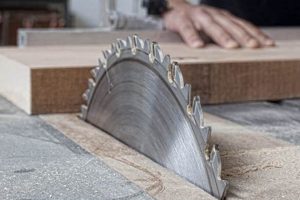
The tools employed to cut wood during fabrication are diverse, each designed for specific tasks and characterized by their blade design, power source, and cutting action. These implements are critical for shaping raw lumber into refined components for construction, furniture making, and other carpentry projects. Examples include tools specialized for making precise, fine cuts, tools for rapidly sectioning large timbers, and tools designed to create curved shapes.
The selection of the appropriate cutting instrument is paramount for achieving accuracy, efficiency, and safety in woodworking endeavors. The evolution of these implements, from manually powered versions to electrically driven counterparts, reflects advancements in material science and engineering. This progression has significantly impacted productivity and the complexity of projects attainable. The effectiveness of any woodworking endeavor heavily relies on proper selection and maintenance of cutting tools.
An examination of the various categories, including hand-powered models, power-driven versions, and specialty designs, will reveal the diverse capabilities available to woodworkers. The following sections will elaborate on specific designs and their suitable applications.
Essential Guidance for Wood Cutting Implements
Effective utilization of wood cutting implements requires careful consideration of tool selection, maintenance, and operational technique. Adherence to best practices ensures optimal results and minimizes the risk of injury.
Tip 1: Select the Appropriate Implement: The choice must align with the specific task. For instance, a dovetail saw is suited for fine joinery, while a circular saw is more appropriate for ripping lumber.
Tip 2: Maintain Blade Sharpness: A sharp blade is crucial for clean cuts and reduced effort. Dull blades increase the risk of kickback and splintering. Regular sharpening or blade replacement is recommended.
Tip 3: Utilize Proper Cutting Techniques: Applying correct pressure and angle is essential. Avoid forcing the implement, as this can lead to inaccurate cuts and potential damage to the tool or workpiece.
Tip 4: Ensure Adequate Workpiece Support: Securely clamping or holding the material prevents movement during the cutting process, improving accuracy and safety.
Tip 5: Wear Appropriate Safety Gear: Eye protection, hearing protection, and dust masks are vital for preventing injuries and respiratory issues.
Tip 6: Understand Grain Direction: Cutting with the grain typically yields smoother results than cutting against it. Adjust the type used based on the wood’s grain.
Tip 7: Inspect Tools Before Use: Check for loose parts, damaged cords, or other defects before operating any power-driven instrument. Repair or replace compromised tools immediately.
Following these guidelines will enhance the quality of woodworking projects, improve efficiency, and promote a safer working environment. Proper care and usage extend the life of these valuable instruments.
The subsequent sections will delve into specific models and their appropriate applications, providing a more comprehensive understanding of the range available.
1. Hand saws

Hand saws represent a foundational category within woodworking saws, characterized by manual operation and suitability for intricate or small-scale tasks. Their dependence on human power provides a tactile connection to the material, fostering control and precision unattainable with mechanized alternatives.
- Crosscut Saw Characteristics
The crosscut saw is designed to sever wood fibers perpendicular to the grain. Teeth are beveled to create a slicing action, minimizing tear-out and producing a clean edge. The saw’s effectiveness is contingent upon the operator’s skill in maintaining a consistent cutting angle and pressure, which is necessary for achieving precise dimensions in projects such as cabinet making and joinery.
- Rip Saw Application
Conversely, the rip saw facilitates cutting along the grain of the wood. The teeth are chisel-like, designed to efficiently remove material as the saw advances. Its employment is evident in the preparation of lumber for framing or creating long, straight edges for furniture components. The success of rip sawing relies on maintaining a straight cutting path and proper alignment with the grain.
- Dovetail Saw Precision
The dovetail saw is a specialized hand saw intended for creating fine joints, notably dovetails. Its thin blade and fine teeth yield narrow kerfs and minimal material loss. Accuracy and control are paramount when utilizing a dovetail saw, as the integrity of the joint depends on precise cuts. Examples include constructing drawers and intricate casework.
- Coping Saw Versatility
The coping saw features a thin, replaceable blade held in a frame, allowing for curved or intricate cuts in thin materials. Its maneuverability makes it suitable for shaping moldings or creating decorative elements. The blade’s ability to rotate within the frame enables cuts at various angles, expanding its utility in detailed woodworking.
The selection of a hand saw hinges on the specific demands of the project, underscoring the importance of understanding their individual strengths and limitations. While power-driven models offer efficiency, hand saws provide an unparalleled level of control and are indispensable for detailed tasks. The choice is contingent upon the desired balance between speed, precision, and the scale of the undertaking.
2. Power saws

Power saws represent a significant evolution in woodworking, enabling faster and more efficient material processing compared to their manual counterparts. Their incorporation into woodworking practices has expanded the scope of achievable projects and reduced the physical demands on craftsmen. The integration of these tools necessitates an understanding of their unique capabilities and safety considerations.
- Circular Saw Adaptability
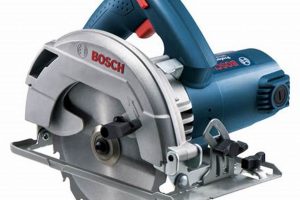
The circular saw is characterized by its rotary cutting action, driven by an electric motor. Its versatility enables both ripping and crosscutting operations, depending on the blade installed. Examples include framing lumber for construction and cutting plywood sheets. The blade guard and proper handling are critical for safety.
- Jigsaw Precision and Versatility
The jigsaw, distinguished by its reciprocating blade motion, excels in creating curved and intricate cuts. The tool’s ability to navigate complex shapes makes it suitable for crafting decorative elements and furniture components. Variable speed settings allow for control when cutting different material thicknesses.
- Miter Saw Accuracy
The miter saw specializes in making accurate angled cuts, essential for creating joints such as miters and bevels. Its precision makes it ideal for producing trim and molding. Laser guides and adjustable fences enhance the accuracy of the cut.
- Table Saw Centralized Cutting
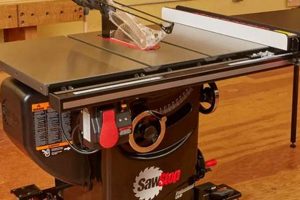
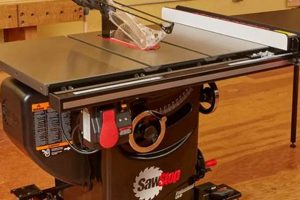
The table saw, featuring a blade extending through a flat surface, serves as a primary tool for dimensioning lumber. Its fence system allows for consistent and accurate rip cuts. Safety devices such as blade guards and push sticks are paramount to prevent injury.
The selection of a power saw is contingent upon the specific requirements of the woodworking task. Understanding the capabilities of each tool and adhering to safety protocols ensures optimal performance and reduces the risk of accidents. Power driven woodworking implements represent essential components of the modern workshop, improving efficiency and expanding the range of project possibilities.
3. Blade design
The effectiveness of woodworking tools is inextricably linked to blade design. Each category of woodworking saw employs a blade specifically configured to achieve a particular cutting action and result. The geometry, tooth pattern, and material composition of the blade directly influence the saw’s capacity to efficiently and accurately process wood. Cause and effect relationships are evident: a blade with coarse teeth, for example, produces a rapid but rough cut, while one with fine teeth yields a slower, smoother surface. The characteristics of blades used define various woodworking saw capabilities and associated woodworking tasks.
Blade selection is critical when preparing timber for joinery. Dovetail saws, with their fine teeth and minimal set, are designed to create the precise cuts necessary for strong interlocking joints. In contrast, circular saws intended for construction framing utilize blades with aggressive tooth patterns to quickly rip through lumber, prioritizing speed over surface finish. The type of blade dictates the range of woodworking applications for which a specific tool is suited. Failure to use the appropriate blade for a given task can result in inefficient cutting, material waste, and potential damage to the tool or the workpiece.
The relationship between blade design and tool performance underpins the fundamental principles of woodworking. Comprehending how blade geometry affects cutting action and surface quality enables craftsmen to optimize tool selection and technique. The diverse range of woodworking saws, each with a specialized blade, reflects the industry’s focus on precision, efficiency, and versatility.
4. Cutting action

The method by which a woodworking implement removes materialreferred to as cutting actionis a critical determinant in its suitability for specific tasks. Distinct cutting actions, such as reciprocating, rotary, and linear, define the capabilities and limitations of various saw types. A reciprocating cutting action, as seen in jigsaws and reciprocating saws, involves a back-and-forth motion of the blade, making it suitable for intricate cuts and demolition work, respectively. Rotary cutting action, employed by circular saws and table saws, uses a spinning blade to slice through the material, prioritizing speed and efficiency for straight cuts. Linear cutting action, exemplified by hand saws, depends on the operator’s manual force to push or pull the blade along a defined path, affording a high degree of control in precise applications.
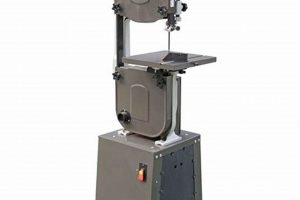
The choice of cutting action directly affects the finish quality and the rate of material removal. For example, a band saw, which uses a continuous blade moving in one direction, provides a smoother cut and is capable of handling curves and contours, making it valuable in furniture making. Conversely, a chainsaw, designed for rapidly felling trees and sectioning timber, employs a high-speed rotary cutting action that sacrifices finish quality for sheer cutting power. The kerf width, or the amount of material removed by the blade, is also influenced by the cutting action and blade design, impacting the precision and material yield of the process.
Understanding the nuances of cutting action is essential for selecting the right tool for the job and optimizing woodworking outcomes. Different cutting actions produce varying levels of vibration, noise, and dust, requiring the user to take appropriate safety measures. Proper assessment and implement selection improve efficiency, diminish material waste, and safeguard the operator. The selection and management of the implement, with awareness of associated risk mitigation, is an integral aspect of wood working tasks.
5. Kerf width
Kerf width, defined as the width of the cut produced by a blade, represents a critical parameter in woodworking. This dimension influences material yield, joint tightness, and the overall precision of woodworking projects. The design and intended application of various woodworking cutting tools directly dictate the resulting kerf width.
- Hand Saw Kerf and Precision
Hand saws, especially those designed for fine joinery such as dovetail saws, typically exhibit minimal kerf widths. This is because manual cutting demands greater control and reduces material waste. A thin kerf ensures tight-fitting joints and maximizes material usage, particularly in projects requiring meticulous detail. The skill of the operator plays a significant role in maintaining consistency with narrow kerf widths. Examples of use cases are fine woodworking and intricate detailing.
- Power Saw Kerf and Efficiency
Power saws, such as circular saws and table saws, often produce wider kerfs compared to hand saws. This is due to the higher cutting speeds and blade thickness requirements for motorized operation. While a wider kerf increases material removal rate, it also leads to greater material loss. Specific blade designs, such as thin-kerf blades for table saws, attempt to mitigate this issue by reducing the kerf width without sacrificing cutting performance. The implications involve speed, material usage, and precision.
- Specialty Saw Kerf Considerations
Specialty saws, including band saws and scroll saws, offer varying kerf widths depending on their intended use. Band saws, used for both straight and curved cuts, typically have narrow kerfs that minimize material waste and allow for intricate designs. Scroll saws, designed for highly detailed work, employ extremely fine blades that produce very narrow kerfs. This is important in detailed woodworking such as sign making.
- Material Type and Kerf Adjustment
The type of material being cut also influences the optimal kerf width. Cutting hardwoods generally requires more robust blades that produce wider kerfs, while softer woods can be cut with thinner blades and narrower kerfs. Adjusting the implement or blade choice based on the material properties is crucial for achieving clean cuts and minimizing material loss. Examples include hardwood flooring versus softwood framing.
The interaction between cutting tool type and kerf width significantly impacts the final outcome of woodworking projects. Understanding these relationships allows woodworkers to select appropriate tools and techniques, optimizing material yield and ensuring the precision necessary for quality craftsmanship. Optimizing tool selection affects material yield.
6. Material compatibility

Material compatibility represents a critical determinant in the selection and application of woodworking tools. The properties of the wood species being worked, such as hardness, density, grain pattern, and resin content, exert significant influence on the efficiency, precision, and longevity of blades. Selecting an improper saw for a specific wood type can result in substandard cuts, accelerated blade wear, or potential damage to both the tool and the material. The hardness of the wood has direct implications on blade wear and cutting quality. A hard wood such as maple requires a blade with hardened teeth for effective and clean cuts.
Practical implications of understanding material compatibility are evident in various woodworking scenarios. For instance, when working with softwoods like pine or cedar, saws with finer tooth patterns and shallower rakes are preferred to minimize splintering and tear-out. Conversely, hardwoods like oak or maple necessitate saws with more robust teeth and steeper rakes to efficiently remove material and maintain a clean cutting edge. The presence of resins or gums in certain wood species, such as cherry or teak, can cause blade binding and heat buildup, necessitating the use of blades with specialized coatings or cooling features. The choice of blade material should also consider the presence of resins. Coatings such as Teflon can reduce friction and heat buildup.
The correlation between material compatibility and tool selection underscores the importance of informed decision-making in woodworking practices. Careful consideration of wood properties and blade characteristics optimizes cutting performance and extends tool life. The challenge lies in balancing the trade-offs between cutting speed, surface finish, and tool maintenance. Selecting the correct tool for the correct material leads to the best woodworking outcomes. Recognizing and addressing these considerations contributes to safer and more effective woodworking outcomes, ensuring projects are completed efficiently and to the highest standards.
Frequently Asked Questions
This section addresses common inquiries regarding woodworking saws, their applications, and selection criteria.
Question 1: What differentiates a crosscut saw from a rip saw?
A crosscut saw is designed to sever wood fibers perpendicular to the grain, while a rip saw is designed to cut along the grain. The tooth geometry and set differ to optimize performance for these distinct cutting actions. Proper selection maximizes efficiency and minimizes tear-out.
Question 2: When is it appropriate to choose a hand saw over a power saw?
Hand saws are preferable for tasks requiring fine control and precision, such as joinery or detailed shaping. Power saws are better suited for rapid material removal and long, straight cuts. The scale and complexity of the project should inform this selection.
Question 3: How does blade thickness affect cutting performance?
Blade thickness influences kerf width. Thinner blades reduce material waste and cutting resistance, but may be more prone to deflection. Thicker blades offer greater stability but remove more material. Striking a balance is vital for accurate and efficient cutting.
Question 4: What safety precautions should be observed when using power saws?
Eye protection, hearing protection, and dust masks are essential. Blade guards should always be in place and functioning correctly. Workpieces must be securely clamped to prevent movement. It is critical to comprehend the manufacturer’s safety guidelines.
Question 5: How often should saw blades be sharpened or replaced?
The frequency of sharpening or replacement depends on the type of wood being cut and the intensity of use. A dull blade increases the risk of kickback and splintering. Regular inspection is advised, with sharpening or replacement as needed to maintain optimal cutting performance.
Question 6: How does material hardness influence the choice?
Harder materials require blades with teeth designed to withstand wear and generate sufficient cutting force. Blades suitable for softwoods may quickly dull or become damaged when used on hardwoods. It is vital to select the right tool and settings.
These FAQs offer insight into the essential aspects of selecting and utilizing tools, promoting informed decision-making in woodworking endeavors.
The next section will provide information about maintaining the functionality of wood cutting implements.
Comprehensive Summary
The exploration has demonstrated the diversity and specialized nature of woodworking cutting instruments. From hand-operated to power-driven models, each category possesses unique characteristics that cater to specific woodworking tasks. This includes blade design, cutting action, kerf width, and material compatibility. The proper selection and utilization of each kind significantly impact project quality, efficiency, and safety.
The pursuit of woodworking proficiency demands a continued refinement of implement knowledge, technique, and safety practices. Understanding these essential cutting instruments, their capabilities, and their limitations is essential for all woodworking professionals and hobbyists.