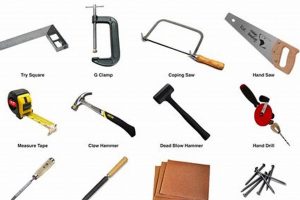
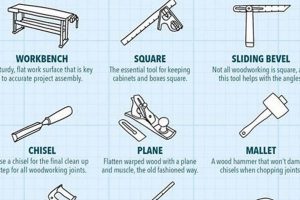
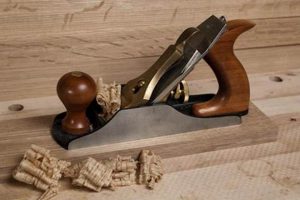
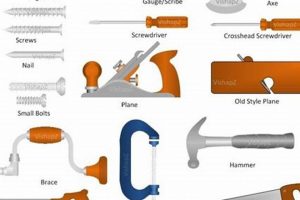
Essential implements manipulated directly by the user, without reliance on powered assistance, represent a fundamental aspect of the craft. Such implements facilitate shaping, cutting, and joining wood through manual force and precise control. A curated selection of these instruments allows individuals to begin creating functional and artistic pieces. Examples include saws for dividing material, chisels for shaping details, planes for smoothing surfaces, and measuring tools for ensuring accuracy.
Proficiency in using these instruments fosters a deeper understanding of material properties and develops critical hand-eye coordination. This approach to woodworking provides a direct connection to the creative process, allowing for nuanced adjustments and personalized outcomes not always achievable with machines. Historically, these tools represent the bedrock of woodworking traditions, passed down through generations and adapted to various cultural contexts. The use of human-powered implements offers a more sustainable and often quieter method of working, emphasizing mindful engagement with the material.
The subsequent sections will delve into specific tool types, outlining their purpose, proper usage, maintenance requirements, and factors to consider when acquiring an initial set. Focus will be placed on selecting implements that offer versatility and durability, enabling the user to tackle a wide range of projects and develop foundational skills.
Essential Guidance for Beginning Woodworkers
The following points provide crucial advice for individuals embarking on woodworking using manual implements. Adhering to these suggestions will facilitate efficient learning and promote safe working practices.
Tip 1: Prioritize Quality over Quantity: Rather than acquiring a large assortment of inexpensive tools, invest in a smaller selection of high-quality instruments. Superior materials and construction result in enhanced performance, longevity, and safety.
Tip 2: Master Sharpening Techniques: Sharpness is paramount. A dull tool is not only ineffective but also dangerous. Learn and practice sharpening techniques regularly to maintain optimal cutting performance. Utilize honing guides to achieve consistent angles.
Tip 3: Understand Grain Direction: Wood’s grain significantly impacts cutting behavior. Always cut with the grain to avoid tear-out and achieve clean, smooth surfaces. Observing the grain pattern before each cut is essential.
Tip 4: Practice Proper Tool Handling: Employ correct grip and body positioning for each tool. Secure workpieces firmly in a vise. Avoid overexertion and maintain control throughout the cutting or shaping process.
Tip 5: Maintain Tools Diligently: Clean tools after each use. Remove debris, apply protective coatings to prevent rust, and store implements properly to prevent damage.
Tip 6: Start with Simple Projects: Begin with manageable projects that focus on fundamental techniques. Gradually increase complexity as skills develop. This approach promotes confidence and minimizes frustration.
Tip 7: Seek Expert Guidance: Consult experienced woodworkers or enroll in introductory courses. Hands-on instruction can accelerate learning and provide valuable insights into best practices.
By emphasizing quality implements, consistent maintenance, and a deliberate approach to skill development, aspiring woodworkers can establish a solid foundation for future projects. The subsequent sections will explore advanced techniques and considerations for expanding the craftsman’s repertoire.
1. Sharpness is critical.

The effectiveness and safety of manual implements are inextricably linked to the condition of their cutting edges. When working with wood, a keen edge produces clean, controlled cuts, minimizing the risk of tear-out, splintering, and inaccurate joinery. Dull implements necessitate increased force, leading to fatigue, loss of control, and a heightened risk of injury. For example, a sharp chisel allows for precise paring of dovetail joints, while a dull chisel is more likely to slip, damaging the workpiece and potentially causing harm to the user.
Maintaining optimal sharpness requires consistent attention and the application of appropriate sharpening techniques. This involves understanding the properties of various sharpening stones, using honing guides to achieve consistent bevel angles, and regularly honing the edge to remove microscopic imperfections. Proper sharpening ensures the implement performs as intended, reducing the physical effort required and improving the overall quality of the finished product. The efficiency gained from sharp tools also conserves material by reducing errors and waste.
In conclusion, the state of an implement’s edge is not merely a convenience but a fundamental aspect of woodworking safety and precision. Investing time and resources in sharpening and maintenance is essential for any individual utilizing human-powered implements, ensuring both optimal performance and a safe working environment. Sharpness directly translates to control, accuracy, and a reduced risk of accidents, making it a non-negotiable consideration for all woodworking endeavors.
2. Proper tool maintenance.

The longevity and performance of instruments within a beginning woodworker’s kit hinge directly on consistent and appropriate maintenance practices. Inadequate care leads to accelerated deterioration, diminished effectiveness, and potential safety hazards, effectively negating the investment in quality implements. For example, neglecting to clean and oil a hand plane after use invites rust formation, rendering the sole uneven and hindering smooth gliding across the wood surface. The effect is decreased accuracy and increased physical exertion.
The connection between preservation and manual tools manifests in various forms. A dull saw, resulting from the lack of proper sharpening, requires significantly more force to operate, increasing the likelihood of blade binding and potential kickback. Similarly, failure to protect chisel edges can lead to nicks and deformation, compromising their ability to create clean, precise cuts. Regular honing, cleaning, and appropriate storage are not merely cosmetic; they are integral to maintaining the tools’ intended functionality and ensuring a safe and efficient working environment. The regular application of linseed oil to wooden handles prevents cracking and splintering, extending their lifespan and improving grip.
In conclusion, a regimen of diligent upkeep is not an optional addendum but a mandatory component of successful woodworking using manual tools. Overlooking this aspect results in a diminished return on investment, compromised quality of work, and an elevated risk of injury. Prioritizing maintenance ensures that the beginner’s kit remains a reliable and effective resource, fostering skill development and facilitating the creation of high-quality pieces. Therefore, instruction in proper care should be an essential element of any introductory woodworking curriculum.
3. Accurate measuring essential.

Precision in measurement is a fundamental requirement when working with manual woodworking implements. This attribute directly influences the fit, function, and aesthetic appeal of the completed project. Inaccurate measurements, even minor deviations, propagate through subsequent steps, leading to misaligned joints, structural instability, and a compromised final result. The selection of instruments for initiating woodworking activities necessitates tools capable of delivering consistent and verifiable readings. A basic set commonly includes a rule, a combination square, and potentially a marking gauge, each serving distinct purposes in transferring dimensions and establishing reference lines.
For instance, when constructing a dovetailed drawer using hand tools, precise measurement is indispensable at every stage. The width of the pins and tails must be accurately determined and transferred to the corresponding boards. Failure to do so results in a joint that is either too tight, requiring excessive force to assemble, or too loose, compromising its strength. The accuracy of the initial measurements directly dictates the quality of the joint and, consequently, the overall integrity of the drawer. Similarly, when using a hand plane to achieve a specific thickness, the constant use of measuring devices to verify the material removed is essential to avoid creating an uneven surface.
The pursuit of accurate measurement within the realm of manual woodworking presents its own set of challenges. Parallax error when reading scales, inconsistencies in marking tool sharpness, and the inherent variability in wood itself all contribute to potential inaccuracies. Overcoming these challenges requires meticulous attention to detail, the use of calibrated measuring tools, and a thorough understanding of the materials being worked. The ability to accurately measure is not merely a skill; it is a cornerstone of successful woodworking, directly impacting the quality and longevity of the craft.
4. Safety precautions mandatory.

The inherent nature of implements designed for manual woodworking necessitates a rigorous adherence to safety protocols. These instruments, often possessing sharp cutting edges, pose a tangible risk of injury if mishandled or used without proper awareness. The introduction of “starter woodworking hand tools” to any individual, irrespective of experience level, must be coupled with comprehensive instruction on safe operating procedures. Ignoring this facet precipitates a range of potential hazards, from minor cuts and abrasions to more severe lacerations and puncture wounds. The omission of safety protocols not only endangers the individual practitioner but also creates a working environment ripe for accidents.
For instance, the improper use of a chisel without adequate hand protection can result in the tool slipping and causing a deep cut. Similarly, neglecting to secure a workpiece firmly in a vise before using a saw increases the likelihood of the material moving unexpectedly, potentially leading to loss of control and injury. Eye protection is equally crucial; flying debris from sawing, planing, or chiseling can cause serious eye damage. The imperative of safety extends beyond the immediate use of the tool. Proper storage of implements is essential to prevent accidental contact with sharp edges. Regular maintenance, including sharpening, ensures tools perform predictably and minimizes the force required, thereby reducing the risk of slips and uncontrolled movements. The failure to understand and implement these safety precautions directly compromises the individual’s well-being and undermines the integrity of the woodworking process.
In summary, integrating safety measures is not merely an ancillary consideration but a fundamental requirement for engaging in woodworking. A conscientious approach to hazard identification, risk mitigation, and adherence to established safety practices is paramount. The understanding that “safety precautions mandatory” constitutes an inseparable component of using “starter woodworking hand tools” is essential for fostering a safe and productive woodworking environment. Neglecting this imperative has potentially severe consequences, whereas its embrace enables individuals to pursue the craft with confidence and minimal risk of harm.
5. Wood grain awareness.
The performance and outcome of woodworking projects undertaken with rudimentary implements are inextricably linked to an understanding of wood grain. The orientation and structure of the wood fibers dictate how it responds to cutting, shaping, and joining operations. This knowledge serves as a critical component when commencing initial woodworking activities. Failure to account for grain direction increases the likelihood of tear-out during planing, splitting during chiseling, and weakened joints due to improper glue adhesion. For instance, attempting to plane against the grain results in a rough, uneven surface requiring excessive sanding or rendering the workpiece unusable. Similarly, driving nails or screws into the end grain provides significantly less holding power than driving them into the face grain.
The selection and use of “starter woodworking hand tools” must, therefore, incorporate an appreciation for wood’s inherent characteristics. A beginner employing a hand saw needs to recognize the difference between cutting with and against the grain to achieve a clean kerf. Similarly, a woodworker using a chisel to create mortise and tenon joints must orient the tool appropriately to prevent splitting along the grain lines. This understanding extends to selecting the correct type of wood for a given project, considering its grain pattern and density in relation to the intended application. The acquisition of skill in discerning wood grain is not merely an academic exercise; it is a practical necessity for achieving successful results with manual implements.
Recognizing the interaction between grain and tool behavior presents initial challenges, particularly in differentiating between various grain patterns and their implications. However, through practice and observation, the woodworker develops an intuition for how the material will respond to different operations. The consequences of ignoring wood grain are readily apparent in failed projects, serving as a valuable, albeit sometimes frustrating, learning experience. Ultimately, wood grain awareness contributes to a deeper understanding of the material itself, enabling more efficient and controlled use of manual implements. Therefore, instruction in wood grain identification and its impact on woodworking processes is an essential element of foundational woodworking education.
6. Ergonomic handle designs.

The configuration of handles on implements for novice woodworkers represents a critical intersection of tool design and user experience. The interface between hand and implement directly affects control, reduces fatigue, and enhances safety during extended periods of use. Poorly designed handles precipitate discomfort, diminish precision, and elevate the likelihood of repetitive strain injuries. Conversely, thoughtfully crafted handles accommodate natural hand contours, distribute pressure evenly, and promote a secure grip, resulting in improved efficiency and reduced strain. For instance, a plane with a handle designed without proper curvature may lead to wrist fatigue and decreased control over the planing process, ultimately affecting the flatness and smoothness of the workpiece. A well-designed handle considers factors such as grip circumference, surface texture, and the angle of the handle relative to the blade, optimizing user comfort and maximizing force transmission.
The application of ergonomic principles to tools within the “starter woodworking hand tools” set directly impacts the learning curve and long-term sustainability of the craft. A beginner encountering implements with comfortable and secure handles is more likely to develop proper technique and persist in their woodworking endeavors. The ease of use inherent in ergonomically designed handles allows the user to focus on mastering core skills, such as sawing straight lines or creating accurate joints, rather than battling with discomfort or struggling to maintain control. Furthermore, implements configured with thoughtful handle designs can be adapted to accommodate diverse hand sizes and grip preferences, promoting inclusivity and accessibility within the woodworking community. A hand saw with a pistol-grip handle, shaped to fit the palm and fingers, reduces strain on the forearm and provides increased leverage, enabling more efficient cutting.
The significance of ergonomic handle designs extends beyond mere comfort; it is integral to promoting sustainable and safe woodworking practices. The design of the handle should prioritize user comfort and control. Addressing these aspects in the selection of initial woodworking implement sets is crucial for new woodworkers. Overlooking this critical detail can introduce unnecessary barriers to skill development and potentially deter newcomers from pursuing the craft. Thus, evaluating the ergonomic properties of handles should be a primary consideration when acquiring “starter woodworking hand tools,” ensuring a positive and productive learning experience.
7. Versatile tool selection.

The judicious selection of implements for a beginning woodworker’s set prioritizes versatility. A constrained budget and the desire to explore diverse woodworking techniques necessitate tools capable of performing multiple functions effectively. This approach maximizes initial investment and reduces redundancy, providing a broad introduction to the craft. Instead of acquiring specialized instruments for narrow applications, focus should be directed toward implements with adaptable capabilities.
- The Combination Plane
The combination plane exemplifies versatility through its capacity to function as a smoothing plane, a rabbet plane, and a molding plane by interchanging irons and adjusting fences. This single tool performs a variety of tasks, eliminating the requirement for separate, specialized planes. In a starter set, a combination plane can perform the functions of several other plane types.
- The Back Saw
A backsaw, characterized by a stiffening rib along the spine, serves as a precise cutting instrument for both crosscuts and rip cuts, albeit with limitations on board thickness. While not ideal for every sawing operation, a backsaw handles dovetails, tenons, and other joinery tasks effectively, making it a more adaptable alternative to specialized saws early in a woodworker’s development.
- The Chisels
A carefully chosen set of chisels, encompassing a range of sizes and bevel angles, fulfills varied shaping and paring requirements. From rough stock removal to fine detail work, chisels demonstrate inherent adaptability. A set with sizes ranging from inch to 1 inch enables the creation of various woodworking elements. Versatility increases as woodworkers develop expertise in blade sharpening and woodworking techniques. The tool also serves to perform a wide range of carpentry function.
- The Marking Gauge
The marking gauge is a valuable instrument for scribing parallel lines, establishing consistent dimensions, and transferring measurements. In addition to its primary function, the marking gauge can also serve as a rudimentary depth gauge or be employed in conjunction with a knife to create a precise cutting line. It serves a diverse of carpentry tasks.
The ability of tools to perform multiple functions contributes significantly to the value of a “starter woodworking hand tools” set. A limited budget requires careful consideration of each purchase, and versatile tools provide the most comprehensive introduction to woodworking techniques and applications.
Frequently Asked Questions Regarding Introductory Hand Implements for Woodworking
The following section addresses commonly encountered inquiries concerning the selection, usage, and maintenance of manual tools intended for use by beginning woodworkers. These responses aim to provide clarity and practical guidance, fostering a foundation for safe and successful woodworking practices.
Question 1: What constitutes a core set of manual implements for a novice woodworker?
A foundational collection typically comprises a hand saw (either a crosscut or a combination saw), a smoothing plane, a set of chisels (ranging in size from inch to 1 inch), a combination square, a marking gauge, and a sharpening stone. These implements enable the execution of basic cutting, shaping, and joining operations. It is prudent to acquire quality instruments that enable a diverse set of functions.
Question 2: How does one determine the appropriate size and type of hand saw for initial projects?
For general-purpose use, a 12- to 14-inch backsaw with approximately 12 teeth per inch (TPI) offers versatility for both crosscutting and ripping operations. A saw with finer teeth will produce smoother cuts but require more effort. The size of the user’s hand and the scale of anticipated projects should be considered. Handsaws enable very precise woodworking activities.
Question 3: What are the essential considerations when selecting chisels for woodworking?
Chisels should be constructed from high-carbon steel and possess tempered blades capable of retaining a sharp edge. The handle material should provide a comfortable and secure grip. A set of four chisels, ranging from inch to 1 inch, provides adequate coverage for most initial projects. Quality chisels also enhance the woodworking activities.
Question 4: How frequently should manual implements be sharpened, and what methods are recommended?
The frequency of sharpening depends on the type of wood being worked and the intensity of use. Implements should be sharpened whenever a noticeable decrease in cutting performance is observed. Sharpening stones, honing guides, and stropping are recommended methods. Care should be taken to sharpen these instruments with care.
Question 5: What safety precautions must be observed when utilizing manual implements?
Eye protection, such as safety glasses, is mandatory. Workpieces must be securely fastened in a vise or with clamps. Hands should be positioned away from the cutting path. Dull implements should be sharpened immediately to prevent excessive force and potential slippage. Use gloves when using tools for extended duration.
Question 6: How should manual implements be properly stored to prevent damage and maintain their longevity?
Implements should be cleaned and dried after each use. Blades should be coated with a rust-preventative oil. Chisels and planes should be stored in a manner that prevents their cutting edges from contacting other surfaces. Wooden handles may benefit from occasional application of linseed oil. Proper tool storage also reduces the risk of accidents.
This compilation of questions and answers provides a preliminary foundation for navigating the selection and use of manual implements in woodworking. Continued learning and practical experience remain essential for developing proficiency in this craft. A quality instrument set will allow for a diverse set of possible activities.
The subsequent section will explore advanced woodworking methods and considerations for more intricate construction endeavors. Manual instruments allows diverse tasks.
Conclusion
The preceding exploration of “starter woodworking hand tools” has illuminated core facets, encompassing selection criteria, operational techniques, maintenance protocols, and safety imperatives. An emphasis has been placed on prioritizing quality, understanding material properties, and adhering to established safety guidelines. The intent is to equip nascent woodworkers with a foundational understanding necessary for the effective and responsible utilization of manual implements. These implements remain essential in the field of woodworking.
Proficiency in manual woodworking fosters a deep appreciation for the craft, cultivating skills that extend beyond mere fabrication. The commitment to continuous learning and refinement is paramount for individuals seeking mastery. The careful utilization of manual tools empowers the creation of enduring pieces and the perpetuation of a time-honored tradition. These skills also enable individuals to perform carpentry tasks.