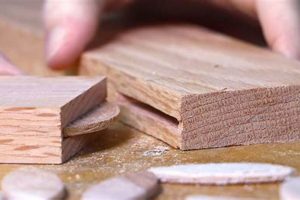
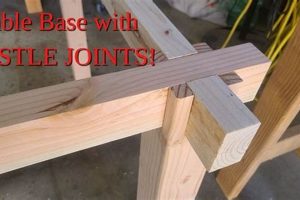
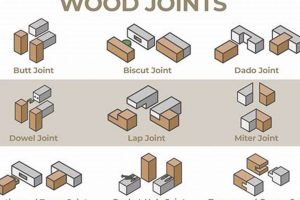
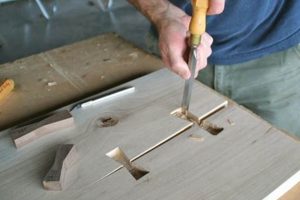
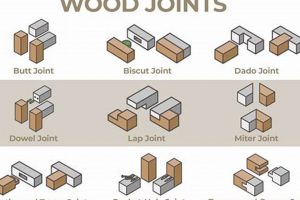
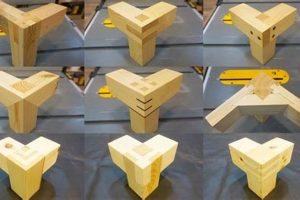
A connection between two or more pieces of wood, achieved through various techniques, forms the backbone of virtually all wooden constructions. These connections range from simple abutments to complex interlocking structures, each designed to serve specific purposes in terms of strength, appearance, and ease of assembly. A basic example is the butt joint, where two pieces are simply placed end-to-end and fastened together; however, more sophisticated methods like mortise and tenon, dovetail, or miter joints offer significantly improved durability and aesthetic appeal.
The integrity of any wooden object relies heavily on the quality and suitability of its interconnecting elements. Well-executed construction translates to longevity and stability in furniture, buildings, and other wooden creations. Historically, mastery of these techniques was a fundamental skill for carpenters and craftspeople, with certain methods evolving over centuries to become hallmarks of particular styles or regional traditions. The selection of appropriate construction methods contributes significantly to the overall value and aesthetic of the finished piece.
This discussion will explore a selection of common and specialized methods, examining their characteristic features, relative strengths and weaknesses, and typical applications across a range of projects. The information aims to provide a foundational understanding of these vital elements in woodworking, guiding the selection of the most appropriate technique for a given design and functional requirement.
Essential Considerations for Secure Wood Connections
Achieving strong and aesthetically pleasing wooden constructions demands careful consideration of several key factors. The following guidelines address critical aspects of selecting and executing appropriate connection methods.
Tip 1: Material Compatibility: Assess the wood species being joined. Softer woods require larger surface areas for adhesive bonding and may benefit from reinforcement with mechanical fasteners in high-stress applications. Harder woods may require more precise cuts for interlocking joints.
Tip 2: Load Assessment: Analyze the intended load-bearing capacity of the structure. Joints subjected to significant tensile or shear forces necessitate robust methods such as mortise and tenon or dovetail joints. Simpler joints may suffice for purely decorative elements.
Tip 3: Environmental Factors: Consider the environment in which the finished piece will reside. Exposure to moisture or extreme temperature fluctuations can weaken some joints. Select methods and adhesives appropriate for the expected environmental conditions.
Tip 4: Precision in Execution: Accurate cuts and careful assembly are crucial for achieving strong and visually appealing results. Sloppy or misaligned joinery compromises structural integrity and detracts from the finished appearance. Use appropriate measuring tools and clamping systems.
Tip 5: Adhesive Selection: Choose adhesives specifically designed for woodworking applications. Different adhesives offer varying degrees of strength, water resistance, and open time. Follow manufacturer recommendations for surface preparation and application techniques.
Tip 6: Reinforcement Techniques: Augment adhesive bonding with mechanical fasteners such as screws, nails, or dowels, particularly in situations where the joint is subjected to high stress. Ensure fasteners are appropriately sized and spaced to prevent splitting or weakening of the wood.
Tip 7: Consider Joint Geometry: The geometry of the selected joint influences its overall strength and stability. For example, angled joints, such as miter joints, are inherently weaker than square joints and may require additional reinforcement.
Careful planning and precise execution are paramount when creating robust structures. By attending to these considerations, a long-lasting and aesthetically pleasing project can be produced.
The subsequent sections will elaborate on the implementation of these guiding principles, applying them to specific techniques and designs.
1. Strength and Durability

The capacity of a wooden structure to withstand applied forces and maintain its integrity over time is fundamentally determined by the construction methods employed. Selection of a technique directly impacts the structure’s resistance to stress, deformation, and eventual failure. The appropriate method is vital for ensuring longevity and safety.
- Surface Area and Glue Adhesion
A larger bonding surface promotes enhanced stability. Techniques like mortise and tenon or dovetail, which feature extensive contact, yield greater strength than simple butt. Glue plays a crucial role, and a larger surface provides better adhesion, resisting separation under stress. Structures relying on larger surface joints tend to exhibit superior resilience, reducing the risk of joint failure and extending the lifespan of the assembly.
- Mechanical Interlock
Interlocking, as seen in dovetail or finger joints, offers resistance to tensile forces without solely relying on adhesive strength. The physical engagement of wood fibers creates a robust connection that resists pulling forces. This is particularly valuable in situations where the structure is subjected to dynamic loads or environmental conditions that might compromise adhesive bonds. Mechanical interlocking increases the joint’s overall durability.
- Fastener Integration
Screws, nails, or dowels offer supplementary reinforcement. These mechanical fasteners augment the strength of glued connections, mitigating the risk of failure under extreme stress. The choice of fastener size, material, and spacing is crucial in optimizing its contribution to overall joint strength. Properly integrated fasteners can significantly enhance durability, especially in applications requiring resistance to shear or racking forces.
- Wood Grain Orientation
Orienting grain strategically strengthens joints. Aligning the grain direction of adjacent pieces to resist anticipated stresses prevents splitting or shearing. Paying attention to grain direction when selecting methods orients wood fibers to maximize resistance, resulting in a more robust and long-lasting structure. This consideration is particularly relevant in applications where the structure is subjected to significant bending or torsional forces.
The interplay of surface area, mechanical interlocking, fastener integration, and grain orientation defines the capabilities of wooden constructions. A comprehensive approach considering each facet maximizes resistance to forces, which in turn leads to an improved construction. The deliberate selection of connection methods, informed by a thorough understanding of these elements, leads to outcomes that are both structurally sound and enduring.
2. Aesthetic Integration

The visual impact of woodworking hinges significantly on how effectively connecting elements are integrated into the overall design. These elements are not merely structural necessities but contribute substantially to the aesthetic harmony and visual appeal of the finished piece. The selection and execution of these methods directly influence the perception and appreciation of the crafted object.
- Joint Visibility and Concealment
Some designs benefit from prominent displays of joinery, showcasing the craftsmanship involved. Others require subtle or entirely concealed methods to maintain a clean, uninterrupted surface. For example, dovetail techniques, with their interlocking fingers, are often intentionally exposed as a decorative element. Conversely, a miter joint, when executed precisely, creates a seamless corner that minimizes the visual presence of the connection. The decision to reveal or conceal directly impacts the style and perceived quality of the finished work.
- Flushness and Surface Continuity
Achieving a smooth, uninterrupted surface is often a key objective in woodworking. Methods that allow for precise alignment and minimize protrusions or gaps are essential. Techniques like the mortise and tenon, when properly fitted, can create a perfectly flush connection. The ability to maintain surface continuity is crucial for both aesthetic appeal and functional considerations, such as ease of cleaning or preventing snagging of clothing. The level of precision achieved contributes to the overall refinement and perceived value of the finished object.
- Decorative Embellishments
Construction methods can be embellished to enhance their visual impact, transforming them into decorative features. Inlays, carvings, or contrasting wood species can be incorporated into joints to create visually striking details. For instance, a simple butt method can be elevated by adding decorative plugs or splines that not only reinforce the joint but also introduce visual interest. The integration of decorative elements transforms functional necessities into opportunities for artistic expression, adding a layer of sophistication and visual complexity.
- Style and Period Consistency
Different construction methods are associated with specific historical periods and styles. The selection of a particular technique can contribute to the authenticity and coherence of a design. For example, certain types of dovetails are characteristic of specific furniture styles, and their use can enhance the overall aesthetic integrity of a reproduction piece. Maintaining stylistic consistency demonstrates attention to detail and elevates the perceived value of the finished work by situating it within a specific historical or design context.
In summary, the careful consideration of visibility, flushness, embellishment, and stylistic consistency in interconnecting elements elevates woodworking from mere construction to an art form. The techniques employed are integral to the overall aesthetic and contribute significantly to the perceived quality, value, and visual appeal of the finished piece.
3. Complexity of Execution

The intricacy involved in creating interconnecting elements varies significantly across different woodworking techniques. This variance impacts the time required, the skill level needed, and the tooling necessary to achieve a successful result. Understanding the execution complexity of each method is crucial for project planning and ensuring a high-quality finished product.
- Tooling Requirements
Certain methods demand specialized tools, increasing the initial investment and skill set required. A simple butt method can be achieved with basic saws and fasteners, while dovetails might necessitate precise chisels, dovetail saws, and marking gauges. The availability and proficiency in using these tools directly influence the feasibility and efficiency of constructing a specific structure. Mastering specialized equipment contributes significantly to the ability to execute complex methods effectively.
- Precision and Accuracy
The level of precision needed for proper integration directly impacts the structural integrity and visual appeal. A mortise and tenon, for instance, requires precise measurements and cuts to ensure a snug fit, preventing racking or instability. In contrast, a lap technique offers more forgiveness in terms of accuracy. The ability to achieve and maintain tight tolerances is vital for creating strong, aesthetically pleasing, and structurally sound structures. Meticulous attention to detail ensures the long-term performance and value of the finished piece.
- Time Investment
The time required for completing connecting elements differs widely among various methods. A straightforward screw attachment is quick and efficient, whereas hand-cut dovetails are labor-intensive and demand considerable time. The time investment is a critical factor in project planning, influencing the overall cost and feasibility. Balancing the desired structural and aesthetic qualities with time constraints is essential for effective project management and efficient use of resources.
- Skill Level and Experience
The expertise necessary to execute different methods varies according to the intricacy of the technique. Basic methods such as butt or lap can be mastered by beginners, while more advanced techniques like compound miter or dovetail demand significant practice and skill. The level of experience directly affects the quality of the completed work, impacting both the structural integrity and the aesthetic appeal. Skill development is a continuous process, and mastering progressively complex techniques expands the possibilities for creative expression and refined craftsmanship.
In conclusion, the complexity significantly influences the practicality and outcome of woodworking projects. Balancing tooling needs, precision requirements, time constraints, and skill level is key to selecting the most appropriate methods and achieving a structurally sound and visually appealing finished product. A thorough understanding of these factors enables woodworkers to make informed decisions, optimizing both the efficiency and the quality of their work.
4. Material Compatibility
The selection of appropriate connecting methods in woodworking is inextricably linked to the physical properties of the materials being joined. Material compatibility, therefore, becomes a paramount consideration, impacting the strength, longevity, and overall integrity of the assembled structure. The mechanical and chemical characteristics of different wood species necessitate a nuanced approach to technique selection.
- Hardwood versus Softwood Considerations
Hardwoods, characterized by their density and tight grain structure, often require methods that maximize surface area for adhesive bonding due to their resistance to glue penetration. Conversely, softwoods, being more porous, readily absorb adhesives, allowing for simpler methods to achieve adequate bond strength. The differing densities also influence the holding power of mechanical fasteners; hardwoods can withstand greater torque from screws, while softwoods may require pre-drilling to prevent splitting.
- Moisture Content and Wood Movement
Differential moisture content between joined pieces can induce stress and subsequent failure. Wood expands and contracts with changes in humidity, and incompatible combinations can lead to warping, cracking, or joint separation. Understanding the expected moisture content of the environment and selecting methods that accommodate wood movement, such as floating tenons or expansion gaps, is crucial for long-term stability.
- Wood Grain Orientation and Strength
The orientation of wood grain significantly impacts a joint’s resistance to stress. End-grain connections, where the fibers run perpendicular to the joining surface, are inherently weaker due to limited surface area for adhesive bonding and the propensity for splitting. Therefore, methods that maximize long-grain contact, such as mortise and tenon or dovetail, are preferred for applications requiring high tensile strength. Careful consideration of grain direction optimizes load-bearing capacity.
- Chemical Compatibility with Adhesives
Certain wood species contain extractives that can interfere with the curing process of some adhesives. For example, oily woods like teak or rosewood may require surface preparation with solvents to remove oils that inhibit bonding. Selecting adhesives specifically formulated for use with particular wood species ensures optimal bond strength and prevents premature joint failure. Following adhesive manufacturer recommendations is essential for achieving reliable and durable connections.
The successful application of construction methods hinges on a thorough understanding of the material properties of the selected wood. Recognizing the interplay between hardwood/softwood characteristics, moisture content, grain orientation, and adhesive compatibility is critical for creating robust, long-lasting structures.
5. Application Specificity

The selection of appropriate joining methods is fundamentally dictated by the intended use and functional requirements of the wooden assembly. Application specificity ensures that the method employed provides adequate strength, stability, and aesthetic appeal for the intended purpose. The structural demands, environmental conditions, and visual expectations of a project must guide the selection process.
- Furniture Construction
Furniture design necessitates a balance between structural integrity and aesthetic considerations. Load-bearing components, such as legs and rails, often employ mortise and tenon or dovetail methods to withstand stress and maintain stability. Decorative elements, such as drawer fronts or cabinet doors, may utilize simpler miter joints or rabbet joints where visual appeal takes precedence. The specific application dictates the method chosen to achieve the desired combination of strength and visual refinement.
- Cabinetry and Millwork
Cabinetry requires precise and durable methods to ensure long-term functionality and aesthetic consistency. Frame-and-panel construction, often employing cope-and-stick or mortise-and-tenon joints, allows for dimensional stability and accommodates wood movement. Drawer construction frequently utilizes dovetail joints for strength and durability. The selection of appropriate methods ensures the structural integrity and visual appeal of cabinetry, while also accounting for the effects of humidity and temperature fluctuations.
- Structural Framing
Structural framing, such as timber framing or post-and-beam construction, demands robust methods capable of withstanding significant loads and environmental stresses. Traditional methods like mortise and tenon joints, secured with wooden pegs, provide exceptional strength and durability. The scale of the project and the forces involved necessitate methods that can withstand tension, compression, and shear forces. The chosen method must ensure structural stability and longevity, often requiring meticulous planning and precise execution.
- Outdoor Applications
Wooden structures exposed to the elements require methods that are resistant to moisture, decay, and insect infestation. Techniques that minimize water penetration and promote drainage are essential. Pressure-treated lumber and weather-resistant adhesives are often used in conjunction with methods like lap joints or tongue-and-groove joints to create durable and long-lasting outdoor structures. The application-specific requirements of outdoor construction necessitate careful consideration of materials and methods to ensure resistance to environmental degradation.
The diverse requirements of woodworking projects necessitate a nuanced approach to method selection. The appropriate method is determined by a combination of factors, including structural demands, aesthetic considerations, environmental conditions, and material properties. A thorough understanding of these application-specific requirements ensures the creation of wooden structures that are both functional and aesthetically pleasing.
Frequently Asked Questions About Woodworking Joints
This section addresses common inquiries regarding the selection, application, and properties of various woodworking construction methods. The following questions and answers aim to clarify fundamental concepts and provide practical guidance.
Question 1: What factors determine the strength of a construction method?
The strength of a wooden connecting element is influenced by several factors, including the surface area available for adhesive bonding, the degree of mechanical interlocking, the type and placement of fasteners, and the orientation of the wood grain relative to applied forces.
Question 2: How does one choose the appropriate construction method for a project?
The selection of a connecting element depends on the intended application, the expected loads, the material properties of the wood, aesthetic considerations, and the available tools and skills. A thorough assessment of these factors is crucial for making an informed decision.
Question 3: What are the advantages and disadvantages of using mechanical fasteners, such as screws or nails, in conjunction with adhesive?
Mechanical fasteners provide immediate holding power and reinforce the bond, particularly in situations where the adhesive may be slow to cure or subject to high stress. However, over-reliance on fasteners can compromise the adhesive bond and may not provide the same long-term durability as a well-executed construction element.
Question 4: How does wood movement affect structures and what steps can be taken to mitigate its effects?
Wood expands and contracts with changes in moisture content, which can cause stress and failure. To mitigate these effects, one should select methods that allow for movement, such as floating tenons or expansion gaps. It is also important to acclimate the wood to its final environment before assembly.
Question 5: Is it possible to achieve adequate strength with simpler methods, or are complex interlocking elements always necessary?
Simpler connecting elements, such as butt, can be adequate for certain applications, particularly when reinforced with adhesives and fasteners. However, for load-bearing structures or those subjected to significant stress, more complex interlocking elements, such as mortise and tenon or dovetail, are generally preferred.
Question 6: What are some common mistakes to avoid when creating joints?
Common mistakes include inaccurate measurements, poorly fitted joints, inadequate adhesive application, improper fastener placement, and failure to account for wood movement. Attention to detail and adherence to best practices are crucial for avoiding these errors.
In summary, the effective application of woodworking techniques relies on a thorough understanding of their individual strengths, limitations, and appropriate uses. Careful planning, precise execution, and attention to detail are essential for creating strong, durable, and aesthetically pleasing wooden structures.
The following section will delve into specific examples of common and specialized methods, providing detailed instructions and practical tips for their execution.
Conclusion
The preceding exploration of different types of joints woodwork underscores the critical role these techniques play in determining the structural integrity, aesthetic appeal, and longevity of wooden constructions. From simple butt joints to intricate dovetail arrangements, each method presents a unique balance of strength, complexity, and visual impact. The careful selection and precise execution of these techniques remain fundamental skills for woodworkers across diverse applications, from furniture making to structural framing.
Continued study and practical application of these methods are encouraged to ensure the preservation of traditional woodworking skills and the advancement of innovative solutions in contemporary design. The enduring significance of robust and aesthetically pleasing connections warrants a commitment to excellence in both craftsmanship and knowledge within the field.