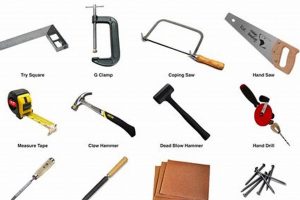
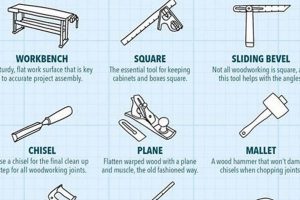
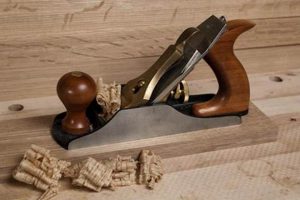
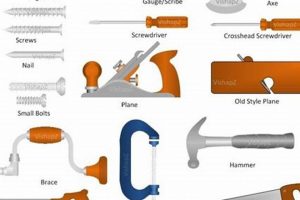
A dedicated surface designed to facilitate the use of manual implements in shaping wood forms the cornerstone of traditional woodworking practices. This structure typically features a robust build, often incorporating vises and holdfasts, to securely clamp workpieces during operations like sawing, planing, and joinery. For example, a craftsman might utilize a substantial, flat-topped platform equipped with a leg vise to precisely plane a board intended for furniture construction.
The presence of such a dedicated workstation allows for enhanced precision, stability, and control compared to working on makeshift surfaces. This directly translates to improved project outcomes and reduced risk of errors. Historically, these specialized work surfaces have served as central hubs for artisans, fostering skill development and enabling the creation of intricate and durable wooden artifacts. Their enduring utility underscores their continued relevance in both professional and amateur woodworking settings.
The subsequent sections will delve into the key characteristics that define these essential work surfaces, examining various design considerations, construction techniques, and the selection criteria for optimal performance. Furthermore, an exploration of essential accessories and maintenance procedures will provide a complete understanding of their role in hand tool-based woodworking.
Optimizing Work Practices
Effective utilization greatly enhances the efficiency and quality of hand tool woodworking. The following recommendations are presented to maximize its potential and ensure consistent, professional results.
Tip 1: Prioritize Stability. Ensure the structure is positioned on a level surface and is free from wobble. Shimming legs, if necessary, prevents unwanted movement that can compromise accuracy during demanding tasks like dovetailing.
Tip 2: Employ Appropriate Clamping Mechanisms. The selection of a vise or holdfast should align with the workpiece’s dimensions and the operation being performed. A face vise with sufficient jaw width is crucial for securing wider boards during planing, while holdfasts excel at quickly clamping pieces to the surface.
Tip 3: Implement Proper Tool Storage. Integrated tool storage, such as drawers or racks, promotes organization and accessibility. Storing frequently used tools within arm’s reach reduces workflow interruptions and minimizes the risk of misplaced items.
Tip 4: Maintain a Clean Work Surface. Regularly remove shavings and debris to prevent obstruction and maintain clear visibility of the workpiece. A dedicated brush and dustpan kept nearby will facilitate quick and efficient cleanup.
Tip 5: Optimize Lighting Conditions. Adequate and direct illumination is essential for precision work. Position a lamp or utilize natural light to minimize shadows and improve visibility of fine details, particularly when executing intricate joinery.
Tip 6: Consider Ergonomics. Adjust the height of the structure to a comfortable working level. Prolonged work at an improper height can lead to fatigue and musculoskeletal strain. A suitable height allows for a neutral posture and efficient use of body mechanics.
Effective implementation of these techniques cultivates a more streamlined and accurate woodworking experience. By focusing on stability, organization, and ergonomic considerations, woodworkers can maximize the benefits offered and consistently produce high-quality results.
With these optimization strategies in mind, the next section will provide guidance on selecting suitable accessories to further enhance the capabilities of hand tool-based woodworking practices.
1. Stability

Stability is a foundational requirement for any platform intended for hand tool woodworking. Without a solid and unwavering base, the precision and control necessary for accurate woodworking become severely compromised, leading to errors and potential safety hazards. The intrinsic link between stability and the quality of the finished product necessitates a thorough understanding of its contributing factors.
- Mass and Rigidity
A heavier and more rigid construction inherently resists movement and vibration. The overall mass dampens vibrations generated during sawing or planing, contributing to cleaner cuts and more controlled material removal. A bench constructed from dense hardwoods, such as maple or beech, demonstrates this principle effectively. In contrast, a lightweight or flexible structure will amplify vibrations, making precise work exceptionally challenging.
- Leg Joinery and Structure
The method by which the legs are connected to the top is critical for overall stability. Mortise and tenon joints, properly executed and reinforced, provide superior strength and resistance to racking compared to simple screw attachments. The inclusion of stretchers connecting the legs further enhances rigidity and prevents the bench from swaying. The design of the leg structure is, therefore, a primary determinant of its capacity to withstand lateral forces.
- Footing and Ground Contact
Even a well-constructed structure will exhibit instability if it lacks adequate contact with the floor. Uneven flooring necessitates the use of shims to ensure that all four legs bear weight evenly. Failure to address this issue results in a rocking motion that disrupts the woodworking process. Broad, flat feet distribute the load and minimize the risk of sinking into softer floor surfaces, contributing to a more stable working platform.
- Clamping System Integration
The integration of vises and holdfasts, while primarily intended for securing workpieces, also contributes to overall stability. A properly installed vise, firmly anchored to the bench structure, can add significant weight and resistance to movement. Furthermore, the act of clamping a workpiece to the bench effectively couples the two, increasing the combined mass and further reducing vibration. The positioning and design of these clamping mechanisms, therefore, play a dual role in both workholding and stabilization.
In summation, stability is not a singular attribute but rather a composite of multiple design and construction considerations. The combined effect of mass, rigid joinery, secure footing, and integrated clamping systems dictates the overall suitability for hand tool woodworking. A workstation lacking in any of these aspects will inevitably compromise the accuracy and efficiency of woodworking operations, highlighting the indispensable nature of stability in these endeavors.
2. Clamping Versatility
The adaptability of a woodworking surface to accommodate diverse workpiece geometries and securing methods constitutes a crucial element of its overall utility. This attribute, often termed clamping versatility, directly impacts the range of projects that can be undertaken and the efficiency with which they can be executed.
- Vise Configurations
The inclusion of multiple vise typessuch as face vises, tail vises, and leg visesexpands the range of workholding options. A face vise provides secure clamping along the front edge of the workbench, suitable for general-purpose tasks like planing and shaping. A tail vise, typically used in conjunction with bench dogs, allows for clamping boards along their length. A leg vise offers exceptional clamping force for large or unwieldy workpieces. The presence of a variety of vise options ensures the ability to adapt to different project requirements.
- Bench Dog Systems
Bench dogs, used in conjunction with a tail vise or dog holes drilled directly into the surface, provide a flexible system for securing workpieces of varying sizes and shapes. The ability to position dogs strategically allows for clamping along edges, across faces, or at angles, enabling the execution of complex joinery and shaping operations. The spacing and arrangement of dog holes directly influence the system’s adaptability.
- Holdfast Compatibility
Holdfasts offer a quick and efficient means of clamping workpieces directly to the surface. These forged steel clamps rely on friction to hold work in place, allowing for rapid adjustments and repositioning. The presence of appropriately sized dog holes or recesses is essential for accommodating holdfasts, enabling the secure clamping of oddly shaped or delicate items without the need for complex vise setups.
- Custom Clamping Jigs
The adaptability of a woodworking platform extends to its capacity to accommodate custom-built clamping jigs. The ability to attach jigs securely to the surface, either through pre-drilled holes or integrated clamping mechanisms, enables the execution of specialized tasks. Examples include jigs for cutting dovetails, shaping curves, or assembling complex structures. The ease with which custom clamping solutions can be implemented directly enhances the workbench’s versatility.
The aforementioned facets of clamping versatility collectively determine the functional capacity of a woodworking surface. A platform equipped with a diverse range of clamping options empowers the craftsman to tackle a wider array of projects with greater efficiency and precision, solidifying the symbiotic relationship between hand tool woodworking and well-considered workholding solutions.
3. Work surface

The work surface is the defining characteristic of a hand tool woodworking bench. It is the area upon which all manual woodworking operations occur, and its qualities directly influence the precision, efficiency, and overall quality of the work produced. The work surface must exhibit flatness, stability, and durability to effectively support a range of woodworking tasks. For example, a warped or uneven surface will impede the accurate planing of a board, rendering precise material removal impossible. The absence of a suitable work surface negates the purpose of the entire structure, making it merely a table rather than a functional woodworking station.
Specific attributes of the work surface contribute to its functional utility. A robust, dense material, such as a hardwood like maple or beech, provides the necessary stability and resistance to wear. The surface must be capable of withstanding repeated impacts from mallets and other tools without sustaining significant damage. Furthermore, features like dog holes, strategically positioned across the surface, facilitate the use of bench dogs and other clamping mechanisms, enabling secure workholding for various operations. A practical illustration is the use of dog holes in conjunction with a tail vise to clamp a long board for edge jointing, ensuring a straight and accurate glue line.
In conclusion, the work surface is not simply a passive component of a hand tool woodworking bench; it is the active interface between the craftsman and the material. Its characteristics dictate the achievable level of precision and control. Addressing challenges such as surface wear, maintaining flatness, and optimizing workholding features are paramount to maximizing the effectiveness of manual woodworking. The quality of the work surface is inextricably linked to the success of any hand tool woodworking endeavor, and its proper design and maintenance are crucial for achieving professional results.
4. Tool Accessibility

The ergonomic layout and storage solutions integrated into a manual woodworking station are critical for optimizing workflow and minimizing wasted time. Tool accessibility, therefore, is not merely a matter of convenience, but a significant factor impacting efficiency and precision.
- Integrated Tool Storage
Drawers, shelves, and racks built directly into the woodworking station provide dedicated locations for specific tools. This organization allows for quick retrieval and reduces the time spent searching for implements. For instance, having a dedicated drawer for chisels, each in its own protective sleeve, ensures immediate access and minimizes the risk of damage.
- Proximity and Placement
The strategic placement of frequently used tools within arm’s reach of the primary work area minimizes unnecessary movement and interruptions. Mounting a magnetic strip above the bench for holding saws or chisels allows for immediate access during operations requiring frequent tool changes. This proximity reduces physical strain and allows for a more fluid workflow.
- Tool Organization Systems
Implementing a consistent system for tool organization, such as using labeled drawers or shadow boards, ensures that tools are always returned to their designated locations. This reduces the time spent searching and prevents tools from being misplaced. A well-organized system fosters a more efficient and productive working environment.
- Specialized Tool Holders
Custom-designed tool holders tailored to specific implements provide secure storage and easy access. A rack designed to hold hand planes vertically protects the blades from damage and allows for quick selection. Specialized holders promote tool longevity and enhance the overall organization of the workspace.
The aforementioned elements of tool accessibility coalesce to form a working environment conducive to efficient and precise hand tool woodworking. A station lacking these features introduces unnecessary delays and increases the risk of errors, highlighting the importance of careful planning and implementation of effective tool storage solutions. The thoughtful organization inherent in the manual woodworking station directly supports the execution of high-quality projects.
5. Ergonomic Height

The vertical positioning of a manual woodworking station relative to the user is a critical determinant of comfort, efficiency, and long-term musculoskeletal health. Establishing an ergonomic height is paramount for optimizing the woodworking experience and minimizing the risk of injury associated with prolonged manual labor.
- Reducing Back Strain
An appropriately elevated work surface minimizes the need for excessive bending or stooping during tasks such as planing or sawing. By maintaining a more upright posture, the load on the lumbar spine is reduced, mitigating the risk of back pain and chronic musculoskeletal disorders. For example, a station that is too low necessitates constant bending, placing undue stress on the lower back muscles, while one that is too high can cause shoulder and neck strain.
- Optimizing Shoulder and Arm Positioning
The height of the workbench should allow the user to work with their elbows bent at approximately 90 degrees, promoting a neutral shoulder position. This reduces the strain on the shoulder and arm muscles, minimizing the risk of repetitive strain injuries such as tendinitis. Proper positioning enables efficient transfer of force during operations like chiseling, reducing fatigue and improving control.
- Enhancing Force Application
An ergonomically appropriate height facilitates the effective application of force during manual operations. A surface that is too low compromises leverage, requiring greater exertion to achieve the desired result. Conversely, a surface that is too high reduces control and accuracy. Optimal height allows the user to apply force efficiently, minimizing fatigue and maximizing precision.
- Promoting Long-Term Musculoskeletal Health
Sustained work at an inappropriate height can lead to chronic musculoskeletal problems, including carpal tunnel syndrome, rotator cuff injuries, and spinal disc degeneration. By prioritizing ergonomic considerations in the design and setup of the woodworking station, these long-term health risks can be significantly reduced, enabling a more sustainable and enjoyable woodworking practice. Regular adjustment of the bench height, if possible, also contributes to preventing repetitive stress injuries.
These considerations underscore the critical role of ergonomic height in the design and utilization of a manual woodworking station. By addressing these factors, woodworkers can optimize their working environment, promoting comfort, efficiency, and long-term health, ensuring that the focus remains on the craft rather than physical discomfort.
6. Durability
The lifespan and functional integrity of a hand tool woodworking bench are directly proportional to its durability. This characteristic is paramount, as a robust structure must withstand the rigors of repetitive impact, heavy loads, and prolonged use to provide a reliable and stable platform for precision woodworking.
- Material Selection and Impact Resistance
The choice of materials fundamentally dictates the resistance to deformation and wear. Dense hardwoods, such as maple, beech, and oak, are favored for their capacity to endure repeated blows from mallets and other hand tools without splintering or cracking. Conversely, softer woods are prone to denting and degradation, compromising the surface flatness and overall structural integrity. A bench crafted from kiln-dried, properly seasoned hardwood demonstrates superior impact resistance and long-term stability.
- Joint Integrity and Structural Stability
The method by which the components are joined determines the bench’s ability to withstand racking and deformation under load. Robust joinery techniques, such as mortise and tenon joints reinforced with wedging or drawboring, provide exceptional strength and resistance to movement. Weak or poorly executed joints are susceptible to loosening over time, leading to instability and a reduction in overall functionality. A well-constructed bench with properly executed joinery maintains its structural integrity even under heavy use.
- Surface Treatment and Protection
The application of a durable finish, such as oil or varnish, protects the wood from moisture, abrasion, and chemical damage. A properly applied finish seals the pores of the wood, preventing it from absorbing moisture that can cause warping or swelling. Furthermore, it provides a protective layer against scratches and stains, preserving the aesthetic appearance and extending the service life. Regular maintenance and reapplication of the finish are essential for preserving the durability of the work surface.
- Hardware Quality and Corrosion Resistance
The quality of the hardware used in the construction of a hand tool woodworking bench, including vises, holdfasts, and fasteners, directly impacts its long-term durability. High-quality steel hardware resists corrosion and wear, ensuring reliable performance over time. Inferior hardware is prone to rusting, bending, or breaking, compromising the functionality of the bench. Regular inspection and maintenance of hardware are essential for ensuring its continued reliability.
In conclusion, the durability of a manual woodworking platform is a composite characteristic derived from material selection, joinery techniques, surface treatment, and hardware quality. A thoughtfully designed and meticulously constructed bench, utilizing durable materials and sound construction principles, provides a stable and reliable platform for precision woodworking for generations. The investment in durability translates to a long-lasting and functional tool that enhances the woodworking experience and contributes to the creation of high-quality projects.
Frequently Asked Questions
The following section addresses common inquiries regarding manual woodworking stations, providing concise and informative responses to facilitate understanding and informed decision-making.
Question 1: What are the key features to consider when selecting a manual woodworking platform?
Essential considerations include stability, clamping versatility, a flat and durable work surface, accessible tool storage, and an ergonomic height tailored to the user. Material quality and construction methods are also paramount for long-term durability.
Question 2: Why is stability so important in a hand tool woodworking bench?
Stability is crucial for precision and safety. Movement or vibration during operations like sawing or planing can compromise accuracy and increase the risk of injury. A stable platform provides a solid foundation for controlled and precise work.
Question 3: What is the ideal height for a hand tool woodworking surface?
The optimal height allows for comfortable work with elbows bent at approximately 90 degrees. This minimizes strain on the back, shoulders, and arms, promoting a neutral posture and reducing the risk of repetitive strain injuries.
Question 4: What types of wood are best suited for constructing a manual woodworking surface?
Dense hardwoods such as maple, beech, and oak are preferred due to their strength, durability, and resistance to wear. These materials provide a stable and long-lasting work surface capable of withstanding the rigors of manual woodworking.
Question 5: How does tool accessibility impact the efficiency of manual woodworking?
Integrated tool storage and strategic placement of implements within arm’s reach minimize wasted time and interruptions. This promotes a more fluid workflow, enhancing efficiency and reducing the risk of errors.
Question 6: What are the essential maintenance tasks for preserving the longevity of a hand tool woodworking bench?
Regular cleaning, application of a protective finish, and inspection of joinery and hardware are essential. Addressing minor repairs promptly prevents more significant problems and extends the lifespan of the bench.
These frequently asked questions provide a foundational understanding of critical considerations related to the utilization and maintenance of manual woodworking stations. Prioritizing these aspects ensures a more productive, accurate, and enjoyable woodworking experience.
The following section will summarize the key elements discussed in this guide to reinforce the importance of a well-designed and properly maintained hand tool woodworking bench.
Conclusion
This exploration has underscored the critical role of the hand tool woodworking bench in traditional woodworking practices. Its stability, clamping versatility, durable work surface, tool accessibility, and ergonomic height are not merely desirable features, but essential components for accurate and efficient craftsmanship. The selection of appropriate materials, robust construction techniques, and consistent maintenance procedures directly influence the longevity and functional utility of this indispensable workstation.
Therefore, a deliberate and informed approach to selecting, constructing, and maintaining a suitable platform is paramount for serious woodworking endeavors. The investment in a quality hand tool woodworking bench translates directly into enhanced project outcomes, improved working conditions, and a sustained connection to the enduring traditions of hand tool woodworking.