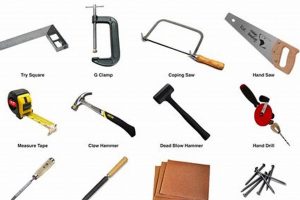
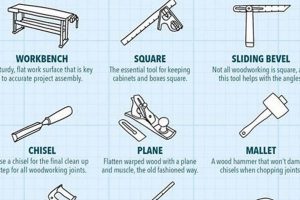
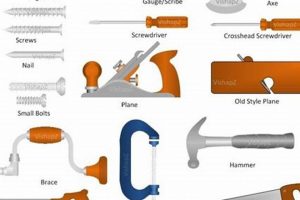
Woodworking endeavors undertaken with manual implements, tailored for individuals new to the craft, represent an accessible entry point into a rewarding hobby. Examples include crafting a simple wooden box, constructing a small cutting board, or assembling a basic birdhouse using tools such as saws, chisels, and hand planes. These initial projects emphasize fundamental techniques and material familiarization.
The advantages of starting with this approach are numerous. It fosters a deeper understanding of wood properties and tool functionality. This method encourages precision and patience, cultivates problem-solving skills, and promotes a connection to traditional craftsmanship. Historically, woodworking was predominantly a manual skill, and engaging with it in this way honors that legacy while offering a tactile and meditative experience.
This article will explore suitable starter projects, essential tools for getting started, crucial techniques for success, and valuable resources to support the learning process, ultimately providing a foundation for further exploration of woodworking arts.
Essential Guidance for Novice Woodworkers
Adhering to best practices ensures both successful project completion and personal safety. Prioritize meticulous planning and diligent execution.
Tip 1: Secure Workpiece Fixation: Employ vises, clamps, or other appropriate holding devices to stabilize the material being worked. Unsecured work can lead to inaccuracies and potentially dangerous slips.
Tip 2: Tool Sharpness is Paramount: Dull tools require excessive force, increasing the risk of injury and producing subpar results. Regularly hone and sharpen cutting edges.
Tip 3: Grain Direction Awareness: Wood grain significantly influences cutting ease and final finish. Understand grain direction to prevent splintering and tear-out during planing or chiseling.
Tip 4: Layout and Marking Accuracy: Precise measurements and clear markings are critical. Utilize sharp pencils, marking gauges, and reliable measuring tools to ensure accuracy.
Tip 5: Gradual Material Removal: Avoid attempting to remove excessive material at once. Take shallow cuts and passes to maintain control and achieve desired dimensions accurately.
Tip 6: Practice Proper Stance and Posture: Maintain a stable stance and ergonomic posture to minimize fatigue and prevent injury during extended work periods.
Tip 7: Prioritize Safety Equipment: Wear appropriate safety gear, including eye protection, hearing protection, and a dust mask, at all times. Create a safe and well-ventilated workspace.
Mastering fundamental techniques and observing safety protocols are crucial for a satisfying and secure woodworking experience. These principles lay the groundwork for increasingly complex projects.
The subsequent sections will delve into specific project ideas suitable for building foundational skills and confidence in woodworking.
1. Project Selection
The selection of an appropriate project directly influences the success and learning experience within manually executed woodworking for beginners. The complexity of the chosen project dictates the specific skills required and the potential for early frustration or accomplishment. A poorly chosen, overly ambitious project can lead to discouragement and abandonment of the craft, while a thoughtfully selected project provides a platform for skill development and builds confidence.
For instance, constructing a small, square wooden box with simple butt joints presents a manageable introduction to sawing, chiseling, and gluing. This offers the opportunity to practice straight cuts, square corners, and accurate assembly. Conversely, attempting a dovetail-joined drawer without prior experience introduces a high degree of difficulty, potentially resulting in inaccurate joinery and a negative learning outcome. Therefore, initial projects should prioritize simplicity in design and construction, allowing the beginner to focus on mastering fundamental techniques.
In summary, judicious project selection is not merely a matter of choosing a desirable end product. It is a critical element in fostering a positive and effective learning environment. By starting with simple, well-defined projects, novice woodworkers can progressively build skills and confidence, establishing a solid foundation for more complex woodworking endeavors. This controlled progression mitigates the risk of discouragement and promotes a sustainable engagement with the craft.
2. Tool Acquisition

The acquisition of appropriate tools is a fundamental prerequisite for undertaking manually executed woodworking projects intended for beginners. The selection and quality of these implements directly affect the ease of learning and the final outcome of the initial projects. A well-chosen set of tools can facilitate the development of essential skills, while inadequate or inappropriate equipment can hinder progress and lead to frustration.
- Essential Hand Saws
The hand saw is indispensable for dimensioning and shaping lumber. A crosscut saw, designed for cutting against the wood grain, and a rip saw, optimized for cutting along the grain, are typically included in a beginner’s toolkit. The size and tooth configuration of these saws influence their cutting efficiency and suitability for specific wood types and thicknesses. Poorly sharpened or inappropriately sized saws can lead to inaccurate cuts and increased physical exertion.
- Sharpening Equipment
Maintaining sharp cutting edges on hand tools is crucial for effective and safe woodworking. Sharpening stones, honing guides, and strops are essential components of a tool sharpening setup. Dull tools require significantly more force to operate and increase the risk of slippage. A beginner’s ability to sharpen and maintain the sharpness of their tools directly impacts the quality of their work and their overall woodworking experience.
- Measuring and Marking Tools
Accurate measurement and precise marking are foundational to woodworking. A reliable measuring tape, a combination square, and a marking gauge are essential for laying out project dimensions and joinery details. The precision of these tools directly influences the accuracy of cuts and the fit of joints. Deficiencies in measuring and marking tools can lead to cumulative errors that compromise the integrity of the finished piece.
- Planes and Chisels
Hand planes are used for smoothing surfaces and achieving precise dimensions. A block plane and a smoothing plane are commonly included in a starter set. Chisels are employed for shaping wood and creating joinery. Bevel edge chisels are particularly versatile. The sharpness and quality of these tools determine the ease with which wood can be shaped and refined. Improperly sharpened or poorly made planes and chisels can result in tear-out and uneven surfaces.
The successful integration of these acquired tools into practical application defines the beginner’s trajectory in manually executed woodworking. Selecting the correct tools, maintaining them properly, and mastering their usage are vital for achieving satisfactory results and fostering a continued interest in the craft. The initial investment in quality tools and sharpening equipment often yields long-term benefits in terms of efficiency, accuracy, and overall enjoyment of woodworking.
3. Technique Mastery

Technique mastery forms the cornerstone of successful engagement with manually executed woodworking projects intended for novice practitioners. The attainment of proficiency in fundamental techniques directly influences the quality of the final product, the efficiency of the construction process, and the overall satisfaction derived from the craft. Improper execution of basic techniques can lead to inaccuracies, structural weaknesses, and an increased risk of injury. Conversely, the dedicated practice and refinement of core skills enables the creation of durable, aesthetically pleasing objects and fosters a deeper appreciation for the inherent properties of wood.
Consider the execution of a mortise and tenon joint, a fundamental element in numerous woodworking projects. A poorly executed mortise and tenon, characterized by inaccurate dimensions, loose fit, or misaligned components, compromises the structural integrity of the assembly. Stress concentrates at the weak points, leading to premature failure under load. However, a properly executed mortise and tenon joint, achieved through precise marking, careful chiseling, and meticulous fitting, distributes stress evenly and ensures the longevity of the piece. Similarly, the ability to accurately saw to a line is crucial for creating square corners and straight edges, essential for the overall appearance and functionality of woodworking projects. Skillful planing, another core technique, allows for the creation of smooth, flat surfaces, which are necessary for achieving a high-quality finish and proper adhesion of subsequent coatings.
In conclusion, technique mastery is not merely a desirable attribute, but rather an indispensable requirement for successful completion of woodworking projects involving hand tools. Focused attention on developing core skills, such as sawing, chiseling, planing, and joinery, yields tangible benefits in terms of product quality, efficiency, and safety. The pursuit of technique mastery is an ongoing process, demanding patience, persistence, and a commitment to continuous learning. It is this dedication to skill development that elevates woodworking from a simple hobby to a rewarding and fulfilling craft.
4. Material Understanding

In the realm of manually executed woodworking projects tailored for beginners, a comprehension of material properties is paramount. The selection of appropriate wood species and an awareness of their individual characteristics directly influence the ease of workability, the structural integrity of the final product, and the overall aesthetic appeal. Ignorance of these factors can lead to project failure, inefficient use of resources, and a diminished appreciation for the craft.
- Wood Species Selection
The choice of wood species dictates the level of difficulty encountered during woodworking. Softwoods, such as pine or fir, are generally easier to work with hand tools due to their lower density and softer grain. Conversely, hardwoods, such as oak or maple, present a greater challenge due to their increased density and interlocked grain. For a beginner, starting with a softwood allows for the development of fundamental skills without excessive physical exertion or tool wear. The selection should align with the intended use of the project; for example, a softwood might suffice for a decorative box, whereas a hardwood would be preferable for a cutting board.
- Grain Orientation and its Impact
Wood grain significantly affects the ease of cutting and shaping. Cutting against the grain can lead to splintering and tear-out, resulting in a rough surface that requires extensive remediation. Understanding the direction of the grain and orienting the workpiece accordingly is crucial for achieving clean, precise cuts with hand tools. Grain orientation also affects the stability of the finished piece; wood expands and contracts differently along and across the grain, which can lead to warping or cracking if not properly considered during construction.
- Wood Moisture Content
The moisture content of wood impacts its workability and stability. Wood that is too wet can be difficult to plane and shape, and it may warp or shrink excessively as it dries. Wood that is too dry can be brittle and prone to cracking. Beginners should use kiln-dried lumber with a moisture content appropriate for the intended environment of the finished project. Using a moisture meter can help assess the moisture content of the wood and ensure it is within an acceptable range. Understanding the effects of moisture content helps minimize potential issues with fit and finish in completed projects.
- Defect Recognition and Avoidance
Wood often contains natural defects, such as knots, checks, and pitch pockets, that can affect its strength and appearance. Beginners should learn to recognize these defects and avoid incorporating them into critical structural elements. Knots can weaken wood and make it difficult to work, while checks and pitch pockets can compromise the integrity of a finished surface. Selecting lumber that is free from excessive defects ensures a more predictable and satisfactory outcome. The skill of defect recognition and mitigation is an important aspect of materials understanding.
These facets of material understanding are not isolated concepts but rather interconnected elements that influence the success of manually executed woodworking projects designed for beginners. A considered approach to wood species selection, grain orientation, moisture content management, and defect avoidance provides a solid foundation for mastering hand tool techniques and producing durable, aesthetically pleasing results. A grasp of material characteristics is thus critical for an efficient and enjoyable entry into this craft.
5. Safety Practices

The integration of rigorous safety practices is not merely an ancillary consideration but a fundamental prerequisite for engaging with manually executed woodworking projects designed for beginners. The inherent nature of hand tools, coupled with the properties of wood, presents a range of potential hazards that necessitate a proactive and systematic approach to risk mitigation. Adherence to established safety protocols minimizes the likelihood of injury, promotes a secure working environment, and fosters responsible craftsmanship.
- Eye Protection
Eye protection is paramount in any woodworking environment. The act of sawing, chiseling, or planing wood generates particulate matter that can cause significant eye irritation or injury. Safety glasses or goggles, compliant with ANSI Z87.1 standards, are essential for shielding the eyes from flying debris. The selection of appropriate eye protection ensures the preservation of visual acuity and prevents potential long-term damage arising from particulate exposure during woodworking activities.
- Respiratory Protection
Inhalation of wood dust poses a significant health risk, potentially leading to respiratory ailments and allergies. A properly fitted dust mask or respirator, certified by NIOSH, is critical for filtering airborne particles. The selection of a respiratory protection device depends on the concentration and particle size of the dust generated. Consistent use of respiratory protection minimizes the risk of respiratory irritation and protects long-term pulmonary health for woodworking practitioners.
- Tool Handling and Maintenance
Safe and effective tool handling is directly related to the condition of the tools themselves. Sharp tools are safer than dull tools because they require less force to operate, reducing the likelihood of slips and uncontrolled movements. Regular sharpening and maintenance of hand tools are essential for preventing accidents and ensuring optimal performance. Proper storage of tools, with blades and sharp edges protected, minimizes the risk of accidental injury when not in use. Diligent tool maintenance is integral to safe woodworking practices.
- Workholding and Stability
Securing the workpiece is crucial for safe and accurate woodworking. Clamps, vises, and other workholding devices prevent the workpiece from shifting during sawing, chiseling, or planing operations. An unstable workpiece can lead to uncontrolled tool movements and potential injury. Proper workholding techniques ensure a stable platform for executing woodworking tasks, minimizing the risk of slips, cuts, and other accidents. The selection of appropriate workholding methods is essential for ensuring stability and control.
The incorporation of these safety practices into the workflow is not simply a procedural checklist but a cultural imperative within the context of manually executed woodworking projects designed for beginners. Consistent adherence to established safety protocols fosters a mindful approach to the craft, promoting a secure working environment and cultivating responsible woodworking habits. The emphasis on safety enables beginners to focus on skill development and creative expression without undue risk of injury, thus fostering a sustainable engagement with the art of woodworking.
6. Patience Cultivation

The successful execution of manually executed woodworking projects for novice practitioners relies significantly on the cultivation of patience. The inherent nature of working with hand tools necessitates a deliberate and measured approach, contrasting sharply with the immediacy often associated with power tools. The development of patience is therefore not merely a virtue, but a practical requirement for achieving satisfactory results and avoiding common pitfalls.
- Acceptance of Slower Pace
Hand tool woodworking inherently demands a slower pace than its power tool counterpart. The process of sawing, planing, and shaping wood by hand requires focused effort and meticulous attention to detail. Accepting this slower tempo allows the beginner to avoid rushing, which often leads to inaccuracies, mistakes, and potential injury. This deliberate pace allows for greater control over the tools and materials, fostering a deeper understanding of the woodworking process. Project completion timelines will inevitably be longer, and embracing this fact is crucial for maintaining a positive attitude.
- Embracing Repetitive Tasks
Many woodworking tasks, such as sharpening tools or preparing stock, involve repetitive actions. These tasks, while seemingly mundane, are essential for ensuring quality and precision. Cultivating patience allows the beginner to approach these repetitive tasks with diligence and focus, recognizing their importance in the overall project. A willingness to engage in these tasks without frustration is a hallmark of a successful hand tool woodworker. Examples include honing a chisel for an extended period to achieve a razor-sharp edge or meticulously sanding a surface to a smooth finish.
- Managing Setbacks and Errors
Mistakes are an inevitable part of the learning process. In hand tool woodworking, errors can be more challenging to correct than with power tools. Cultivating patience allows the beginner to approach setbacks with a constructive mindset, viewing them as opportunities for learning and improvement. Instead of becoming discouraged by a flawed cut or a misaligned joint, the patient woodworker will analyze the error, identify the cause, and develop strategies for avoiding similar mistakes in the future. This resilience is essential for long-term skill development.
- Appreciating the Process over the Product
Hand tool woodworking emphasizes the journey as much as the destination. The act of shaping wood by hand, engaging with the material in a tactile and deliberate manner, can be a deeply rewarding experience in itself. Cultivating patience allows the beginner to appreciate the process of woodworking, finding satisfaction in the incremental progress made with each cut, each plane stroke, and each carefully fitted joint. This shift in focus from the end product to the process fosters a greater sense of accomplishment and a deeper connection with the craft.
The facets outlined above underscore the integral role of patience in the realm of manually executed woodworking endeavors for those new to the art. The ability to accept a slower pace, embrace repetitive tasks, manage setbacks constructively, and appreciate the process all contribute to a more rewarding and ultimately successful woodworking experience. These attributes collectively create a mindset conducive to skill development and a sustained engagement with the craft, demonstrating that patient application is as valuable as technical proficiency.
Frequently Asked Questions
This section addresses common inquiries and clarifies fundamental aspects of engaging in woodworking projects using hand tools, specifically tailored for individuals with limited or no prior experience. The information provided aims to dispel misconceptions and offer practical guidance.
Question 1: What constitutes a suitable initial project for a beginner utilizing hand tools?
A simple, geometrically regular object, such as a small box or a basic cutting board, represents a suitable entry point. These projects minimize the complexity of joinery and allow for concentrated practice of fundamental techniques such as sawing, planing, and chiseling. Intricate designs or complex assemblies should be reserved for subsequent endeavors after foundational skills are established.
Question 2: Which hand tools are deemed essential for starting in woodworking?
A minimal toolkit should include a crosscut saw, a rip saw, a smoothing plane, a block plane, a set of bevel edge chisels, a combination square, a marking gauge, and sharpening equipment (such as sharpening stones and honing guides). The quality of these tools directly impacts the ease of use and the accuracy of results; investing in reputable brands is advisable.
Question 3: What are the primary safety considerations when working with hand tools?
Eye protection (safety glasses or goggles), respiratory protection (dust mask or respirator), and secure workholding devices are paramount. Sharp tools must be handled with caution and maintained regularly. A well-lit and properly ventilated workspace minimizes hazards. Focus and attention are crucial to avoid accidents.
Question 4: How does the choice of wood species impact the ease of a beginner’s project?
Softwoods, such as pine or fir, are generally easier to work with due to their lower density and softer grain structure. Hardwoods, such as oak or maple, present a greater challenge due to their increased density and resistance to cutting. Beginners are advised to start with softwoods to develop fundamental skills before progressing to hardwoods.
Question 5: What is the importance of sharpening hand tools and how frequently should they be sharpened?
Sharp tools are safer and more efficient than dull tools. They require less force to operate and produce cleaner, more accurate cuts. Sharpening frequency depends on the tool and the type of wood being worked. As a general guideline, tools should be sharpened whenever they begin to feel dull or require excessive force to operate. Regular honing between sharpening sessions helps maintain sharpness.
Question 6: How can a beginner develop patience and persistence in hand tool woodworking?
Patience is cultivated through deliberate practice and a mindful approach to the craft. Focusing on the process rather than solely on the outcome can enhance enjoyment and reduce frustration. Breaking down complex tasks into smaller, manageable steps makes them less daunting. Accepting that mistakes are a natural part of the learning process and viewing them as opportunities for improvement is essential.
These answers emphasize the foundational principles of safe, effective, and enjoyable hand tool woodworking. Careful attention to these elements facilitates skill development and fosters a sustained engagement with this craft.
The subsequent section will explore avenues for continued learning and skill enhancement in woodworking.
Conclusion
This exploration of manually executed woodworking endeavors tailored for individuals new to the craft has illuminated key aspects critical for success. Project selection, tool acquisition, technique mastery, material understanding, safety practices, and patience cultivation have been identified as foundational elements. A deliberate and methodical approach to these areas is essential for realizing rewarding and sustainable engagement with woodworking.
The information presented herein provides a framework for initiating a journey into the world of hand tool woodworking. Continued practice, diligent study, and a commitment to safety will facilitate skill development and unlock the potential for creating enduring and meaningful objects. The art of woodworking, when approached with intention and respect, offers a unique opportunity for personal growth and creative expression.