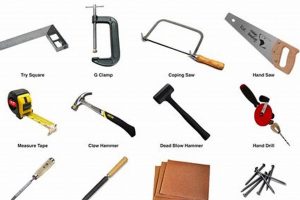
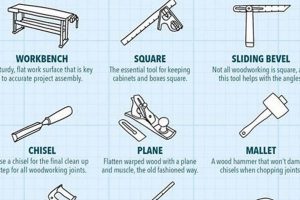
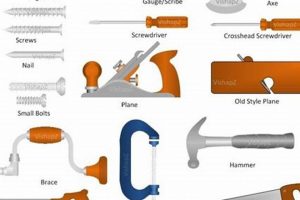
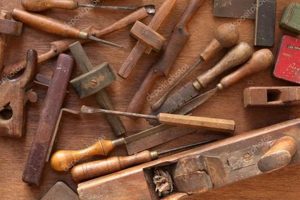
The craft of shaping wood using muscle-powered implements represents a fundamental approach to fabrication. This methodology prioritizes precision and control, enabling the creation of intricate designs and robust structures. Examples include the use of chisels for joinery, planes for smoothing surfaces, and saws for cutting stock to size.
Employing these methods fosters a deeper connection between the artisan and the material. The resulting work often exhibits a level of detail and individuality unattainable through mechanized processes. Historically, this approach formed the bedrock of construction and furniture making, embodying both practicality and artistic expression.
Subsequent sections will delve into specific types of implements used, techniques for achieving accurate results, and considerations for selecting and maintaining the necessary equipment. Further discussion will also cover safety protocols and best practices for efficient and rewarding project completion.
Essential Considerations for Manual Wood Shaping
Mastering manual wood shaping requires patience, practice, and a thorough understanding of both the implements and the wood itself. Attention to detail in preparation and execution is paramount for achieving optimal results. The following guidelines offer practical advice for improving proficiency.
Tip 1: Sharpen Implements Regularly: A keen edge is crucial for clean cuts and reduced effort. Honing should be performed frequently during use, and more extensive sharpening should be undertaken as needed to maintain optimal performance. Dull implements are not only less effective but also increase the risk of injury.
Tip 2: Secure Workpieces Effectively: Proper clamping or fixturing is essential for stability and safety. Ensure that the workpiece is adequately supported to prevent movement during cutting or shaping. Inadequate securing can lead to inaccuracies and potential accidents.
Tip 3: Practice Proper Stance and Grip: Maintaining a balanced stance and using a firm, controlled grip will enhance accuracy and reduce fatigue. Distribute weight evenly and avoid overreaching. Experiment with different hand positions to find what provides the best leverage and control for each task.
Tip 4: Grain Direction Matters: Understanding the direction of the wood grain is fundamental. Cutting against the grain can result in tear-out and a rough surface. Always strive to work with the grain for smoother, cleaner results. Examine the workpiece carefully before commencing any shaping operation.
Tip 5: Use Appropriate Pressure: Avoid applying excessive force. Let the sharpness of the implements and the natural properties of the wood guide the process. Overpowering the cut can lead to inaccuracies and increase the risk of losing control.
Tip 6: Master the Push and Pull Cut: Many hand saws are designed to cut on either the push or the pull stroke. Understanding which stroke is most effective for a given task, and developing proficiency in both, will improve speed and accuracy.
Tip 7: Dry Fit Before Assembly: Before applying adhesives or fasteners, dry fit all components to ensure proper alignment and fit. This practice allows for corrections to be made before a permanent bond is created, preventing costly mistakes.
These guidelines emphasize the importance of meticulous preparation, proper technique, and a thorough understanding of the materials and implements involved. Adherence to these principles will foster both efficiency and safety, leading to superior craftsmanship.
The subsequent section will explore specific applications of these implements and techniques in various woodworking projects.
1. Precision Material Removal
Precision material removal stands as a cornerstone of the craft. The ability to selectively remove small amounts of wood with accuracy is essential for achieving intricate joinery, refined surfaces, and overall structural integrity in woodworking projects. Utilizing implements allows for a high degree of control over the shaping process, enabling woodworkers to realize complex designs with minimal waste.
- Chisel Work for Joinery
Chisels are employed to create precise mortises, tenons, and other interlocking joints. The sharpness of the chisel and the skill of the woodworker dictate the tightness and strength of the resulting connection. For example, crafting a dovetail joint requires the careful removal of small amounts of material to ensure a snug fit. Improper chisel work can compromise the joint’s integrity and lead to structural failure.
- Planing for Surface Accuracy
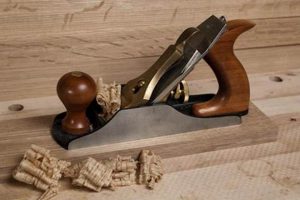
Hand planes are used to flatten, smooth, and refine wood surfaces. Achieving a perfectly flat surface requires the methodical removal of thin shavings. The type of plane, its sharpness, and the woodworker’s technique all influence the final outcome. A well-tuned plane can produce surfaces that are both aesthetically pleasing and dimensionally accurate, essential for applications such as furniture making.
- Carving for Decorative Detail
Carving involves the controlled removal of wood to create decorative elements and sculptural forms. Gouges, knives, and other specialized tools are used to shape the wood according to a predetermined design. Precision is crucial to avoid errors that can ruin the overall aesthetic. Examples include carving intricate details on furniture or creating three-dimensional relief panels.
- Sawing for Dimensioning Stock
Hand saws are vital for precisely cutting wood to specific dimensions. The accuracy of the cut directly impacts the fit and finish of the final project. Different saw types, such as rip saws and crosscut saws, are designed for cutting along or across the grain, respectively. Skillful use of a saw results in clean, square cuts that minimize waste and reduce the need for further material removal.
These examples highlight the critical role of precision material removal in shaping wood by hand. By mastering these techniques, artisans can achieve a level of control and accuracy that is difficult to replicate with power tools. The inherent sensitivity of hand tools allows for a nuanced approach, resulting in high-quality, meticulously crafted wooden pieces.
2. Joint Integrity

Joint integrity, in the context of shaping wood, represents the structural soundness and long-term stability of connections between wooden components. The manner in which these joints are formed directly influences the overall durability and aesthetic quality of finished pieces. Implement use is uniquely suited to achieving high levels of joint integrity due to the control and precision they afford the woodworker.
The creation of robust joints using muscle-powered implements requires a deep understanding of wood properties and joinery techniques. The meticulous fitting of mortise and tenon joints, dovetails, or other interlocking configurations ensures a strong mechanical bond, often augmented by adhesives. For instance, a hand-cut dovetail joint, carefully executed, distributes stress efficiently, preventing failure under load. Similarly, a precisely fitted mortise and tenon joint provides resistance to racking forces in furniture construction. The inherent tactile feedback and visual assessment available during manual joint creation enable adjustments that are often missed by automated processes. Historic examples of furniture and architectural elements demonstrate the lasting strength achievable through these methods; structures centuries old still stand as testament to the effectiveness of well-executed joinery.
Ultimately, the connection between joint integrity and shaping wood revolves around the principles of careful planning, precise execution, and a thorough understanding of material behavior. While modern techniques offer speed and efficiency, implements facilitate a level of control and craftsmanship that is difficult to replicate. The enduring quality of hand-crafted joinery highlights its continued relevance in woodworking. The pursuit of joint integrity, therefore, remains a central tenet of the craft, ensuring the longevity and beauty of wooden creations.
3. Surface Refinement

Surface refinement represents a critical stage in woodworking, directly impacting the aesthetic appeal and functional performance of the finished product. In the context of shaping wood, this process encompasses the techniques employed to achieve smoothness, flatness, and the desired texture on a workpiece. This is often accomplished through the strategic removal of minute amounts of material to eliminate imperfections left by initial shaping operations. The achievement of surface refinement showcases a craftsman’s mastery.
The connection between muscle-powered implements and surface refinement is particularly strong due to the control and tactile feedback they provide. Planes, scrapers, and abrasive materials are the primary tools utilized for this purpose. Hand planes, available in various configurations, are employed to smooth surfaces, remove machining marks, and establish flatness. Scrapers are used to eliminate tear-out and further refine the surface, especially on figured wood. Abrasives, such as sandpaper or sharpening stones, are then employed to achieve the final level of smoothness. The selection of appropriate grit levels and the application of proper technique are essential for preventing scratches and ensuring a uniform finish. For example, a meticulously prepared table top might undergo several planing stages followed by scraping and progressive sanding to achieve a glass-like surface, enhancing the wood’s natural grain and luster. In the restoration of antique furniture, preserving original character while eliminating imperfections requires careful application of surface refinement techniques using muscle-powered implements. These skills ensures that material removed is the least possible in an effort to retain the integrity of the antique.
Achieving optimal surface refinement presents challenges, including the risk of over-sanding, which can round over sharp edges and diminish detail. Skilled artisans exercise restraint and rely on visual and tactile feedback to guide their actions. Surface refinement is also closely linked to the choice of finish; a properly refined surface will accept finishes more evenly and enhance their visual properties. Understanding the relationship between surface refinement and the broader context of woodworking enables artisans to create pieces of exceptional quality and lasting beauty. It is also a skill that is highly prized and rare in the 21st Century.
4. Controlled Cutting

Controlled cutting, in the context of manual wood shaping, signifies the precise and deliberate separation of wood fibers to achieve desired dimensions, shapes, and joinery. It is a fundamental skill, directly impacting the accuracy, efficiency, and safety of woodworking endeavors. The degree of control exerted during this process is a defining characteristic of skilled craftsmanship and a primary benefit of utilizing muscle-powered implements.
- Saw Selection and Application
Different saw types, each designed for specific cutting tasks, are essential. Crosscut saws sever wood fibers perpendicular to the grain, while rip saws follow the grain. Dovetail saws, with their fine teeth and rigid backs, excel at creating precise joinery. Proper saw selection, based on the wood species, grain orientation, and desired cut profile, directly impacts the efficiency and accuracy of the cutting process. The correct saw selection for example will affect the integrity of the finished piece and/or joint.
- Blade Angle and Pressure Control
Maintaining the correct blade angle is crucial for achieving straight, accurate cuts. Applying consistent, controlled pressure throughout the cut minimizes binding and prevents the saw from wandering off course. Excessive pressure can lead to inaccurate cuts, while insufficient pressure results in inefficiency and fatigue. A balanced approach is necessary for achieving optimal results. Learning and understanding the different pressure techniques is essential for controlled cutting and for all who are shaping wood.
- Kerf Management and Tear-out Prevention
The kerf, or the width of the cut produced by the saw blade, must be carefully managed to ensure accurate dimensions. Minimizing tear-out, or the splintering of wood fibers as the saw exits the cut, is essential for achieving a clean, professional finish. Techniques such as scoring the wood before cutting and using backing blocks can help prevent tear-out, particularly when working with brittle or figured wood. Controlled cutting minimizes the need for further adjustments of the material.
- Ergonomics and Body Positioning
Maintaining a comfortable and stable body position is essential for controlling the saw and preventing fatigue. A proper stance allows for efficient power transfer and minimizes the risk of injury. Adjusting the workpiece height and using appropriate supports can further enhance control and reduce strain. Prioritizing ergonomic considerations contributes to both accuracy and safety in the cutting process. Proper body position is often overlooked which is crucial for controlled cutting.
These facets demonstrate the multifaceted nature of controlled cutting within the realm of manual wood shaping. The skillful application of these principles enables artisans to transform raw lumber into precisely shaped components, ultimately resulting in high-quality, durable, and aesthetically pleasing woodworking creations. Mastery of controlled cutting is fundamental to the success of any woodworking project.
5. Ergonomic Efficiency

Ergonomic efficiency, within the context of manual wood shaping, pertains to the design and utilization of implements and techniques that minimize physical strain and maximize work output. The connection between ergonomic efficiency and shaping wood is both direct and crucial; poorly designed implements or improper techniques can lead to fatigue, repetitive strain injuries, and decreased precision, ultimately compromising the quality and longevity of both the artisan and the finished product. Conversely, implements that fit well in the hand, require minimal force to operate, and promote natural body postures contribute to increased productivity, improved accuracy, and reduced risk of injury.
The importance of ergonomic efficiency is exemplified in several aspects of shaping wood. For instance, the design of a hand plane can significantly impact the force required to smooth a surface. A plane with a well-shaped handle and properly angled blade reduces the need for excessive pushing, minimizing strain on the wrist and shoulder. Similarly, the weight and balance of a saw affect the ease and accuracy of cutting; a well-balanced saw allows the woodworker to maintain control with minimal effort. Selecting implements with handles that accommodate the user’s hand size and shape reduces the risk of carpal tunnel syndrome and other hand-related injuries. Furthermore, the height of the workbench and the positioning of the workpiece influence posture and reduce strain on the back and neck. Ergonomic considerations, therefore, are integral to maximizing the efficiency and sustainability of wood shaping practices, which includes safety precautions for the craftsman.
In summary, ergonomic efficiency is not merely a peripheral concern but a fundamental component of successful and sustainable practice. By prioritizing the design of implements, the optimization of techniques, and the careful consideration of the workspace, woodworkers can mitigate the risks associated with repetitive motions and physical exertion. The integration of ergonomic principles promotes both the well-being of the artisan and the quality of the work produced, ensuring that the tradition of shaping wood continues to thrive for generations to come. These best practices are especially important for long-term wood-shapers.
Frequently Asked Questions
This section addresses common inquiries regarding the practice of manual wood shaping. The intent is to provide clear and concise answers to frequently encountered questions, promoting a deeper understanding of the craft.
Question 1: What are the primary advantages of utilizing manual methods compared to power tools?
Manual methods offer superior control, precision, and tactile feedback. They facilitate intricate joinery and refined surface finishes unattainable with many power tools. Furthermore, they reduce noise and dust exposure.
Question 2: What constitutes a suitable initial investment in essential implements?
A basic set typically includes a smoothing plane, a chisel set, a marking gauge, a combination square, and a selection of saws. Expect an initial investment ranging from \$300 to \$800, depending on quality and brand. Additional specialized implements can be acquired as needed.
Question 3: How can implement maintenance requirements be managed effectively?
Regular sharpening is crucial. Sharpening stones of varying grits, along with honing compounds, are essential for maintaining keen edges. Proper storage in a dry environment prevents rust and corrosion. Routine cleaning after use prolongs tool life.
Question 4: What are the fundamental safety precautions to observe?
Always secure workpieces firmly before commencing cutting or shaping. Utilize sharp implements to minimize force and prevent slippage. Wear appropriate eye protection. Maintain a clean and organized workspace to reduce trip hazards.
Question 5: Is prior experience required to begin learning these techniques?
No prior experience is strictly necessary, but a basic understanding of woodworking principles is beneficial. Starting with simple projects and gradually increasing complexity is recommended. Seek guidance from experienced practitioners or instructional resources.
Question 6: How can consistent accuracy in joinery be achieved?
Precise marking and measuring are paramount. Practice cutting and fitting joinery on scrap wood before committing to final pieces. Utilize sharp implements and employ appropriate clamping techniques. Dry-fit components before applying adhesives.
These answers provide a foundational understanding of various facets of manual wood shaping. Further exploration of specific techniques and implements is encouraged for continued skill development.
The following section will delve into advanced methods and applications of manual wood shaping.
Conclusion
This exploration has illuminated the multifaceted nature of hand tools woodworking, emphasizing its importance in achieving precision, structural integrity, surface refinement, controlled cutting, and ergonomic efficiency. Each aspect is intrinsically linked, contributing to the creation of durable and aesthetically pleasing wooden objects. The information presented underscores the continued relevance of these traditional techniques in contemporary woodworking practice.
The commitment to mastering hand tools woodworking represents a dedication to quality, craftsmanship, and a profound connection with the material. As mechanized processes continue to evolve, the value of these skills endures, serving as a testament to the enduring power of human ingenuity and the pursuit of excellence in the manipulation of wood.