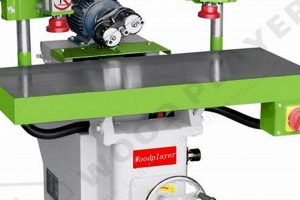
The application of powered tools in the shaping and assembly of wood components represents a significant segment of modern woodworking practices. This encompasses a wide range of processes, from initial stock preparation using planers and jointers, to intricate shaping with routers and spindle molders, and precise cutting with table saws and band saws. For example, crafting identical cabinet doors in high volume typically relies on the accuracy and repeatability of automated shaping equipment.
This approach increases production efficiency, enhances precision, and allows for the creation of complex designs that would be difficult or impossible to achieve with hand tools alone. Historically, the introduction of power tools revolutionized the woodworking industry, enabling mass production of furniture, architectural elements, and other wood-based products. The resulting improvements in manufacturing speed and consistency led to reduced costs and increased accessibility for consumers.
The following discussion delves into specific types of equipment commonly used in such operations, examining their functionalities, safety considerations, and their role in contemporary woodworking environments. The exploration will further cover aspects of automation, computer numerical control (CNC), and their integration to refine operational capability.
Machine Woodworking
Effective utilization of powered equipment demands adherence to established safety protocols and a comprehensive understanding of machine capabilities and limitations. Optimized output requires consistent maintenance, proper setup, and informed material selection.
Tip 1: Prioritize Safety Protocols. Comprehensive safety training is paramount. Ensure all operators are thoroughly versed in machine-specific safety procedures, including the correct use of guards, personal protective equipment (PPE), and emergency shut-off procedures. Regular safety audits are recommended to identify and mitigate potential hazards.
Tip 2: Implement a Rigorous Maintenance Schedule. Regular inspection and maintenance are crucial for optimal performance and longevity. This includes lubricating moving parts, sharpening blades, checking belts and pulleys for wear, and calibrating machine settings. A documented maintenance schedule ensures consistency and minimizes downtime.
Tip 3: Select Appropriate Tooling for the Material. The choice of cutting tools directly impacts the quality of the final product. Consider the hardness, density, and grain structure of the wood being processed. Utilizing the correct blade type, router bit, or cutter head minimizes tear-out, reduces machine stress, and extends tool life.
Tip 4: Optimize Machine Settings for Material and Task. Proper adjustment of speed, feed rate, and depth of cut is essential for achieving desired results. Consult machine manuals and material specifications for recommended settings. Experimentation with scrap material allows for fine-tuning these parameters before commencing production runs.
Tip 5: Employ Dust Collection Systems Effectively. Wood dust poses significant health and safety risks. Invest in a robust dust collection system that effectively captures dust at the source. Regular cleaning and maintenance of the system are essential for maintaining optimal performance and compliance with relevant regulations.
Tip 6: Secure Workpieces Adequately. Safe and accurate work requires effective clamping and fixturing. Utilize appropriate holding devices to prevent movement during processing. Verify that the workpiece is securely positioned before initiating machine operation.
Tip 7: Regularly Inspect and Calibrate Equipment. Deviations in machine calibration can lead to inaccurate cuts and compromised quality. Periodically verify the accuracy of machine settings using precision measuring tools and calibration standards. Recalibrate as needed to maintain optimal performance.
Effective machine woodworking hinges on a commitment to safety, consistent maintenance, and the application of informed operational practices. Adherence to these guidelines ensures efficient production, reduces the risk of accidents, and prolongs the lifespan of valuable equipment.
The following section details advanced applications and contemporary trends which build upon these fundamental operational principles.
1. Precision Material Processing

Precision material processing is a cornerstone of contemporary machine woodworking. Its implementation directly affects dimensional accuracy, surface finish, and the overall structural integrity of finished products. The integration of advanced equipment and techniques underscores the importance of achieving specific tolerances and consistent results, impacting everything from furniture manufacturing to architectural millwork.
- Dimensional Accuracy and Tolerance
The ability to maintain specified dimensions within acceptable tolerances is fundamental. Computer Numerical Control (CNC) routers and laser cutting systems allow for achieving intricate designs with minimal deviation from the intended specifications. Failure to maintain these standards can result in assembly difficulties, structural weakness, and aesthetic imperfections. For example, precise fitting of dovetail joints requires adherence to strict dimensional accuracy to ensure joint integrity.
- Surface Finish Quality
Achieving a consistent and high-quality surface finish is crucial for aesthetic appeal and subsequent finishing processes. Planers, sanders, and other surface preparation equipment must be calibrated and maintained to produce smooth, uniform surfaces free from imperfections. The surface roughness affects the adhesion of paints, stains, and coatings. The use of dull blades or improperly adjusted sanders can produce tear-out or chatter marks, compromising the final appearance.
- Material Utilization and Waste Reduction
Precision processing minimizes material waste by optimizing cutting layouts and reducing errors. Software-aided design and manufacturing (CAD/CAM) systems enable efficient nesting of parts on stock material, maximizing yield and reducing scrap. Accurate machining also reduces the need for rework or replacement of damaged components, resulting in cost savings and improved resource utilization. The reduction of offcuts contributes to both economic efficiency and environmental sustainability.
- Repeatability and Consistency
A crucial aspect of precision is the ability to consistently reproduce identical components. Machine woodworking, particularly with automated systems, ensures that each part conforms to the same specifications, leading to uniformity in assembled products. This is particularly important in mass production scenarios, such as the manufacture of kitchen cabinets or furniture components. The repeatability of machine processes ensures that each piece meets quality standards.
These facets of precision processing highlight its integral role in modern woodworking. Without the ability to accurately control dimensions, surface quality, and material utilization, the efficiency and quality achievable through automated woodworking processes would be severely diminished. These factors are all interwoven and are directly related to the final outcomes expected in demanding manufacturing environments.
2. Automated Cutting Efficiency
Automated cutting efficiency represents a core advantage in modern machine woodworking. By integrating computer-controlled equipment and automated workflows, production throughput is significantly increased, precision is enhanced, and material waste is minimized. These advancements collectively transform traditional woodworking practices, enabling mass production and intricate designs previously unattainable.
- CNC Routing and its Impact
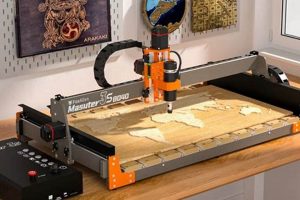
Computer Numerical Control (CNC) routers provide unparalleled accuracy and repeatability in shaping wood components. By following pre-programmed toolpaths, these machines can execute complex cuts with minimal human intervention. This technology is especially valuable in producing intricate patterns, curved profiles, and nested parts. The utilization of CNC routing significantly reduces the risk of human error, ensuring uniformity across large production runs. For instance, manufacturing identical chair legs or cabinet doors can be accomplished with exceptional precision and speed.
- Laser Cutting Applications
Laser cutting offers distinct advantages in processing thin wood materials and creating intricate designs with exceptional edge quality. Laser systems can cut through wood with minimal material distortion and produce fine details that would be difficult or impossible to achieve with conventional cutting methods. This technique finds applications in crafting decorative inlays, precision joinery, and customized signage. The non-contact nature of laser cutting minimizes the risk of material damage and allows for creating complex geometries with ease.
- Automated Sawing Systems
Automated sawing systems, including optimizing saws and panel saws with integrated material handling, streamline the process of cutting stock lumber to specific dimensions. These systems can automatically measure, mark, and cut boards based on pre-defined cut lists, minimizing waste and maximizing material yield. Automated sawing improves production efficiency, reduces the physical demands on operators, and ensures dimensional accuracy in preparing stock for further processing. Example uses include cutting framing lumber in home construction to specified length, optimizing the yield of lumber based on defect placement for furniture manufacture.
- Robotic Material Handling
The integration of robotic systems for material handling further enhances automated cutting efficiency. Robots can be used to load and unload materials from cutting machines, transfer workpieces between workstations, and sort finished parts. This automation reduces manual labor, increases throughput, and minimizes the risk of material damage during handling. The implementation of robotic material handling contributes to a more efficient and streamlined production process, reducing cycle times and improving overall productivity. For example, a robotic arm might be used to load sheets of plywood onto a CNC router and then remove the completed parts.
The advancements in automated cutting technology have profoundly reshaped the capabilities of machine woodworking. The integration of CNC routing, laser cutting, automated sawing, and robotic material handling systems enable woodworking businesses to achieve higher levels of precision, efficiency, and productivity. These technologies are essential for remaining competitive in today’s demanding manufacturing environment and for pushing the boundaries of what is possible in wood design and fabrication.
3. Enhanced Production Speed

The correlation between enhanced production speed and machine woodworking is direct and substantial. The utilization of powered machinery inherently accelerates the fabrication of wood products compared to manual methods. This increase in speed is not merely a marginal improvement; rather, it represents a paradigm shift in manufacturing capacity, enabling the completion of projects within significantly reduced timeframes. This acceleration stems from the ability of machines to perform repetitive tasks with consistent speed and precision, factors challenging to replicate through human labor alone. An example of this is the mass production of furniture components. Where handcrafting a single chair leg might consume several hours, a CNC lathe can produce dozens, if not hundreds, in the same timeframe. This disparity highlights the transformative influence of machine woodworking on production speed.
The enhanced production speed afforded by machine woodworking has profound implications for businesses operating within the industry. It allows for a greater volume of orders to be fulfilled within a given period, directly translating to increased revenue and profitability. Furthermore, faster production cycles enable businesses to respond more rapidly to market demands and adapt to evolving customer preferences. The ability to quickly manufacture and deliver products provides a competitive advantage, particularly in industries where timeliness is paramount. The production of prefabricated housing components, for example, relies heavily on the speed and efficiency of machine woodworking to meet construction schedules and minimize on-site labor costs.
In summary, enhanced production speed is not merely a desirable attribute of machine woodworking; it is an intrinsic characteristic that fundamentally alters the landscape of wood product manufacturing. The adoption of powered machinery enables businesses to achieve higher levels of productivity, respond effectively to market demands, and maintain a competitive edge. Despite the initial investment in equipment, the long-term benefits of enhanced production speed, coupled with improved accuracy and reduced material waste, make machine woodworking a strategically sound choice for businesses seeking to optimize their operations. Challenges related to operator training and equipment maintenance must be addressed to fully realize the potential of these technologies.
4. Consistent Component Replication

Consistent component replication, a fundamental principle in manufacturing, assumes particular significance in the context of machine woodworking. This facet addresses the ability to produce identical wooden components repeatedly, ensuring uniformity, interchangeability, and efficient assembly. It is a direct outcome of the precision and automation inherent in machine woodworking processes, enabling manufacturers to meet quality standards and production demands effectively.
- Dimensional Accuracy and Tolerance Control
Machine woodworking, when properly executed, enables the attainment of stringent dimensional accuracy across replicated components. Equipment such as CNC routers and automated saws can consistently cut materials to specified dimensions, minimizing deviations that might occur in manual processes. Tight tolerance control ensures that each component conforms to design specifications, facilitating seamless assembly and preventing structural or aesthetic inconsistencies. For example, in the production of cabinet doors, dimensional accuracy is crucial for proper alignment and functionality. Deviations in size or shape can lead to misaligned hinges, gaps, and overall structural instability.
- Surface Finish Uniformity
Beyond dimensional accuracy, consistent component replication also extends to surface finish. Machine woodworking techniques, such as automated sanding and planing, provide a uniform surface quality across multiple components. This uniformity is essential for achieving consistent finishing results, whether painting, staining, or applying clear coatings. Surface inconsistencies can lead to uneven absorption of finishes, resulting in variations in color, gloss, and texture. Replicating components with the same surface finish minimizes the need for extensive rework and ensures a high-quality final product. The production of furniture parts, for example, greatly benefits from consistent surface finishing, allowing automated staining and coating processes.
- Automated Process Control
The integration of automated process control systems plays a critical role in ensuring consistent component replication in machine woodworking. These systems monitor and adjust machine parameters in real-time, compensating for variations in material properties, tool wear, and environmental conditions. By maintaining precise control over the cutting process, automated systems minimize deviations and ensure that each component is produced to the same specifications. This level of control is particularly important in high-volume manufacturing environments where even minor inconsistencies can accumulate and negatively impact overall product quality. An example is a lumber milling operation optimizing cut patterns using computer software with feedback loops that monitor saw blade wear.
- Reduced Human Error and Variability
One of the primary benefits of machine woodworking is its ability to minimize human error and variability in component replication. Unlike manual woodworking processes, which are subject to operator skill and fatigue, machine-controlled operations can consistently execute repetitive tasks with high precision. This reduction in human intervention leads to greater uniformity and predictability in the production of wooden components. Even skilled woodworkers can produce slight variances when performing tasks repeatedly; automated systems mitigate those variations. An example is the automated production of wooden trim or molding where the use of CNC machinery reduces the variation in profiles along long runs.
The consistency enabled by machine woodworking has transformative effects on cost and quality in nearly all manufactured wood product sectors, from mass produced mouldings to custom millwork projects requiring multiple identical pieces. The benefits of consistent component replication, ranging from enhanced dimensional accuracy to reduced human error, collectively contribute to a more efficient and reliable manufacturing process. Consistent component replication enables efficient assembly, reduces waste, and enhances the overall quality of finished wood products, solidifying its role as a cornerstone of modern woodworking practices.
5. Ergonomic Operator Consideration
Ergonomic operator consideration represents a critical component within the broader context of machine woodworking. Prolonged operation of woodworking machinery frequently involves repetitive movements, awkward postures, and exposure to vibration and noise. Without adequate ergonomic interventions, operators face an elevated risk of musculoskeletal disorders (MSDs), such as carpal tunnel syndrome, back pain, and tendinitis. These conditions not only compromise the well-being of individual workers but also lead to decreased productivity, increased absenteeism, and higher workers’ compensation costs for employers. For instance, an operator continuously feeding lumber into a jointer without proper table height adjustment and anti-vibration measures is prone to developing back and upper extremity issues over time. The effective integration of ergonomic principles into machine woodworking directly mitigates these risks, promoting a safer and more sustainable work environment.
The practical application of ergonomic principles in machine woodworking involves several key strategies. These include the selection and configuration of machinery designed with ergonomic features, such as adjustable work heights, intuitive controls, and vibration dampening systems. The implementation of properly designed workstations, equipped with anti-fatigue mats, adjustable seating, and appropriate lighting, further enhances operator comfort and reduces strain. Furthermore, comprehensive training programs that educate operators on proper lifting techniques, posture, and machine operation procedures are essential. Job rotation and scheduled breaks can also alleviate fatigue and prevent overuse injuries. Consider the example of a CNC operator using a standing desk setup which allows flexibility in posture and reduces pressure on joints. It could be a substantial reduction in injury rate than a operator using the incorrect chair setup. The selection, setup and usage are all factors that should be considered to reduce fatigue and risk of accidents.
In conclusion, ergonomic operator consideration is not merely an ancillary aspect of machine woodworking but an indispensable element of responsible and efficient manufacturing practices. Failure to prioritize ergonomics results in increased health risks for workers, reduced productivity, and potential financial burdens for employers. By proactively implementing ergonomic interventions, such as the selection of ergonomically designed equipment, the creation of optimized workstations, and the provision of comprehensive training, woodworking businesses can cultivate a healthier, safer, and more productive work environment. Addressing challenges related to the cost of ergonomic equipment and the integration of ergonomic principles into existing workflows requires a commitment from both management and employees. Embracing ergonomic best practices ultimately benefits both the workforce and the bottom line, ensuring the long-term sustainability of machine woodworking operations. The return on investment in ergonomics extends beyond reduced healthcare costs to include improved employee morale, enhanced product quality, and a strengthened competitive position in the market.
6. Minimized Material Waste
The integration of machine woodworking processes significantly contributes to the reduction of material waste in wood product manufacturing. This outcome stems from the precision, automation, and optimization capabilities inherent in these technologies, enabling more efficient utilization of raw materials and reducing scrap generation compared to traditional manual methods. The following details several facets of this relationship.
- Optimized Cutting Layouts through Software Integration
Advanced Computer-Aided Design (CAD) and Computer-Aided Manufacturing (CAM) software allows for the creation of optimized cutting layouts that minimize material waste. These programs analyze part geometries and efficiently nest them within a given stock size, reducing offcuts and maximizing yield. For example, cabinet manufacturers employ nesting software to arrange door and panel components on plywood sheets, achieving significant material savings compared to manual layout methods. The software considers material grain direction and potential defects to achieve the best possible yield.
- Precision Cutting with CNC Machinery
Computer Numerical Control (CNC) routers, saws, and other automated cutting equipment offer unparalleled precision compared to manual operations. These machines can follow intricate cutting paths with minimal deviation, reducing the risk of errors and ensuring accurate part dimensions. Precise cutting translates to less material wasted due to incorrect cuts, overcuts, or dimensional inaccuracies. In the manufacture of complex architectural millwork, CNC routers are used to create intricate profiles with minimal material loss.
- Material Defect Detection and Avoidance
Machine woodworking systems can be integrated with defect detection technologies, such as laser scanners and image recognition systems, to identify knots, cracks, and other imperfections in lumber. This information is then used to optimize cutting patterns, avoiding these defects and minimizing the production of unusable parts. This process ensures that costly materials are not wasted on components that will ultimately be rejected. For instance, lumber grading systems utilize scanners to identify defects in real-time, automatically adjusting cutting patterns to maximize clear lumber yield.
- Thin Kerf Cutting Technologies
The use of thin kerf saw blades in machine woodworking operations minimizes material loss during the cutting process. Thin kerf blades remove less material with each cut, resulting in more usable material and reduced sawdust generation. These blades are particularly beneficial in processing expensive hardwoods where material conservation is critical. Thin kerf technology is frequently used in resawing operations to create veneer from solid lumber.
These elements collectively demonstrate the capacity of machine woodworking to reduce material waste. By employing advanced software, precise machinery, defect detection systems, and thin kerf cutting technologies, woodworking operations can significantly improve material utilization, reduce costs, and promote sustainable manufacturing practices. The implementation of these strategies not only benefits businesses financially but also contributes to environmental conservation by reducing the demand for raw materials.
7. Safety Protocol Adherence

The imperative of safety protocol adherence is magnified within machine woodworking due to the inherent hazards associated with high-speed machinery, sharp cutting tools, and the potential for projectile debris. Strict adherence to established safety guidelines is not merely a recommendation but a fundamental requirement for preventing injuries, protecting personnel, and ensuring a safe and productive work environment. The failure to comply with safety protocols can lead to severe consequences, including lacerations, amputations, eye injuries, and even fatalities.
- Personal Protective Equipment (PPE) Compliance
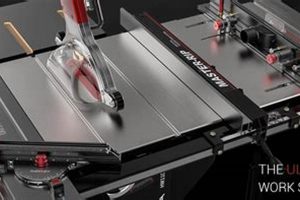
The consistent use of appropriate PPE, including safety glasses, hearing protection, respirators, and appropriate clothing, forms the first line of defense against potential hazards in machine woodworking. Safety glasses protect against flying debris, hearing protection mitigates noise-induced hearing loss, respirators prevent inhalation of wood dust, and appropriate clothing prevents entanglement in machinery. Compliance with PPE requirements requires ongoing training, monitoring, and enforcement. For example, operators using a table saw must wear safety glasses to shield their eyes from sawdust and potential kickback. Inadequate PPE or failure to use it correctly significantly increases the risk of injury.
- Machine Guarding and Interlock Systems
Machine guarding and interlock systems are engineered safety features designed to prevent access to hazardous areas of woodworking machinery during operation. Guards physically prevent contact with moving parts, while interlock systems automatically shut down the machine if a guard is removed or bypassed. Regular inspection and maintenance of these safety devices are crucial to ensure their proper functioning. Circumventing machine guards to increase speed or ease of operation is a dangerous practice that can lead to severe accidents. For example, the removal of a blade guard on a jointer exposes the operator to the rotating cutter head, posing a significant amputation risk.
- Lockout/Tagout Procedures for Maintenance and Repair
Lockout/tagout (LOTO) procedures are essential for preventing accidental machine startup during maintenance or repair activities. These procedures involve isolating energy sources and applying locks and tags to prevent unauthorized reactivation of the equipment. LOTO procedures safeguard maintenance personnel from electrical shock, crushing injuries, and other hazards associated with working on machinery. Neglecting LOTO protocols can have catastrophic consequences, such as a technician being injured by a machine that unexpectedly starts during maintenance. Proper LOTO training and strict adherence to established protocols are critical for ensuring the safety of maintenance personnel.
- Emergency Procedures and First Aid Preparedness
Comprehensive emergency procedures and readily available first aid resources are vital for responding effectively to accidents that may occur in machine woodworking environments. Emergency procedures should include clear protocols for reporting injuries, evacuating the work area, and providing first aid. Readily accessible first aid kits, stocked with appropriate supplies, and trained first aid personnel are essential for providing immediate care to injured workers. Regular drills and simulations help to familiarize employees with emergency procedures and ensure a coordinated response in the event of an accident. For example, clear signage indicating emergency exits and first aid station locations should be prominently displayed throughout the woodworking facility.
The collective impact of these safety protocols is profound. Consistent adherence to these measures not only reduces the risk of accidents but also fosters a safety-conscious culture within the woodworking environment. Continuous training, proactive hazard identification, and a commitment to maintaining a safe work environment are essential for minimizing the risks associated with machine woodworking and protecting the well-being of workers. Safety is not an optional add-on but a core value that must be integrated into every aspect of machine woodworking operations.
Frequently Asked Questions About Machine Woodworking
The following section addresses common inquiries regarding the use of powered machinery in woodworking, aiming to provide clear and concise answers to facilitate informed understanding.
Question 1: What constitutes machine woodworking and how does it differ from traditional methods?
Machine woodworking involves the utilization of powered tools and equipment to shape, cut, and assemble wood components, replacing or augmenting manual processes. Traditional woodworking primarily relies on hand tools and manual techniques. The key difference lies in the speed, precision, and scale of production, with machine woodworking enabling higher output and tighter tolerances.
Question 2: What are the primary safety hazards associated with machine woodworking?
The operation of woodworking machinery presents various safety hazards, including the risk of cuts, lacerations, amputations from contact with moving blades and cutters; eye injuries from flying debris; hearing loss from prolonged exposure to noise; respiratory issues from inhaling wood dust; and potential for electrocution due to electrical malfunctions. Adherence to safety protocols, proper machine guarding, and the use of personal protective equipment are crucial for mitigating these risks.
Question 3: What type of personal protective equipment (PPE) is required in machine woodworking?
Appropriate PPE in machine woodworking typically includes safety glasses or face shields to protect the eyes from flying debris; hearing protection (earplugs or earmuffs) to reduce noise exposure; respirators or dust masks to prevent inhalation of wood dust; and appropriate work gloves and footwear to protect hands and feet from potential hazards. The specific PPE requirements may vary depending on the type of machine and the nature of the task being performed.
Question 4: How is dust control managed in machine woodworking environments?
Effective dust control is essential for mitigating the health risks associated with wood dust exposure. This is typically achieved through the use of dust collection systems that capture dust at the source (e.g., at the machine’s cutting point). These systems employ a combination of hoods, ducts, and collection units to remove dust particles from the air. Regular cleaning and maintenance of dust collection systems are crucial for maintaining their efficiency. Additionally, respiratory protection may be required in certain situations.
Question 5: What are the key maintenance procedures for woodworking machinery?
Regular maintenance is crucial for ensuring the safe and efficient operation of woodworking machinery. Key maintenance procedures include lubricating moving parts, sharpening or replacing cutting tools, checking and adjusting machine alignment, inspecting belts and pulleys for wear, and cleaning machine components. A documented maintenance schedule should be followed to ensure that all necessary maintenance tasks are performed at appropriate intervals. Equipment manuals should be consulted for specific maintenance recommendations.
Question 6: How does Computer Numerical Control (CNC) impact machine woodworking?
CNC technology has revolutionized machine woodworking by enabling automated and highly precise cutting and shaping of wood components. CNC routers, mills, and lathes can follow pre-programmed toolpaths with minimal human intervention, allowing for the creation of complex designs with exceptional accuracy and repeatability. CNC technology improves efficiency, reduces waste, and expands the design possibilities in woodworking.
This compilation aims to address initial concerns and highlight key safety and maintenance considerations inherent in the field. The application of sound practices in machine woodworking is vital for safety and long-term operational effectiveness.
The subsequent discussion will focus on practical applications and advanced techniques utilized across specific woodworking trades.
Conclusion
The preceding analysis has explored various facets of machine woodworking, emphasizing its transformative impact on efficiency, precision, and material utilization within the woodworking industry. The integration of advanced technologies, coupled with rigorous safety protocols, has redefined the possibilities for wood product manufacturing. Careful consideration of operational tips, ergonomic factors, and waste reduction strategies is paramount for maximizing the benefits of such powered systems.
Continued research and development in machine woodworking will likely yield further advancements in automation, material processing, and design capabilities. Ongoing professional training and adherence to evolving safety standards remain critical for ensuring a sustainable and responsible future for this integral component of the manufacturing landscape. Businesses and professionals who embrace these evolving technologies are best poised to capitalize on new opportunities and meet the increasing demands of the market.