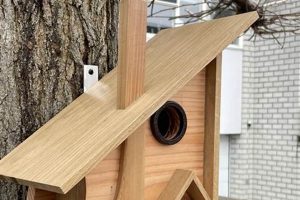
Woodworking endeavors characterized by their limited time commitment and reduced complexity, often involving simplified designs and readily available materials, represent an accessible entry point into the craft. Examples include constructing small storage boxes, simple picture frames, or basic shelves, projects generally achievable within a few hours using minimal tools and fundamental techniques.
The significance of these approachable projects lies in their ability to foster skill development, encourage creativity, and provide a sense of accomplishment. Historically, such introductory exercises have served as a foundation for aspiring woodworkers, enabling them to build confidence and master essential skills before undertaking more ambitious constructions. Furthermore, the readily attainable nature of these projects promotes sustainable practices by utilizing scrap wood and minimizing material waste.
The subsequent discussion will delve into specific project ideas, tool recommendations, and essential safety precautions pertinent to initiating these straightforward woodworking activities. This exploration will equip individuals with the knowledge and resources needed to embark on their woodworking journey with confidence and efficiency.
The following guidelines are designed to optimize efficiency and enhance success in simpler woodworking activities. Attention to these points will promote quality craftsmanship and minimize potential setbacks.
Tip 1: Project Selection: Opt for designs that align with current skill level and available tools. Begin with projects featuring straight cuts and minimal joinery before attempting more intricate constructions. Examples include cutting boards or basic wall shelves.
Tip 2: Material Preparation: Prior to commencing construction, ensure all lumber is properly dimensioned and free of defects. Accurate measurements are critical for achieving desired results. Employ a sharp hand plane to true edges and surfaces as needed.
Tip 3: Tool Maintenance: Sharp tools are paramount for efficient and safe woodworking. Regularly hone blades of chisels and planes. A dull tool requires more force and increases the risk of slippage.
Tip 4: Joinery Simplicity: Prioritize basic joinery techniques such as butt joints, rabbets, and dadoes. These connections are relatively easy to execute and provide sufficient strength for many simpler projects. Reinforce with glue and fasteners as necessary.
Tip 5: Sanding Strategy: Implement a progressive sanding approach, starting with a coarser grit and gradually moving to finer grits. This ensures a smooth and uniform finish. Use a sanding block to maintain a flat surface and prevent rounded edges.
Tip 6: Finishing Application: Apply finishes in thin, even coats, following the manufacturer’s instructions. Avoid excessive build-up, which can lead to drips and unevenness. Allow each coat to dry completely before applying the next.
Tip 7: Workspace Organization: Maintain a clean and organized workspace to promote efficiency and prevent accidents. Ensure adequate lighting and ventilation. Store tools safely and keep walkways clear of obstructions.
These recommendations highlight the importance of careful planning, meticulous execution, and consistent attention to detail in the context of these accessible woodworking pursuits. Adherence to these principles will maximize the potential for successful outcomes.
The ensuing segments of this article will address considerations for expanding woodworking skills and tackling more complex projects.
1. Simplicity

In the context of accessible woodworking endeavors, simplicity serves as a foundational element. The degree of simplicity inherent in a design directly influences the time and effort required for its completion. Complex joinery, intricate carvings, and elaborate finishing techniques inherently increase project duration and demand higher skill levels. Consequently, projects that prioritize simplicity are more readily categorized as being both quick and easy. A basic birdhouse, for instance, often involves straight cuts, minimal assembly, and a rudimentary finish, making it a prime example of a simple project suitable for beginners. Conversely, a dovetailed drawer requires precise measurements, specialized tools, and advanced joinery skills, placing it outside the scope of quick and easy activities.
The importance of simplicity extends beyond mere ease of execution. Simplified designs often utilize fewer materials, leading to cost savings and reduced waste. They also provide opportunities for learning fundamental woodworking skills without the overwhelming complexity of advanced techniques. Constructing a simple box, for example, allows an individual to practice cutting, gluing, and fastening techniques, establishing a solid foundation for future projects. Furthermore, the constraints of simplicity can foster creativity. Designers and woodworkers must find innovative solutions to achieve functionality and aesthetic appeal within limited parameters, potentially leading to unique and inventive designs.
Ultimately, the emphasis on simplicity enables a broader audience to participate in woodworking. By reducing the barriers to entry, individuals with limited time, resources, or experience can experience the satisfaction of creating functional and aesthetically pleasing objects. While more complex projects offer greater challenges and potential rewards, the value of simplicity in fostering accessibility and promoting skill development within the realm of woodworking should not be underestimated. The selection of projects that embody simplicity becomes crucial for individuals seeking a positive and manageable introduction to the craft.
2. Efficiency

Efficiency is an inextricable component of endeavors classified as “quick easy woodworking projects.” These projects, by definition, necessitate a streamlined approach to minimize both time investment and resource expenditure. A direct causal relationship exists: inefficient practices eliminate a project’s eligibility for inclusion within this category. For instance, a project intended to be “quick” but hampered by disorganized material sourcing or redundant steps will invariably exceed anticipated timelines, negating its initial classification.
The importance of efficiency extends beyond mere speed of completion. Efficient projects often translate to lower material costs due to minimized waste and reduced potential for errors. An example would be a small shelving unit designed with precise measurements, thereby eliminating unnecessary cuts and material overages. Furthermore, efficient execution reduces the physical and mental strain associated with woodworking, making the activity more sustainable and enjoyable. This often involves careful planning and the selection of techniques appropriate for the project’s scale and complexity.
In summary, efficiency is not merely a desirable attribute of “quick easy woodworking projects” but rather a defining characteristic. Its presence directly impacts project duration, material usage, and overall user experience. Challenges to achieving efficiency often stem from inadequate planning or a lack of familiarity with fundamental woodworking techniques. Understanding and prioritizing efficiency is, therefore, essential for individuals seeking to engage in woodworking activities that are truly both quick and easy.
3. Safety
Safety is an indispensable element in woodworking, regardless of project size or complexity; its significance is heightened within the context of “quick easy woodworking projects.” The presumption of reduced risk associated with simpler activities can lead to complacency, thereby increasing the potential for accidents. A false sense of security when using power tools, even for brief operations, can result in severe injury. For instance, failure to properly secure a workpiece when cutting small pieces of wood on a miter saw can cause the wood to become a projectile, leading to potential harm. The misconception that a project’s simplicity negates the need for protective gear, such as safety glasses or hearing protection, similarly increases the risk of injury from flying debris or excessive noise exposure.
The implementation of comprehensive safety protocols is not a hindrance but rather an integral component of efficient and enjoyable woodworking. Correct tool handling techniques, appropriate personal protective equipment, and a well-organized workspace are essential for minimizing hazards. For example, understanding the kickback potential of a table saw, even when making a seemingly simple cut, and taking steps to mitigate that risk through proper stance and the use of a push stick is crucial. Similarly, the proper ventilation of workspaces when applying finishes or adhesives is vital for preventing respiratory irritation and potential health complications. Smaller projects do not inherently equate to smaller risks; the scale of the activity does not diminish the potential for injury if proper safety measures are disregarded.
In conclusion, the inherent appeal of “quick easy woodworking projects” should not overshadow the imperative of prioritizing safety. A thorough understanding of potential hazards, coupled with consistent adherence to safety protocols, is critical for ensuring a positive and injury-free woodworking experience. The deliberate integration of safety considerations into every stage of the project, from planning to completion, ensures that even the simplest woodworking tasks are undertaken responsibly and without unnecessary risk.
4. Materials

The selection of materials exerts a profound influence on the feasibility and ultimate success of undertakings classified as “quick easy woodworking projects.” The ease with which a project can be completed is often directly correlated with the availability and workability of the chosen materials. Readily accessible lumber, such as pine or fir, available at most home improvement stores, exemplifies material selection congruent with the objective of expedience. Conversely, the use of exotic hardwoods, requiring specialized sourcing and possessing inherently difficult machining characteristics, introduces complexities that undermine the “quick easy” designation.
Appropriate material selection extends beyond mere availability; it encompasses factors such as dimensional stability, ease of cutting and fastening, and suitability for finishing. Plywood, for instance, offers excellent dimensional stability and can be readily cut into various shapes with minimal risk of warping or cracking, making it a suitable choice for shelving or cabinet components in smaller projects. Similarly, softwood trim pieces designed for ease of nailing and painting are ideal for adding decorative elements without requiring advanced woodworking skills. Furthermore, pre-dimensioned lumber, often available in standard sizes, eliminates the need for extensive milling, reducing project time and complexity. Misjudging the compatibility of the material with the intended application invariably leads to complications and increased time investment, thereby contravening the fundamental principles of “quick easy woodworking projects.”
Ultimately, the careful consideration of material characteristics and their influence on project complexity is crucial for achieving a successful outcome within the constraints of time and skill level. The intelligent selection of readily available, easily workable, and appropriately sized materials streamlines the construction process, minimizes challenges, and enhances the overall enjoyment of these accessible woodworking pursuits. Neglecting this critical aspect can transform a seemingly straightforward project into a frustrating and time-consuming endeavor, highlighting the practical significance of understanding the intimate connection between materials and the realization of “quick easy woodworking projects.”
5. Tools

The toolset employed directly dictates the feasibility and scope of endeavors categorized as “quick easy woodworking projects.” A correlation exists between the complexity and efficiency of a project and the requisite tool sophistication. While advanced machinery, such as CNC routers or industrial-grade jointers, can expedite certain processes and enhance precision, they inherently negate the accessibility characteristic of these projects. Conversely, reliance solely on hand tools can render even simple tasks laborious and time-consuming, thus undermining the “quick” element. The effective execution of accessible woodworking activities necessitates a judicious selection of tools that strike a balance between efficiency and ease of use.
A foundational toolset for “quick easy woodworking projects” typically includes a hand saw (or circular saw), a drill/driver, a measuring tape, a combination square, sandpaper, and a selection of clamps. These tools, when properly utilized, enable the completion of a wide array of projects, ranging from basic shelves to small storage containers. For example, a simple bookshelf can be constructed using pre-dimensioned lumber, a circular saw for cutting to length, a drill/driver for assembling with screws, and sandpaper for smoothing edges. The absence of any one of these tools can significantly impede progress or compromise the quality of the finished product. Moreover, access to more specialized hand tools, such as a block plane or a marking gauge, can enhance the precision and craftsmanship of these projects without drastically increasing complexity. The appropriate tool is thus a force multiplier, increasing the effectiveness of the user while staying within the bounds of accessibility.
In summary, the judicious selection and effective utilization of tools constitute an essential determinant of success in “quick easy woodworking projects.” An over-reliance on complex machinery can compromise accessibility, while inadequate tooling hinders efficiency and quality. A carefully curated toolset, encompassing both basic power tools and essential hand tools, allows individuals to undertake a wide range of accessible woodworking activities with confidence and efficiency. Recognizing the role of tools as a critical component enables woodworkers to approach these projects strategically, maximizing their potential for success. This, in turn, can motivate them to try advanced projects over time.
6. Design
In the realm of accessible woodworking endeavors, design serves as a pivotal determinant of project feasibility and success. Its role extends beyond mere aesthetics, influencing the complexity of construction, material requirements, and overall time investment. Careful consideration of design principles is essential for ensuring that a project aligns with the objectives of being both quick and easy.
- Simplicity of Form
Simplified designs, characterized by geometric shapes and minimal ornamentation, directly correlate with reduced construction time and effort. A basic rectangular box, for example, demands fewer cuts and simpler joinery compared to a complex, curved form. This direct relationship makes design choices fundamental in determining the accessibility of a given project.
- Efficient Material Use
Strategic design minimizes material waste and optimizes the utilization of readily available lumber dimensions. Projects that incorporate standard board sizes with minimal cutting requirements inherently reduce both cost and labor. A design that efficiently nests components, minimizing scrap, contributes significantly to the project’s overall efficiency.
- Joinery Considerations
Design decisions directly impact the complexity of required joinery techniques. Designs incorporating simple butt joints or rabbets are considerably easier to execute than those requiring intricate dovetails or mortise-and-tenon joints. Prioritizing simpler joinery techniques is crucial for maintaining the “quick and easy” characteristic of a project.
- Functional Clarity
A clear and well-defined purpose in the design facilitates efficient construction and prevents unnecessary complications. A design lacking functional clarity may necessitate modifications during the build process, leading to increased time investment and potential errors. Well-defined projects with clear design goals will result in less time spent correcting and altering the design.
The interplay between these facets underscores the critical role of design in realizing accessible woodworking activities. By prioritizing simplicity, efficient material use, uncomplicated joinery, and functional clarity, design can transform potentially complex tasks into manageable and rewarding projects. The intelligent application of design principles, therefore, is paramount for individuals seeking to engage in woodworking activities that are truly both quick and easy. Failure to address these considerations can render even the most straightforward project unnecessarily challenging.
7. Finish

The application of a finish is an integral step in completing woodworking projects, including those categorized as “quick easy.” The selection and execution of a finish can significantly impact the overall appearance, durability, and longevity of the project, influencing both its aesthetic appeal and functional performance.
- Type of Finish
The selection of the appropriate finish is paramount. Oil-based finishes, such as linseed or tung oil, offer ease of application and a natural aesthetic, but require extended drying times. Water-based finishes dry quickly and offer ease of cleanup, but may lack the depth and richness of oil-based counterparts. Polyurethane finishes provide exceptional durability and resistance to moisture, but require careful application to avoid brush marks or imperfections. Paste wax offers a simple and quick method for sealing and protecting wood surfaces, but provides minimal protection against scratches or water damage. The type of finish selected should align with the project’s intended use and the desired aesthetic.
- Application Method
The method of finish application influences the final result. Brushing, wiping, and spraying are common application techniques, each suited to different types of finishes and project scales. Brushing requires careful technique to avoid streaks and brush marks, while wiping offers greater control and minimizes the risk of drips. Spraying provides a smooth, even finish but necessitates specialized equipment and a well-ventilated workspace. The chosen method should be appropriate for the selected finish and the individual’s skill level.
- Drying Time
Drying time is a critical consideration in the context of “quick easy woodworking projects.” Finishes with extended drying times, such as multiple coats of varnish or lacquer, may negate the “quick” aspect of the project. Fast-drying finishes, such as shellac or some water-based products, allow for quicker completion but may require multiple coats to achieve the desired level of protection and appearance. Understanding the drying time of the chosen finish is crucial for planning the project timeline.
- Surface Preparation
Proper surface preparation is essential for achieving a satisfactory finish. Sanding, cleaning, and filling imperfections ensure a smooth and even surface for the finish to adhere to. Failure to adequately prepare the surface can result in blemishes, uneven color absorption, and poor adhesion, detracting from the overall appearance of the project. Careful surface preparation is a prerequisite for a successful finish application, regardless of the project’s complexity.
The integration of these considerations is crucial for effectively applying a finish to “quick easy woodworking projects.” Choosing an appropriate finish, employing suitable application methods, accounting for drying time, and ensuring proper surface preparation ensures a favorable outcome. Effective finishing complements the project, enhancing both its aesthetic appeal and functional longevity. These processes are also important for a person who practice these kinds of projects, the project will be perfect with finishing.
Frequently Asked Questions
This section addresses common inquiries pertaining to woodworking projects characterized by their reduced complexity and accelerated completion times.
Question 1: What defines a woodworking project as ‘quick and easy’?
A project classified as such typically involves simplified designs, readily available materials, minimal tool requirements, and fundamental construction techniques, generally achievable within a few hours.
Question 2: Is prior woodworking experience necessary to undertake these projects?
While prior experience can be beneficial, many projects are specifically designed for beginners, providing an accessible entry point into the craft. Detailed instructions and readily available resources can compensate for a lack of prior experience.
Question 3: What are some examples of projects suitable for beginners?
Common examples include constructing simple boxes, picture frames, cutting boards, small shelves, or basic birdhouses. These projects generally feature straight cuts, minimal joinery, and straightforward assembly processes.
Question 4: What essential tools are required for commencing these projects?
A basic toolset typically includes a hand saw (or circular saw), a drill/driver, a measuring tape, a combination square, sandpaper, clamps, and appropriate safety equipment. More advanced tools may be added as skills and project complexity increase.
Question 5: How can potential safety hazards be minimized?
Safety is paramount. Always wear appropriate personal protective equipment, such as safety glasses and hearing protection. Ensure a well-lit and organized workspace. Understand the proper use of all tools and follow all safety guidelines. Focus and avoid distractions.
Question 6: Where can suitable project plans and instructions be found?
Numerous resources are available, including woodworking books, online tutorials, and project plans specifically designed for beginners. Select plans that align with current skill level and available tools.
The information presented in this FAQ section provides a foundation for understanding and engaging in woodworking activities characterized by their accessibility and expediency. Adherence to these guidelines will contribute to a positive and productive woodworking experience.
The subsequent section will provide advice on expanding skills and exploring more complex projects.
Conclusion
The preceding discussion has presented a detailed exploration of woodworking projects characterized by their accessible nature and expedited completion timelines. It has underscored the importance of factors such as design simplicity, material selection, tool appropriateness, safety protocols, and efficient execution in successfully realizing these endeavors. Understanding these principles is crucial for individuals seeking to engage in woodworking without significant time commitment or advanced skill requirements.
Embracing such projects provides a valuable entry point into the craft, fostering skill development and encouraging creative expression. It is the pursuit of this accessibility that expands participation and facilitates the enjoyment of woodworking across a broader audience. Continued dedication to simple and effective techniques ensures the enduring relevance of this facet of the craft.