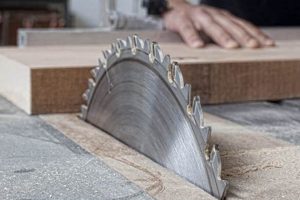
Woodworking necessitates the use of various cutting instruments designed for specific tasks. These instruments, often characterized by a toothed blade, facilitate the shaping and sizing of wood. Their selection depends on the material, the desired cut’s precision, and the project’s overall requirements. For instance, a fine-toothed instrument is optimal for detailed joinery, while a larger, coarser one is more suited for rough stock removal.
The appropriate choice in cutting tools yields several advantages, including enhanced accuracy, improved efficiency, and a reduced risk of material waste. Historically, manual versions were the mainstay of carpentry; however, advancements in technology have led to the development of powered options, increasing speed and reducing physical exertion. The availability of specialized implements expands the range of woodworking possibilities, enabling intricate designs and complex constructions.
This discussion will explore different categories, examining their applications and characteristics to provide a comprehensive understanding of their role in woodworking. The subsequent sections will delve into hand-powered models like the backsaw, coping saw, and handsaw, as well as power-driven variants, including the table saw, miter saw, and jigsaw, each with its unique strengths and limitations.
Selection and Application
Effective utilization of cutting implements requires careful consideration of several factors to ensure optimal results and safety.
Tip 1: Blade Selection. Choose the appropriate blade type based on the wood’s density and desired cut quality. A higher tooth count ensures a smoother finish, while fewer teeth are better suited for rapid stock removal.
Tip 2: Maintaining Sharpness. Regularly sharpen blades to maintain cutting efficiency and reduce the risk of kickback. A dull blade requires more force, increasing the potential for accidents and uneven cuts.
Tip 3: Understanding Grain Direction. Be aware of the wood’s grain direction to avoid tear-out, especially when working with hardwoods. Cutting against the grain can result in splintering and a rough surface.
Tip 4: Proper Safety Measures. Always wear appropriate safety gear, including eye protection and hearing protection, when operating power tools. Secure workpieces firmly to prevent movement during cutting.
Tip 5: Work Holding. Secure the material adequately. Clamps and vises ensure stability, contributing to accuracy and minimizing the risk of accidents. Using a push stick can keep hands safely away from the blade during operation.
Tip 6: Speed Control. For powered options, adjusting the speed to match the material is essential. Slower speeds often produce cleaner cuts in denser materials, while higher speeds are suitable for softer woods.
Tip 7: Practice. Before tackling complex projects, practice cuts on scrap material to refine technique and ensure the chosen tool is performing as expected. Experiment with different angles and speeds to gain a feel for the wood and the instrument.
Tip 8: Dust Collection. Implement effective dust collection methods to maintain visibility and minimize the risk of respiratory irritation. Dust collection systems improve the overall work environment and contribute to a safer workspace.
Adhering to these principles promotes accuracy, safety, and efficiency, leading to improved outcomes in woodworking endeavors.
The following sections will provide a detailed analysis of specific implements and their respective applications, building upon these fundamental considerations.
1. Hand Saws

Hand saws represent a foundational category within the broader scope of cutting instruments employed in woodworking. These tools, powered solely by manual force, offer a level of control and precision often unmatched by their motorized counterparts, particularly in intricate or delicate operations. The direct relationship between the operator’s input and the cutting action allows for nuanced adjustments and a heightened sense of feel, crucial for achieving accurate results in tasks like joinery or shaping complex curves. The variety within this category, encompassing tools such as the dovetail saw, backsaw, and coping saw, highlights the adaptability of manual cutting techniques to diverse woodworking needs.
The selection of a specific hand saw is often dictated by the nature of the cut required. For example, a rip saw, characterized by its larger teeth and aggressive cutting angle, is designed for efficiently cutting wood along the grain, while a crosscut saw excels at making perpendicular cuts across the grain. The backsaw, with its reinforced spine, provides rigidity and stability for precise cuts in joinery. Examples include crafting dovetail joints or tenons. The coping saw, with its thin, flexible blade, enables the creation of intricate curves and patterns. The skill in selecting and employing hand saws is essential for both professional woodworkers and hobbyists, enabling them to execute a wide range of woodworking projects effectively.
In conclusion, the category of manual cutting instruments holds a vital role within the larger context of woodworking. Their reliance on human power demands a deep understanding of the material being worked and the characteristics of the tool being used. While power tools offer speed and efficiency, hand saws provide unparalleled control and are often indispensable for achieving high-quality results in specialized woodworking applications. Their continued relevance underscores the enduring importance of traditional techniques in the modern woodworking landscape.
2. Power Saws
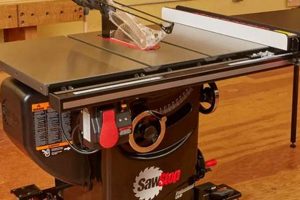
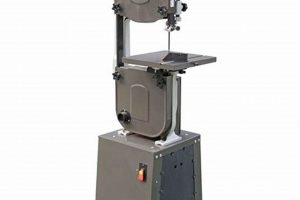
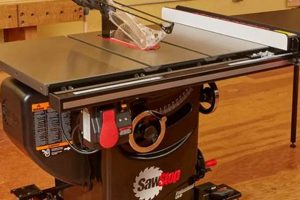
Power saws represent a significant component within the broader category of woodworking tools. Their introduction has fundamentally altered woodworking practices, leading to increased efficiency and the capability to process larger volumes of material. Power-driven instruments offer a diverse array of functionalities, from precise joinery to rapid stock removal, each designed to meet specific woodworking needs. Table saws, for example, are commonly employed for ripping boards and creating accurate square cuts, significantly reducing the time required compared to manual methods. Miter saws excel at producing precise angled cuts for framing and trim work, while band saws enable the creation of curved and irregular shapes with relative ease. The proliferation of powered tools has also directly influenced the complexity and scale of woodworking projects undertaken, enabling intricate designs and complex assemblies that would be impractical or impossible to execute solely with manual tools.
A critical aspect of power saws lies in the selection of appropriate blades and settings. The type of blade, its tooth configuration, and the tool’s speed must be carefully matched to the material being processed to achieve optimal results and minimize the risk of damage or injury. For instance, using a fine-toothed blade on a table saw is essential when cutting plywood to prevent splintering. Similarly, adjusting the speed of a band saw is necessary when working with different wood densities to maintain control and prevent blade breakage. Safety measures are paramount when operating powered cutting instruments. Operators must adhere to strict safety protocols, including wearing appropriate personal protective equipment, ensuring proper machine setup, and maintaining a clear understanding of the tool’s operational characteristics. Neglecting safety precautions can lead to serious injuries, highlighting the importance of comprehensive training and responsible tool usage.
In summary, power saws constitute a transformative element within woodworking, providing enhanced speed, precision, and versatility. Their integration into woodworking practices has enabled the creation of intricate designs and the efficient processing of large volumes of material. However, the effective and safe utilization of these instruments requires a thorough understanding of their capabilities, limitations, and safety protocols. The continued evolution of powered cutting instruments will undoubtedly shape the future of woodworking, driving innovation and expanding the possibilities for design and construction.
3. Blade Material
The performance and longevity of cutting implements used in woodworking are intrinsically linked to the composition of their blades. The selection of a specific material is a critical determinant of the instrument’s suitability for diverse applications. Carbon steel, known for its sharpness and ease of sharpening, finds application in hand saws where intricate detail work is required. However, its susceptibility to corrosion necessitates careful maintenance. High-speed steel (HSS), characterized by superior heat resistance and durability, is commonly utilized in power saws, enabling prolonged operation at elevated speeds without significant degradation of the cutting edge. The choice between these, and other materials, directly impacts the precision, efficiency, and overall lifespan of the cutting tool. For example, using a carbon steel blade in a high-speed power saw application would lead to rapid dulling and potential blade failure, while employing an HSS blade for delicate hand sawing might prove unnecessarily cumbersome due to its increased hardness.
The advent of specialized alloys has further expanded the options available for cutting implement blades. Bimetal blades, combining a flexible backing with a high-speed steel cutting edge, offer a balance of durability and resistance to breakage. These blades are frequently found in reciprocating saws and band saws, where blade flexing is common. Carbide-tipped blades, incorporating small pieces of tungsten carbide brazed onto a steel body, provide exceptional wear resistance and are particularly effective for cutting abrasive materials such as hardwoods and composites. Table saws and miter saws often utilize carbide-tipped blades to maintain sharpness over extended periods of use, reducing the frequency of sharpening. The material of the blade must also be carefully matched to the type of wood being cut. Softer woods may be efficiently cut with carbon steel or HSS blades, while hardwoods and manufactured boards necessitate the use of carbide-tipped or diamond-edged blades to prevent premature dulling and ensure clean cuts.
In conclusion, blade material represents a crucial factor in determining the effectiveness and lifespan of woodworking cutting instruments. The selection of a specific material must be based on a careful consideration of the intended application, the properties of the material being cut, and the desired balance between sharpness, durability, and cost. Understanding the characteristics of different blade materials is essential for maximizing the performance of woodworking tools and achieving high-quality results. Ignoring this critical component can lead to inefficient operation, premature tool failure, and compromised safety. Therefore, a thorough comprehension of blade material properties is indispensable for informed tool selection and effective woodworking practice.
4. Tooth Configuration
The arrangement of teeth on a saw blade, commonly referred to as the tooth configuration, exerts a substantial influence on cutting performance and material suitability. Variations in tooth geometry, including tooth pitch, rake angle, and gullet depth, determine the aggressiveness of the cut, the smoothness of the finish, and the efficiency of waste removal. Understanding the relationship between tooth configuration and specific cutting applications is essential for optimizing the selection and utilization of cutting implements.
- Tooth Pitch
Tooth pitch, defined as the number of teeth per inch (TPI) or the distance between adjacent teeth, dictates the fineness of the cut. High TPI configurations yield smoother finishes and are well-suited for thin materials or delicate operations, as exemplified by dovetail saws used in joinery. Conversely, lower TPI configurations facilitate rapid stock removal in thicker materials, as seen in rip saws designed for cutting along the grain. Selecting the appropriate tooth pitch is critical to prevent tear-out, reduce friction, and maximize cutting efficiency.
- Rake Angle
The rake angle, which describes the angle of the tooth face relative to the cutting direction, influences the aggressiveness of the cut. A positive rake angle, where the tooth leans forward, promotes aggressive cutting and efficient material removal. This configuration is typical of rip saws intended for fast, albeit potentially rough, cuts. A negative or neutral rake angle, where the tooth leans backward or is perpendicular, provides a smoother, more controlled cut, as found in crosscut saws. The rake angle must be carefully matched to the material and the desired cut quality to ensure optimal performance and minimize the risk of kickback.
- Gullet Depth
Gullet depth, referring to the space between the base of the tooth and the saw blade, determines the capacity for chip removal. Deeper gullets allow for more efficient removal of sawdust, preventing clogging and reducing friction. This is particularly important when cutting thick or dense materials, as seen in saws designed for ripping hardwoods. Shallower gullets are suitable for finer cuts in thinner materials where chip removal is less critical. Inadequate gullet depth can lead to overheating, binding, and reduced cutting efficiency.
- Tooth Set
Tooth set, defined as the alternating offset of teeth to the left and right of the blade’s centerline, provides clearance for the blade body during cutting. The set width determines the kerf, or the width of the cut. Insufficient set can cause the blade to bind in the cut, while excessive set can result in a wider kerf and increased material waste. The appropriate tooth set is crucial for smooth, efficient cutting and is particularly important when working with materials prone to binding, such as green wood or plastics. Variations in tooth set patterns, such as raker teeth, are employed to further optimize chip removal and reduce vibration.
The interplay between tooth pitch, rake angle, gullet depth, and tooth set collectively defines the cutting characteristics of a saw blade. These variables must be carefully considered in conjunction with the material being cut and the specific application to optimize performance and achieve the desired results. The selection of a particular tooth configuration represents a critical decision in woodworking, directly impacting the efficiency, accuracy, and quality of the final product. Ignoring these factors can lead to suboptimal cutting performance, increased material waste, and potential safety hazards.
5. Cut Type
The relationship between cut type and woodworking cutting instruments is fundamental. The desired cut fundamentally dictates the selection of an appropriate instrument. Different operations necessitate different blade geometries, power delivery systems, and operational characteristics. A rip cut, executed along the grain of the wood, requires a blade configuration distinct from that used in a crosscut, which is performed perpendicular to the grain. This distinction arises from the differing resistance encountered in each cutting direction. Ripping demands a blade with aggressive teeth designed to efficiently sever long fibers, while crosscutting necessitates a blade that cleanly severs individual wood cells, minimizing splintering. The instrument employed must be capable of producing the desired cut with accuracy and efficiency. This necessity directly impacts tool selection.
Consider, for example, the use of a table saw for ripping lumber. The in-line blade configuration and the ability to use a fence for guidance make it well-suited for this task. Conversely, a coping saw, with its fine blade and maneuverability, excels at creating curved or intricate cuts, such as those found in decorative moldings or inlay work. Miter instruments facilitate precise angled cuts. When creating a picture frame, accuracy is essential. The choice reflects the inherent capabilities of the tool in relation to the desired outcome. The nature of the cut itself directly influences the selection process.
Understanding this connection is critical for any woodworker. Improper tool selection can lead to inefficient operation, inaccurate results, and increased safety risks. Careful matching of the instrument to the operation promotes both efficiency and quality. The cut type is a primary factor driving selection, with each instrument engineered to excel in specific cutting scenarios. Therefore, a comprehensive knowledge of various cutting operations and their corresponding requirements is indispensable for successful woodworking.
6. Size and Capacity

The physical dimensions and operational capability significantly influence the selection of woodworking cutting tools. Instrument size directly correlates with the maximum dimensions of material it can process. Small models, such as coping saws, are adept for intricate curved cuts but unsuitable for large stock. Conversely, large table instruments are optimized for processing sizable boards, offering stability and power that smaller options lack. Capacity, often measured by maximum cutting depth or width, determines the limits of projects that can be undertaken. A limited capacity restricts the ability to work with thicker stock or create wider dados, necessitating alternative techniques or tools. Understanding these dimensional constraints enables informed instrument selection based on project scope. A cabinet maker working with wide panels will require a large table instrument to efficiently dimension the material, while a model maker creating intricate scale models will find a small instrument with a narrow kerf blade much more suitable.
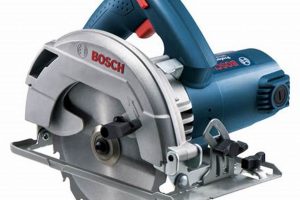
The interplay between instrument dimensions and operational capacity further manifests in portable versus stationary models. Portable instruments, such as circular saws or jigsaws, offer flexibility and convenience for on-site work or projects with limited space. However, they often compromise on capacity and precision compared to stationary models. Stationary instruments, including table or band instruments, provide greater stability, power, and capacity, enabling complex and accurate cuts. A construction crew framing a house will rely on portable circular instruments for speed and mobility, while a furniture maker in a dedicated workshop will prioritize the precision and capacity of stationary instruments. The choice between portable and stationary instruments often represents a trade-off between convenience and performance, based on the specific demands of the woodworking task.
In summary, the dimensions and operational capacity of woodworking cutting tools are critical considerations in the selection process. Size and capacity limitations directly influence the type of projects that can be undertaken and the efficiency with which they can be executed. Portable instruments offer flexibility, while stationary instruments provide greater precision and capacity. Careful assessment of project requirements in relation to instrument specifications is essential for optimizing tool selection and achieving desired outcomes in woodworking endeavors.
7. Application

The selection of a cutting tool for woodworking is fundamentally driven by its intended application. The specific task at hand dictates the required precision, material removal rate, and cut type, thereby determining the most suitable instrument. For instance, a delicate operation like creating dovetail joints necessitates the use of a backsaw, characterized by its fine teeth, rigid blade, and precise control. Conversely, the task of rapidly dimensioning lumber for a framing project demands a circular instrument known for its speed and aggressive cutting capability. Ignoring this direct relationship between application and instrument leads to inefficient operation, compromised quality, and potentially hazardous situations. The effectiveness of woodworking endeavors is contingent upon aligning the instrument with the intended purpose.
Consider the scenario of creating curved elements for furniture construction. A bandsaw, with its narrow blade and continuous cutting action, provides the maneuverability and control required to execute intricate curves. Attempting this task with a table instrument, designed for straight-line cuts, would be impractical and potentially dangerous. Similarly, installing trim work often involves precise angled cuts. A miter instrument, engineered for this specific application, offers the accuracy and repeatability necessary to achieve professional results. Utilizing a hand instrument for this purpose would be time-consuming and prone to error. The application, therefore, serves as a critical filter in the instrument selection process, ensuring that the chosen tool possesses the necessary capabilities to achieve the desired outcome.
In summary, the application serves as the foundational element in the selection of woodworking cutting tools. The characteristics of the task at hand, including the required precision, cut type, and material removal rate, directly influence the choice of instrument. This understanding is essential for maximizing efficiency, ensuring quality, and minimizing safety risks. Failure to consider the application can lead to suboptimal performance, increased material waste, and compromised structural integrity. The competent woodworker must possess a comprehensive knowledge of various cutting operations and their corresponding requirements to effectively leverage the diverse range of cutting instruments available.
Frequently Asked Questions About Woodworking Cutting Instruments
The following section addresses common inquiries regarding the selection and application of woodworking cutting instruments.
Question 1: What factors determine the selection of a specific cutting instrument for a given woodworking task?
The selection hinges primarily on the type of cut required (rip, crosscut, curve), the material being processed (hardwood, softwood, composite), and the desired precision. Furthermore, size and capacity limitations of the instrument must be considered in relation to the dimensions of the workpiece.
Question 2: What are the fundamental differences between hand-powered and power-driven cutting instruments?
Hand-powered instruments rely solely on manual force, offering greater control and feel for intricate work. Power-driven instruments utilize electric motors or other power sources, enabling faster material removal and processing of larger stock, albeit with potentially reduced tactile feedback.
Question 3: How does blade material influence the performance and longevity of cutting implements?
Blade material directly affects sharpness, wear resistance, and heat tolerance. Carbon steel is easily sharpened but prone to corrosion, while high-speed steel offers greater durability. Carbide-tipped blades provide exceptional wear resistance for abrasive materials.
Question 4: What role does tooth configuration play in determining the cutting characteristics of a saw blade?
Tooth configuration, encompassing tooth pitch, rake angle, gullet depth, and tooth set, dictates the aggressiveness of the cut, the smoothness of the finish, and the efficiency of chip removal. These factors must be carefully matched to the material and the desired cut type.
Question 5: How important is adherence to safety protocols when operating woodworking cutting instruments?
Adherence to safety protocols is paramount. Proper personal protective equipment, machine setup, and operational awareness are essential to mitigate the risk of injury. Neglecting safety precautions can lead to severe consequences.
Question 6: How does one maintain optimal performance and extend the lifespan of woodworking cutting implements?
Regular sharpening or blade replacement is crucial for maintaining cutting efficiency. Proper storage and cleaning prevent corrosion and damage. Additionally, employing correct cutting techniques and avoiding excessive force can prolong the instrument’s useful life.
Understanding the nuances of cutting instrument selection and maintenance is paramount for safe and efficient woodworking practices.
The subsequent article section will provide guidelines for creating high-quality woodworking projects.
Conclusion
The preceding discussion has provided a comprehensive overview of cutting implements employed in woodworking. The varied categories, ranging from hand-powered saws to electrically driven models, each possess distinct characteristics and are suited for specific applications. The interplay of blade material, tooth configuration, and power source collectively dictates the instrument’s performance and longevity. A thorough understanding of these factors is indispensable for informed selection and effective utilization.
Mastery of woodworking requires a commitment to both technical knowledge and practical skill. Continued exploration and refinement of technique are essential for achieving optimal results. The information presented herein serves as a foundation for continued learning and skillful execution in the craft of woodworking. Competent application of cutting instruments directly influences the quality and durability of finished products. Therefore, a dedicated approach to tool selection and application is essential for success in woodworking endeavors.