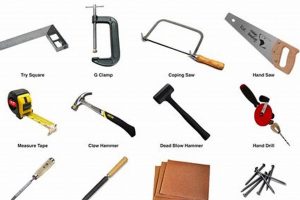
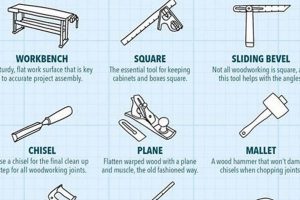
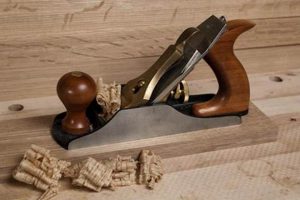
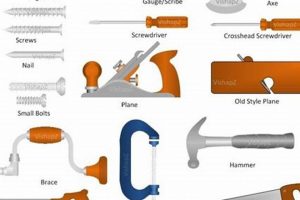
These implements represent a class of portable, motor-driven devices designed to shape, cut, or fasten wood. A common example is a handheld electric drill utilized for creating pilot holes prior to screw insertion, or a powered sander employed for smoothing a wooden surface.
Their adoption significantly enhances efficiency and precision compared to manual methods. Historically, woodworking relied heavily on human strength and dexterity. The advent of motorized options allowed for increased production speed, consistent results, and the ability to tackle more complex projects. These devices reduce physical strain on the operator, allowing for prolonged work periods and improved overall output.
Subsequent sections will delve into specific types, covering operational principles, safety considerations, and appropriate applications across various woodworking disciplines. Topics will include routers, jigsaws, circular saws, and the selection criteria for each based on project requirements.
Essential Guidelines for Optimal Utilization
The following recommendations aim to maximize the efficacy and longevity of motorized woodworking implements while prioritizing user safety and project quality.
Tip 1: Prioritize Personal Protective Equipment (PPE). Eye protection, hearing protection, and respiratory protection are mandatory. Wood dust and high noise levels pose significant health risks if proper precautions are not observed.
Tip 2: Conduct Pre-Operational Inspections. Before each use, verify the integrity of power cords, blades, bits, and safety guards. Address any defects before commencing work to prevent accidents and ensure optimal performance.
Tip 3: Secure Workpieces Effectively. Employ clamps, vises, or other appropriate work-holding devices to stabilize the material. Unsecured workpieces introduce instability and increase the likelihood of tool slippage.
Tip 4: Maintain Sharp Cutting Edges. Dull blades or bits require excessive force, leading to reduced accuracy, increased kickback potential, and accelerated tool wear. Regularly sharpen or replace cutting components as needed.
Tip 5: Adhere to Manufacturer’s Guidelines. Consult the tool’s manual for specific operating instructions, speed settings, and recommended applications. Deviation from these guidelines can compromise safety and tool lifespan.
Tip 6: Practice Proper Cord Management. Keep power cords clear of the work area to prevent tripping hazards and accidental severing. Utilize extension cords of appropriate gauge to avoid voltage drops and potential tool damage.
Tip 7: Regulate Feed Rate. Avoid forcing the tool through the material. Maintain a consistent, controlled feed rate to achieve clean cuts and minimize strain on the motor.
Adherence to these principles will enhance the precision, safety, and longevity associated with motorized woodworking devices.
The subsequent sections will focus on advanced techniques and project-specific applications within the realm of woodworking.
1. Precision

In woodworking, precision is paramount. The ability to execute cuts and shapes accurately directly influences the structural integrity, aesthetic appeal, and overall quality of the finished product. The implementation of motorized hand-held implements enables a degree of control and repeatability often unattainable through purely manual methods, provided that sound technique and appropriate equipment are employed.
- Controlled Cutting Depth
Many motorized implements feature adjustable depth stops or similar mechanisms. This allows the operator to precisely control the depth of cut, which is essential for creating dadoes, rabbets, and other joinery elements where dimensional accuracy is critical. An example includes setting a router to cut a precisely sized groove for a shelf support.
- Consistent Angle Execution
Devices like miter saws and circular saws equipped with bevel adjustments facilitate the consistent execution of angled cuts. This is vital for framing, cabinetry, and other applications where uniform angles are necessary for structural stability and visual harmony. An improperly angled cut, in contrast, can compromise the entire assembly.
- Template-Guided Operations
Routers, in conjunction with templates, offer a method for replicating complex shapes and profiles with high accuracy. The template guides the router bit, ensuring that each cut matches the intended design. This is frequently employed in creating decorative molding or shaping furniture components.
- Precise Fastening
Drills and impact drivers, when used with appropriate drill bits and fasteners, enable the creation of precisely positioned and securely fastened joints. The controlled torque of these tools minimizes the risk of overdriving screws or damaging the wood, ensuring a strong and aesthetically pleasing connection.
The facets described above underscore the importance of precision in woodworking. While skill and experience are still crucial, the capabilities of motorized hand-held devices amplify the woodworker’s ability to achieve repeatable and accurate results, ultimately contributing to higher quality and more complex projects. However, relying solely on the tool’s capabilities without mastering the underlying techniques can negate any advantage gained.
2. Safety

The operation of powered hand-held woodworking implements inherently presents a spectrum of potential hazards. High-speed rotating blades, abrasive surfaces, and projectile debris all contribute to the risk of serious injury. A lack of adherence to established safety protocols and a deficient understanding of tool-specific dangers markedly elevate the likelihood of accidents. For instance, operating a circular saw without proper blade guarding or attempting to force a router against the grain can lead to dangerous kickback, potentially resulting in severe lacerations or fractures. The causal relationship between unsafe practices and injury is direct and demonstrable.
Safety is not merely an ancillary consideration but rather an intrinsic component of proficient woodworking using motorized implements. Personal Protective Equipment (PPE), including but not limited to eye protection, hearing protection, and respiratory protection, is paramount in mitigating the risks associated with airborne particulate matter, loud noises, and flying debris. Furthermore, thorough pre-operational inspections to verify the integrity of power cords, blade sharpness, and the functionality of safety mechanisms are indispensable. A failure to adequately prepare the workspace, secure the workpiece, or maintain a firm grip on the tool can all contribute to loss of control and subsequent injury. Consider the example of improperly securing a piece of lumber before using a jigsaw; the vibration of the tool can cause the material to shift, leading to inaccurate cuts and a heightened risk of the operator losing control.
Understanding and consistently implementing safety procedures is paramount for any individual working with motorized woodworking devices. The practical significance of this understanding extends beyond personal well-being, encompassing the preservation of valuable tools and the prevention of costly damage to materials. While modern implements often incorporate numerous safety features, these are not substitutes for responsible operator behavior and a comprehensive knowledge of best practices. Neglecting these fundamentals can result in avoidable accidents, underscoring the critical role of safety education and adherence to established guidelines within the realm of motorized woodworking.
3. Versatility

The adaptability of motorized hand-held woodworking devices significantly broadens the scope of achievable projects and techniques. This characteristic stems from the availability of interchangeable accessories, adjustable settings, and the inherent design of specific tools, collectively enabling a single implement to perform a diverse array of tasks. This flexibility is a defining feature, distinguishing motorized options from more limited traditional hand tools.
- Material Compatibility
Many power tools, when paired with appropriate blades or bits, can process a wide range of materials beyond wood. For example, a jigsaw with a metal-cutting blade can be used on aluminum or thin steel sheets, extending its usefulness beyond woodworking-specific applications. Similarly, a router, when equipped with specialized bits, can shape plastics or composite materials. This adaptability enhances the tool’s value and utility in a broader workshop environment.
- Multifunctional Accessories
The development of multifunctional accessories further amplifies the versatility of these devices. Examples include drill presses capable of accommodating sanding drums or polishing wheels, effectively transforming the tool into a sanding or polishing station. Router tables enable a handheld router to function as a stationary shaper, providing improved stability and control for intricate cuts. These accessories significantly expand the operational possibilities of individual tools.
- Adjustable Settings and Control
Variable speed controls, adjustable depth stops, and bevel settings are common features that contribute to versatility. Variable speed allows the operator to tailor the tool’s performance to the specific material and task, preventing burning or splintering of the wood. Adjustable depth stops ensure precise cuts, while bevel settings facilitate angled cuts for joinery or decorative purposes. The ability to fine-tune these parameters enhances the user’s ability to adapt the tool to diverse applications.
- Combination Tools
The emergence of combination tools, designed to perform multiple functions, further exemplifies versatility. Oscillating multi-tools, for example, can saw, sand, scrape, and cut, making them invaluable for detail work, repairs, and projects in confined spaces. These tools offer a compact and efficient solution for individuals seeking to minimize the number of specialized implements in their workshop.
The various facets of versatility underscore the adaptable nature of motorized woodworking devices. The capability to perform multiple tasks, process various materials, and accommodate diverse accessories enhances the value and utility of these implements for both amateur and professional woodworkers. This inherent flexibility contributes to their widespread adoption and continued development within the field.
4. Efficiency
The integration of power tools into woodworking yields a demonstrable increase in operational efficiency. Motorized implements reduce the time required to execute tasks such as cutting, shaping, and fastening, translating into greater output within a given timeframe. This enhanced productivity is a direct consequence of the mechanical advantage offered by powered devices, diminishing the reliance on manual effort and accelerating workflow. For instance, the use of a power planer significantly reduces the time needed to flatten a warped board compared to using hand planes, directly impacting project completion speed.
Efficiency, in this context, encompasses not only speed but also the optimization of resource utilization. The precision and control afforded by motorized tools minimize material waste through accurate cuts and consistent results. Consider the application of a laser-guided miter saw; the increased precision in angle cuts leads to less scrap material, directly reducing overall project costs. Furthermore, the reduced physical strain associated with power tools allows for longer work periods without compromising accuracy, minimizing errors and rework. This combination of factors contributes to a more streamlined and cost-effective woodworking process.
The inherent efficiency gains associated with power tools offer a tangible advantage in both professional and amateur woodworking settings. While traditional hand tools retain a place in specific applications requiring finesse and specialized techniques, motorized implements provide an undeniable benefit in terms of speed, accuracy, and resource management. This enhanced efficiency translates to increased productivity, reduced material waste, and a more sustainable woodworking practice. Ultimately, the strategic deployment of these tools enables woodworkers to accomplish more in less time, maximizing both their output and profitability.
5. Maintenance

Sustained operational effectiveness of motorized woodworking implements hinges on diligent maintenance practices. Neglecting routine servicing precipitates diminished performance, accelerated wear, and an elevated risk of mechanical failure. The cost-effectiveness of preventative maintenance significantly outweighs the expense associated with repairing or replacing neglected implements.
- Lubrication of Moving Parts
Consistent lubrication minimizes friction and heat buildup within the tool’s internal mechanisms. Gears, bearings, and spindles require regular application of appropriate lubricants as specified by the manufacturer. Insufficient lubrication leads to premature wear, reduced power output, and potential seizure of components. An example includes lubricating the blade height adjustment mechanism on a table saw to ensure smooth and accurate height changes.
- Blade and Bit Sharpening/Replacement
Dull cutting edges necessitate increased force to achieve desired results, placing undue stress on the tool’s motor and increasing the risk of kickback. Regularly sharpening blades and bits, or replacing them when sharpening is no longer effective, ensures optimal cutting performance and extends the tool’s lifespan. The frequency of sharpening or replacement depends on the material being worked and the intensity of use. A dull circular saw blade, for instance, will produce splintered cuts and require significantly more force to push through the material.
- Inspection and Replacement of Power Cords and Brushes
Damaged power cords pose a significant electrical hazard and should be immediately replaced. Regular inspection for fraying, cracks, or exposed wires is crucial. Similarly, carbon brushes, which transfer electricity to the motor, wear down over time and require periodic replacement. Worn brushes can cause diminished power, erratic motor performance, and eventual motor failure. A visual inspection of the power cord and brushes should be included in routine maintenance procedures.
- Cleaning and Dust Removal
Accumulated sawdust and debris can impede airflow, leading to overheating and reduced motor efficiency. Regular cleaning with compressed air or a brush removes these obstructions, preventing performance degradation and potential damage. Internal components, such as motor windings, are particularly susceptible to the negative effects of dust accumulation. A clean tool operates more efficiently and experiences a prolonged service life.
These maintenance facets underscore the critical role of preventative care in maximizing the operational lifespan and ensuring the safe and efficient performance of motorized woodworking implements. Adherence to manufacturer’s recommendations and the implementation of routine servicing procedures are essential for preserving the value and utility of these tools.
6. Applications

The practical deployment of motorized hand-held woodworking implements spans a broad spectrum of woodworking disciplines, from rough carpentry to intricate joinery and fine finishing. The specific application dictates the selection of the appropriate implement and the techniques employed, highlighting the interdependent relationship between tool and task.
- Construction and Framing
Within the realm of construction and framing, implements such as circular saws, reciprocating saws, and impact drivers are indispensable. These tools facilitate the rapid and accurate cutting of lumber for structural components, the demolition of existing structures, and the efficient fastening of framing members. A framing crew relies on the speed and power of these tools to maintain project timelines and ensure structural integrity. For example, a circular saw enables the quick and precise cutting of studs, joists, and rafters, while an impact driver secures these components with robust fasteners.
- Cabinetry and Furniture Making
Cabinetry and furniture construction necessitate a higher degree of precision and finesse. Routers, jigsaws, sanders, and drills play crucial roles in shaping components, creating joinery, and preparing surfaces for finishing. The intricate details of cabinet doors, drawer fronts, and furniture legs often require the precise control afforded by these implements. A router, for instance, enables the creation of decorative profiles on cabinet edges, while a sander smooths surfaces for a flawless finish. The quality of cabinetry and furniture is directly linked to the accurate application of these devices.
- Wood Turning and Carving
While primarily associated with stationary lathes, certain power tools also contribute to wood turning and carving applications. Angle grinders equipped with carving discs enable the rapid removal of material for shaping bowls and other turned objects. Rotary tools, with their small size and variable speed settings, are well-suited for intricate carving and detail work. These implements supplement traditional turning and carving techniques, enhancing efficiency and expanding creative possibilities. The ability to quickly rough out a bowl blank with an angle grinder, prior to refining it on a lathe, exemplifies this synergistic relationship.
- Finishing and Surface Preparation
Achieving a professional-quality finish requires meticulous surface preparation. Sanders, both orbital and belt sanders, are employed to smooth surfaces, remove imperfections, and prepare wood for staining, painting, or varnishing. Power planers are used to flatten uneven surfaces or reduce the thickness of stock. The proper application of these implements ensures a smooth and uniform surface, enhancing the aesthetic appeal and longevity of the finished product. For example, using an orbital sander to progressively refine the surface of a tabletop before applying a protective coating results in a durable and visually appealing finish.
The preceding examples illustrate the diverse range of applications for motorized hand-held woodworking implements. The specific tool selection and application techniques are contingent upon the requirements of the project, the desired level of precision, and the characteristics of the material being worked. The effective integration of these tools into a woodworking workflow enhances efficiency, precision, and overall project quality.
Frequently Asked Questions
The following section addresses common inquiries regarding the selection, operation, and maintenance of motorized hand-held woodworking implements. The information presented aims to clarify potential misconceptions and provide practical guidance.
Question 1: What are the primary safety considerations when operating a circular saw?
Safe operation necessitates the consistent use of eye and hearing protection. The blade guard must be functional and properly positioned. The workpiece should be securely clamped or supported. The operator should maintain a firm grip on the tool and avoid forcing the blade through the material to prevent kickback. A thorough understanding of the tool’s operating manual is also critical.
Question 2: How frequently should power tool blades be sharpened?
The frequency of sharpening is contingent upon the type of material being worked, the intensity of tool use, and the quality of the blade. Dull blades require increased force, leading to reduced cut quality and an elevated risk of kickback. Blades should be sharpened when cutting becomes difficult, when splintering or burning occurs, or when the cutting edge appears visibly damaged.
Question 3: What is the appropriate method for cleaning a router bit?
After each use, router bits should be cleaned to remove resin buildup and debris. A stiff brush and a solvent specifically designed for removing pitch and resin are recommended. Avoid using abrasive cleaners, which can damage the cutting edges. After cleaning, the bit should be thoroughly dried and lightly oiled to prevent rust.
Question 4: What type of extension cord is appropriate for a power tool?
The extension cord should be of sufficient gauge to handle the amperage draw of the tool. Undersized extension cords can cause voltage drops, leading to reduced power and potential motor damage. Refer to the tool’s operating manual or the tool’s data plate for the specific amperage requirements and select an extension cord accordingly. Heavy-duty extension cords are generally recommended for power tool use.
Question 5: What are the key differences between an orbital sander and a belt sander?
An orbital sander utilizes a circular sanding motion and is primarily used for fine sanding and surface preparation. A belt sander utilizes a continuous loop of sandpaper and is more aggressive, suitable for rapid material removal and leveling uneven surfaces. The choice between the two depends on the specific task and the desired level of material removal.
Question 6: What is the proper method for storing power tools to prolong their lifespan?
Power tools should be stored in a dry, clean environment, away from extreme temperatures and humidity. Power cords should be neatly coiled and secured to prevent damage. Blades and bits should be stored separately to protect their cutting edges. Regular cleaning and lubrication, as outlined in the tool’s operating manual, will further prolong the tool’s lifespan.
In summary, responsible operation and meticulous maintenance are essential for maximizing the safety, efficiency, and longevity of power tools utilized in woodworking applications.
The subsequent section will delve into advanced techniques and project-specific applications within the realm of woodworking.
Conclusion
This exploration has illuminated the multifaceted nature of woodworking hand power tools. From understanding their fundamental definitions and diverse applications to recognizing the paramount importance of safety protocols and diligent maintenance, a comprehensive overview has been presented. The emphasis on precision, versatility, and efficiency underscores their transformative impact on woodworking practices.
The effective and responsible utilization of these implements demands a commitment to continuous learning and a steadfast adherence to best practices. By embracing this commitment, practitioners can unlock the full potential of woodworking hand power tools, transforming raw materials into objects of lasting beauty and utility, while minimizing risks and maximizing productivity. The future of woodworking is inextricably linked to the skilled and thoughtful application of these essential devices.