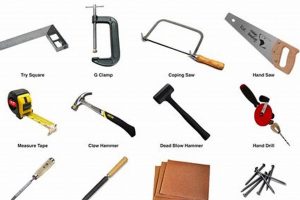
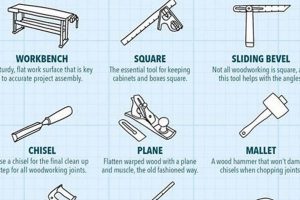
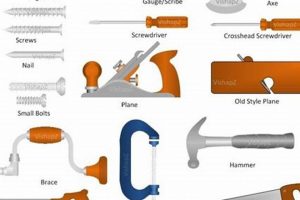
The craft involves shaping wood using manual implements, incorporating various methods and skills to realize tangible creations. This approach necessitates a deep understanding of wood grain, tool maintenance, and joinery principles, yielding outcomes distinguished by their handcrafted quality and unique character. Examples include crafting furniture, decorative items, or functional tools using saws, chisels, planes, and other non-powered implements.
This method fosters a strong connection between the artisan and the material, encouraging mindful creation and reducing reliance on electricity. Historically, it represents the foundation of woodworking traditions, predating mechanized processes and emphasizing sustainability through careful resource utilization and the longevity of finished pieces. The benefits extend beyond the purely utilitarian, providing a meditative and satisfying creative outlet.
The following discussion will explore foundational elements. Detailed examinations of essential implements, proven methodologies for achieving precision and efficiency, and practical examples demonstrating the application of these principles in various endeavors will be presented. The aim is to provide a thorough overview for both novice and experienced woodworkers.
Essential Techniques and Project Considerations
The following section outlines critical considerations for those engaging in woodworking using non-powered instruments. Attention to these details can significantly improve both the quality of the finished product and the overall woodworking experience.
Tip 1: Sharpening is Paramount: Consistently maintain the keen edge of every tool. Dull instruments require excessive force, leading to inaccuracies and potential safety hazards. Utilize honing guides and sharpening stones appropriate for each tool type.
Tip 2: Wood Selection Matters: Different species possess varying densities, grain patterns, and working properties. Choose wood appropriate for the intended project, considering factors such as structural integrity, aesthetic appeal, and ease of shaping.
Tip 3: Mastering Joinery Techniques: Strong and well-executed joints are fundamental to the longevity and stability of woodworking projects. Practice common joints such as mortise and tenon, dovetails, and rabbets, ensuring precise fits and proper glue application.
Tip 4: Plan Before Cutting: Develop detailed plans and cutting lists prior to commencing work. This proactive approach minimizes material waste and reduces the likelihood of errors. Accurate measurements and careful layout are essential.
Tip 5: Respect the Grain: Understanding the direction of wood grain is crucial for successful planing, chiseling, and sawing. Working with the grain reduces tear-out and allows for cleaner, more controlled cuts.
Tip 6: Secure Workholding: Invest in a robust workbench and appropriate clamping systems. Securely holding the workpiece is essential for accurate and safe execution of all woodworking tasks. Vises and holdfasts are invaluable.
Tip 7: Practice Patience and Precision: Woodworking using manual implements demands a measured approach. Avoid rushing, focus on accuracy, and embrace the incremental nature of the process. Small, controlled cuts are preferable to forceful, imprecise actions.
Adhering to these principles enhances the enjoyment and efficacy of woodworking. The resulting projects will reflect a commitment to craftsmanship and the inherent beauty of the chosen material.
The next segment will delve into specific projects that can be successfully undertaken using the described methods.
1. Tool Selection

The selection of appropriate implements is paramount to the successful execution of any woodworking endeavor. Within the context of “woodworking with hand tools tools techniques & projects,” the choice of tools directly influences the achievable level of precision, the efficiency of work, and the quality of the final product. Inadequate or poorly suited implements can lead to frustration, wasted materials, and compromised results.
- Saw Selection and its Impact on Joinery
The type of saw chosen dictates the feasible joinery methods. For example, a dovetail saw with its fine teeth and precise control is essential for creating tight-fitting dovetail joints. Conversely, a coarse-toothed rip saw facilitates the efficient breakdown of lumber. Employing an inappropriate saw can render complex joinery tasks exceedingly difficult or impossible.
- Chisel Varieties and Shaping Capabilities
Different chisels serve distinct purposes in shaping wood. Beveled edge chisels excel at cleaning up corners and creating fine details. Mortise chisels, with their robust construction, are designed to remove large amounts of material when creating mortise joints. The selection of the correct chisel profile enables efficient and accurate material removal, crucial for achieving desired forms.
- Planes and Surface Preparation
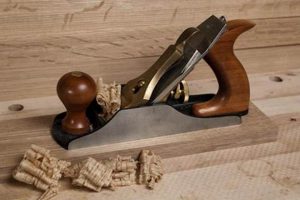
Hand planes are indispensable for creating smooth, flat surfaces. A jack plane is typically used for initial flattening, followed by a smoothing plane for refining the surface. The choice of plane type, blade angle, and sharpening technique determines the achievable surface quality. Proper plane selection minimizes tear-out and ensures a consistent finish.
- Measuring and Marking Tools for Precision
Accurate measurements and precise marking are fundamental to achieving accurate cuts and joinery. Tools such as marking gauges, squares, and knives are essential for transferring dimensions and creating reference lines. Inaccurate marking inevitably leads to errors in the final product, regardless of the skill employed in other areas.
The interdependence between tool selection and project outcomes highlights the importance of understanding the specific roles and capabilities of each implement. Thoughtful consideration of the task at hand, combined with a well-curated selection of high-quality tools, is essential for realizing successful and satisfying woodworking projects. Moreover, the continuous refinement of tool selection, based on experience and specific project needs, is a hallmark of the dedicated woodworker.
2. Sharpening Proficiency

Sharpening proficiency represents a cornerstone skill within the discipline of “woodworking with hand tools tools techniques & projects.” It is the element that directly mediates the interaction between the artisan, the tool, and the raw material, influencing the efficiency of the process and the quality of the resulting product.
- The Edge and Material Removal
A honed edge permits controlled and precise material removal. Dull tools, conversely, necessitate increased force, resulting in inaccurate cuts, torn fibers, and diminished control. The keenness of the edge directly impacts the woodworker’s ability to shape and refine the wood to the desired dimensions and forms. Sharpening directly influences the artisan’s control.
- Safety Considerations and Tool Control
Sharp tools are inherently safer than dull ones. A sharp tool engages the wood readily, reducing the likelihood of slippage and uncontrolled movements. Conversely, a dull tool requires excessive force, increasing the risk of injury due to sudden, uncontrolled release. Sharpening promotes controlled tool behavior.
- Efficiency and Reduced Physical Exertion
A sharp tool reduces the physical effort required to execute woodworking tasks. The reduced force necessary translates to less fatigue, allowing for longer periods of focused work. Furthermore, sharp tools yield cleaner cuts, minimizing the need for subsequent corrective actions. Sharpening optimizes workflow and minimizes physical strain.
- The Connection to Traditional Techniques
Many traditional “woodworking with hand tools tools techniques & projects” are predicated on the assumption of exceptionally sharp tools. The intricate joinery methods, delicate carving, and fine surface finishing techniques rely on the ability to make precise, controlled cuts, which is only achievable with a meticulously maintained edge. Sharpening unlocks advanced woodworking methods.
The elements highlighted underscore the indispensable role of sharpening proficiency. From enhancing control and safety to optimizing efficiency and unlocking advanced techniques, the ability to maintain a keen edge is intrinsic to success in “woodworking with hand tools tools techniques & projects”. It is a skill that merits constant attention and refinement.
3. Wood Grain Awareness

Understanding the grain of wood is a fundamental prerequisite for effective “woodworking with hand tools tools techniques & projects.” The direction, orientation, and characteristics of the grain dictate how wood responds to cutting, shaping, and finishing processes. Ignoring the grain can result in unsatisfactory outcomes, increased effort, and compromised structural integrity.
- Tear-Out Mitigation
Working against the grain, particularly when using planes or chisels, often leads to tear-out, where wood fibers lift and splinter instead of being cleanly severed. Awareness of the grain direction allows the craftsman to orient the tool to cut with the grain, minimizing tear-out and producing a smooth, clean surface. Recognizing changes in grain direction is paramount.
- Joint Strength and Stability
The orientation of the wood grain influences the strength and stability of joinery. For example, aligning the grain direction in mating pieces of a mortise and tenon joint maximizes the glue surface area and creates a stronger bond. Grain orientation also affects how the wood will respond to seasonal changes in humidity, minimizing warping and cracking. Proper alignment enhances structural integrity.
- Planing and Surface Finishing
Achieving a smooth, uniform surface with hand planes requires a thorough understanding of grain direction. Working with the grain allows the plane iron to slice cleanly through the wood fibers, resulting in a polished surface. Conversely, planing against the grain results in a rough, uneven surface. Knowledge of grain direction guides surfacing.
- Wood Movement Prediction
Wood expands and contracts with changes in humidity, primarily across the grain. An awareness of this movement is crucial for designing and constructing projects that will remain stable over time. Understanding wood movement prevents issues.
Wood grain awareness, therefore, is not merely a theoretical concept, but a practical skill essential for successful execution of “woodworking with hand tools tools techniques & projects.” Incorporating this understanding into all phases of the project, from material selection to final finishing, is essential for producing high-quality, durable, and aesthetically pleasing pieces.
4. Joinery Precision
In the realm of “woodworking with hand tools tools techniques & projects,” joinery precision represents a critical determinant of structural integrity and aesthetic quality. The success of any project relies heavily on the accuracy and fit of its joints. Imprecise joinery leads to weakened structures, compromised aesthetics, and a reduction in the longevity of the finished piece. A poorly executed dovetail, for instance, will not only detract from the visual appeal but will also fail to provide the necessary strength to withstand stress. In contrast, a finely crafted mortise and tenon joint ensures a robust and lasting connection between components. Hand-cut joints showcase the dedication to the craft.
The attainment of joinery precision within hand tool woodworking necessitates a comprehensive understanding of woodworking principles and techniques. This includes meticulous planning, accurate marking, and the skillful manipulation of hand tools such as saws, chisels, and planes. Specific examples of joinery techniques dependent on precision include dovetail joints, mortise and tenon joints, and intricate inlay work. In each of these instances, even slight deviations from the intended dimensions can result in a compromised joint. The practical application of precise joinery techniques is evident in the creation of durable furniture, sturdy framework, and refined decorative elements. When executed accurately, these joints showcase the beauty and functionality that can be achieved through hand tool woodworking.
In conclusion, joinery precision is not merely a desirable attribute within “woodworking with hand tools tools techniques & projects”; it is an essential element upon which the structural soundness and aesthetic appeal of the finished product are built. The challenges inherent in achieving this precision, such as maintaining tool sharpness and compensating for wood movement, require diligent practice and a deep understanding of the material and the techniques involved. Mastering joinery techniques contributes directly to the longevity of woodworking projects.
5. Project Planning

Project planning serves as the foundational framework upon which all successful “woodworking with hand tools tools techniques & projects” are built. The absence of a detailed plan directly correlates with increased material waste, inaccurate cuts, weakened joinery, and ultimately, project failure. A well-defined plan encompasses material selection, precise dimensions, joinery techniques, and a step-by-step construction sequence. Consider, for example, the construction of a dovetailed box. Without a meticulously drafted plan outlining the dimensions of each piece and the angles of the dovetails, achieving a tight-fitting, aesthetically pleasing joint is highly improbable. Project planning enhances the efficiency and outcome of projects.
The practical application of project planning extends beyond mere dimensional accuracy. It encompasses an anticipation of potential challenges inherent to “woodworking with hand tools tools techniques & projects,” such as grain direction irregularities, tool limitations, and the inevitable variations in wood properties. A comprehensive plan will incorporate strategies to mitigate these challenges, ensuring a smoother workflow and a more predictable outcome. The design should take into account the limitations of manual tools and methods. The creation of a table, for instance, necessitates a careful consideration of wood movement, joinery methods that accommodate expansion and contraction, and the appropriate application of finishes to protect the wood from environmental factors. Thoughtful design and planning mitigate challenges.
In summary, project planning is not merely a preliminary step in “woodworking with hand tools tools techniques & projects,” but an integral component that dictates the success or failure of the endeavor. A comprehensive plan, encompassing accurate dimensions, joinery considerations, and mitigation strategies for potential challenges, ensures efficient execution, minimized waste, and a finished product that reflects both functionality and aesthetic appeal. Careful planning optimizes wood use, resulting in less waste.
6. Safe Practices

Adherence to stringent safety protocols is not merely advisable, but fundamentally essential when engaging in “woodworking with hand tools tools techniques & projects.” The inherent nature of manual implements, often possessing sharp edges and requiring significant physical exertion, presents a spectrum of potential hazards that necessitate diligent mitigation.
- Tool Maintenance and Condition
Regular inspection and maintenance of tools are vital. Dull tools require increased force, elevating the risk of slippage and subsequent injury. Sharp tools, conversely, engage the wood more readily, reducing the likelihood of uncontrolled movements. Maintaining tool condition also includes ensuring proper handle attachment and the absence of defects that could compromise structural integrity. A loose hammer head, for instance, presents an immediate safety threat.
- Appropriate Personal Protective Equipment (PPE)
The utilization of appropriate PPE is non-negotiable. Eye protection, such as safety glasses or goggles, shields against flying debris. Hearing protection, particularly during prolonged sawing or planing, mitigates the risk of noise-induced hearing loss. Respiratory protection, in the form of a dust mask or respirator, prevents the inhalation of fine wood particles, which can pose a long-term health hazard. The specific PPE requirements vary depending on the task at hand, but the principle of comprehensive protection remains constant.
- Work Area Organization and Ergonomics
A clean and well-organized workspace minimizes the risk of trips, falls, and accidental contact with sharp implements. Tools should be stored securely and readily accessible. Ergonomic considerations, such as maintaining a proper stance and minimizing repetitive movements, reduce the risk of musculoskeletal injuries. Prolonged bending or reaching can lead to back strain, while repetitive hand motions can contribute to carpal tunnel syndrome. Proper workspace setup is crucial.
- Safe Handling of Sharp Tools
The safe handling of sharp tools requires unwavering concentration and adherence to established procedures. Tools should always be held with a firm grip and directed away from the body. When not in use, tools should be stored safely, with blades protected. Carelessness or distraction can lead to severe lacerations. Sharp tools demand attention and respect.
The facets outlined above underscore the vital connection between safety practices and “woodworking with hand tools tools techniques & projects.” Consistently practicing these measures not only minimizes the risk of injury but also enhances the overall enjoyment and productivity of the craft. Safety is inextricably linked to quality and sustainability in all woodworking endeavors.
Frequently Asked Questions
The following section addresses prevalent inquiries regarding “woodworking with hand tools tools techniques & projects.” It aims to provide succinct, informative answers to common concerns and misconceptions encountered in this craft.
Question 1: What are the essential hand tools required for a beginner?
A basic starter set should include a crosscut saw, a rip saw, a smoothing plane, a block plane, a set of chisels in varying widths, a sharpening stone, a marking gauge, a combination square, and a mallet. These implements provide the foundation for numerous woodworking operations.
Question 2: How frequently should hand tools be sharpened?
Sharpening frequency depends on tool usage and wood type. A dull edge is readily apparent; when tools require excessive force or produce ragged cuts, sharpening is necessary. Routine honing can extend the intervals between full sharpening sessions.
Question 3: Is it feasible to achieve the same level of precision with hand tools as with power tools?
While power tools offer speed and efficiency, hand tools, when wielded skillfully, can achieve comparable or even superior precision in certain applications. The direct tactile feedback allows for nuanced control, particularly in intricate joinery. However, achieving this level of precision requires dedicated practice.
Question 4: What are the advantages of using hand tools over power tools in woodworking?
Hand tools offer several advantages, including reduced noise, minimal dust generation, increased portability, and a heightened connection to the craft. Furthermore, they often promote a more deliberate and thoughtful approach to woodworking.
Question 5: How does one select the appropriate wood species for hand tool woodworking?
Wood selection depends on the project’s intended use and aesthetic considerations. Softwoods, such as pine and fir, are easier to work but less durable. Hardwoods, such as oak and maple, offer superior strength and resistance to wear but require more effort to shape. Grain pattern is another important consideration.
Question 6: What are some common safety precautions to observe when woodworking with hand tools?
Essential safety measures include wearing eye and ear protection, maintaining sharp tools, securing workpieces firmly, and avoiding distractions. Proper technique and a clean, well-lit workspace are also crucial for preventing injuries.
The information presented aims to clarify fundamental aspects of “woodworking with hand tools tools techniques & projects.” Proficiency in this craft requires ongoing learning and refinement of skills.
The following section will explore example project designs.
Woodworking with Hand Tools
The preceding discussion has explored fundamental elements of “woodworking with hand tools tools techniques & projects,” encompassing tool selection and maintenance, joinery precision, project planning, safety protocols, and the critical awareness of wood grain properties. Each aspect, meticulously observed, contributes to the creation of durable, aesthetically refined pieces. Mastery of these techniques fosters both functionality and artistry.
Continued exploration and diligent practice are essential for refining skills and realizing the full potential of manual woodworking. The enduring legacy of craftsmanship relies on committed individuals who uphold principles of precision, safety, and a profound understanding of material properties. The pursuit of excellence in “woodworking with hand tools tools techniques & projects” ensures the continuation of this valued tradition, and serves as an invitation to engage in careful creation.