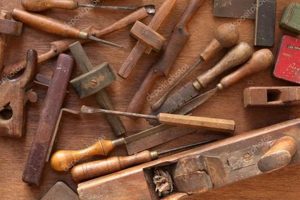
The initial phase of learning to work wood using manual implements involves familiarizing oneself with fundamental techniques and selecting appropriate tools. This entails practicing basic cuts, understanding wood grain, and acquiring a foundational understanding of joinery methods. For instance, a novice might begin by learning to plane a board flat, saw a straight line, or chisel a mortise.
Mastering these skills offers several advantages, including enhanced control over the creative process, a deeper connection to the materials, and the creation of durable, handcrafted pieces. Historically, woodworking was primarily accomplished with hand tools, representing a tradition of craftsmanship that emphasized precision and artistry.
The subsequent sections of this article will delve into specific tool selection, essential techniques for achieving accurate results, and strategies for developing proficiency in this rewarding craft.
Tips for Getting Started with Hand Tool Woodworking
The following tips aim to provide a solid foundation for individuals embarking on the journey of woodworking with hand tools. Adherence to these guidelines can improve efficiency, safety, and the quality of finished projects.
Tip 1: Prioritize Sharp Tools: Dull tools are a primary cause of frustration and can be dangerous. Invest in sharpening equipment and learn proper sharpening techniques for chisels, planes, and saws. A sharp tool requires less force and produces cleaner cuts.
Tip 2: Learn to Read Wood Grain: Understanding wood grain direction is crucial for effective planing and chiseling. Always plane with the grain to avoid tear-out. Similarly, chisel across the grain with caution, removing thin shavings.
Tip 3: Master Basic Joinery: Mortise and tenon, dovetails, and rabbets are fundamental joints in hand tool woodworking. Practice these joints until they can be executed accurately and efficiently. Consider practicing on inexpensive wood before moving to final project material.
Tip 4: Secure Workpiece Effectively: A stable workpiece is essential for safe and accurate work. Use a sturdy workbench and appropriate clamping methods to prevent movement during sawing, planing, and chiseling operations.
Tip 5: Practice Proper Body Mechanics: Adopt ergonomic posture and stances to avoid strain and fatigue. Stand close to the workbench and use the entire body to generate power, rather than relying solely on arms and shoulders.
Tip 6: Start with Simple Projects: Avoid complex projects initially. Begin with smaller, straightforward designs such as boxes or small shelves. This will allow focusing on skill development without being overwhelmed.
Tip 7: Invest in Quality Layout Tools: Accurate layout is crucial for precise joinery. Acquire a reliable square, marking gauge, and knife. These tools are essential for transferring measurements accurately to the workpiece.
Mastering these tips will establish a solid base for further exploration in hand tool woodworking, leading to increased satisfaction and a deeper understanding of the craft.
The subsequent section of this article will address common mistakes to avoid when first venturing into hand tool woodworking.
1. Tool Selection

The selection of appropriate tools is a critical determinant in the success of any woodworking endeavor initiated with hand implements. Tool selection is not merely an exercise in acquiring equipment; it directly impacts the ease of learning fundamental techniques, the quality of the final product, and the overall safety of the woodworking process. Inadequate or unsuitable tools can lead to frustration, poor results, and even injury. For instance, attempting to plane a surface with a dull, poorly adjusted plane will result in a rough, uneven surface, making further work difficult and potentially leading to inaccurate joinery. Similarly, using an undersized saw for ripping thicker stock will require excessive force, increasing the risk of losing control and producing a crooked cut.
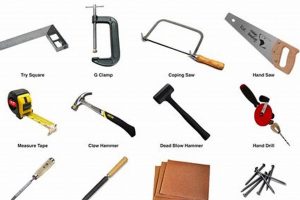
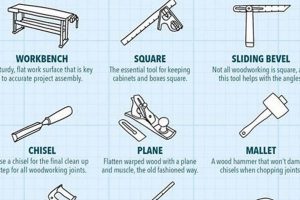
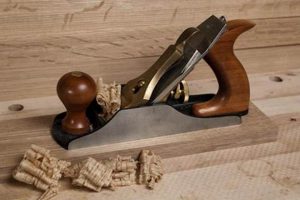
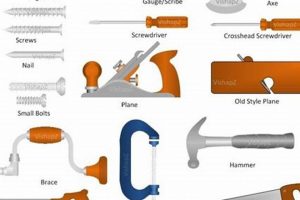
The initial toolset need not be extensive but should consist of high-quality, versatile implements. A well-tuned smoothing plane, a sharp chisel set, a reliable saw (both rip and crosscut), and essential measuring and marking tools form a solid foundation. Investing in quality tools from reputable manufacturers, while potentially more expensive initially, often proves more economical in the long run due to their durability and performance. Moreover, acquiring tools incrementally allows the woodworker to understand their individual needs and preferences, leading to more informed purchasing decisions. Early engagement with sharpening techniques is critical to ensure tools will perform to potential.
In summary, effective tool selection is an essential and fundamental element when starting hand tool woodworking. Strategic investment in essential and high-quality tools, together with a knowledge of their correct application and maintenance, fosters proficiency and sets the stage for successful woodworking projects. Recognizing the impact of tool selection allows the woodworker to approach the craft with a measured and effective strategy, mitigating common frustrations and enhancing the learning experience.
2. Sharpening Mastery

Sharpening mastery is not merely a skill within hand tool woodworking, it constitutes a fundamental prerequisite for successful engagement. The sharpness of a tool dictates its effectiveness and directly impacts the quality of the work produced. A dull tool not only requires significantly more effort to use but also poses a heightened risk of injury and substandard results. Therefore, competence in sharpening techniques forms the bedrock upon which all other hand tool woodworking skills are built.
- Efficiency and Control
Sharp tools require less force to cut wood, leading to increased efficiency and improved control. Reduced force translates into greater accuracy, particularly when executing fine details or intricate joinery. For example, a sharp chisel allows precise paring of a tenon shoulder to achieve a perfect fit, while a dull chisel is prone to skidding and crushing the wood fibers.
- Safety Considerations
Counterintuitively, sharp tools are safer than dull ones. Dull tools demand excessive force, increasing the likelihood of slipping and causing injury. A sharp blade, conversely, requires minimal pressure, minimizing the risk of accidental cuts. Moreover, a clean, controlled cut is less likely to splinter or tear the wood, reducing the chances of flying debris.
- Wood Fiber Integrity
Sharp tools sever wood fibers cleanly, resulting in a smooth, polished surface. This is particularly crucial for achieving tight-fitting joinery and aesthetically pleasing finishes. A dull tool, on the other hand, tends to crush and tear the wood fibers, creating a ragged surface that requires extensive sanding or planing to correct.
- Tool Longevity and Maintenance
Mastering sharpening techniques extends the lifespan of hand tools. Regular sharpening prevents excessive wear and tear, reducing the need for costly replacements. Moreover, understanding the principles of sharpening facilitates proper tool maintenance, ensuring that tools are always in optimal condition for use. The regular attention keeps tools perform their best.
These facets of sharpening mastery collectively emphasize its paramount importance for anyone “getting started with hand tool woodworking.” Proficiency in sharpening is not simply an advanced skill to be acquired later; it is an essential foundation that empowers the woodworker to work efficiently, safely, and effectively from the outset. Neglecting this aspect will inevitably lead to frustration, subpar results, and a diminished appreciation for the craft.
3. Wood Grain Awareness

Wood grain awareness is a fundamental aspect of woodworking, particularly when using hand tools. Comprehension of grain direction and characteristics directly influences the efficiency, accuracy, and overall success of woodworking projects. Ignoring the grain can lead to tear-out, splitting, and weakened joints, while understanding and working with it results in cleaner cuts, stronger structures, and more aesthetically pleasing results.
- Planing Direction
Planing with the grain is essential for achieving a smooth surface. Planing against the grain causes the blade to lift and tear the wood fibers, resulting in a rough and uneven texture. Observing the grain direction and adjusting the planing angle accordingly is crucial for achieving a clean and polished finish. For example, when planing a board with alternating grain patterns, it may be necessary to change direction to avoid tear-out.
- Chiseling Techniques
Grain direction significantly affects chiseling techniques. When paring or shaping wood with a chisel, it is important to work with the grain to prevent splitting. Chiseling against the grain can cause the wood to fracture along the grain lines, resulting in inaccurate cuts and damage to the workpiece. Recognizing the grain allows for controlled and precise chiseling, enabling the creation of intricate details and tight-fitting joints.
- Joint Strength and Stability
Grain orientation plays a critical role in joint strength and stability. When constructing mortise and tenon or dovetail joints, aligning the grain properly ensures that the joint can withstand stress and resist splitting. For instance, in a mortise and tenon joint, the grain of the tenon should run parallel to the grain of the mortised piece to maximize strength. Understanding these principles is essential for creating durable and long-lasting woodworking projects.
- Wood Selection and Preparation
Awareness of wood grain informs the selection and preparation of lumber. Different species exhibit varying grain patterns and characteristics, influencing their suitability for specific woodworking applications. Straight-grained wood is ideal for tasks requiring consistent strength and stability, while figured wood is often used for decorative purposes. Recognizing these distinctions allows the woodworker to choose the appropriate material for the intended project and prepare it accordingly to minimize waste and maximize yield.
In conclusion, wood grain awareness is an indispensable skill for anyone embarking on hand tool woodworking. A thorough understanding of grain direction and characteristics enables the woodworker to make informed decisions about tool selection, cutting techniques, joint construction, and material preparation, resulting in higher-quality projects and a more rewarding woodworking experience. Ignoring the grain is a recipe for frustration and failure, while embracing it unlocks the full potential of the craft.
4. Basic Joinery
The acquisition of basic joinery skills constitutes a fundamental pillar of any individual’s initiation into hand tool woodworking. Proficiency in joinery directly determines the structural integrity, aesthetic quality, and overall longevity of crafted objects. Neglecting this crucial element hinders the ability to create functional and enduring pieces, relegating the woodworker to mere shaping and surface treatment, rather than true construction. For instance, a simple box, constructed using poorly executed rabbet joints, will exhibit weakness at the corners and premature failure under even moderate stress. Conversely, a precisely cut dovetail joint provides exceptional strength and resistance to racking forces, ensuring the box’s integrity for years to come.
The mastery of joinery techniques such as the mortise and tenon, dovetail, rabbet, and dado joint directly expands the range of projects achievable through hand tool methods. Each joint possesses unique characteristics and applications, influencing the design and functionality of the final product. The mortise and tenon joint, renowned for its strength and versatility, is commonly employed in furniture construction, providing robust connections between legs and rails, or posts and beams. Dovetail joints, prized for their visual appeal and interlocking strength, are frequently used in drawer construction and casework. Understanding the properties and applications of each joint enables the woodworker to select the most appropriate technique for a given project, optimizing its structural performance and aesthetic qualities. Mastering these joints, while challenging, greatly expands the capabilities of any woodworker.
Therefore, basic joinery is not merely an optional skill but an essential and foundational element for getting started in hand tool woodworking. Without a firm grasp of these techniques, the woodworker’s potential remains severely limited. Prioritizing the development of joinery skills from the outset enables the creation of durable, aesthetically pleasing, and functional objects, fostering a deeper appreciation for the craft and unlocking a wider range of creative possibilities. Overcoming the initial challenges associated with learning these techniques is a crucial investment that yields significant returns in terms of skill development, project quality, and long-term satisfaction.
5. Safe Practices

The integration of safe practices is paramount when commencing woodworking with hand tools. A disregard for safety protocols elevates the risk of injury and impedes the development of sound technique. Prioritizing safety fosters a controlled environment, allowing for focused learning and consistent skill refinement.
- Tool Condition and Maintenance
Maintaining hand tools in optimal condition is a fundamental aspect of safety. Sharp tools are inherently safer than dull tools, requiring less force and reducing the likelihood of slippage. Regular sharpening and proper storage mitigate the risk of accidental cuts and abrasions. Inspection for defects, such as loose handles or chipped blades, is essential before each use. A tool in disrepair presents an unnecessary hazard, diverting attention from the task at hand and increasing the potential for injury. In contrast, a well-maintained tool enables precise and controlled movements, enhancing both safety and efficiency.
- Workholding and Stability
Securing the workpiece effectively is critical for preventing uncontrolled movements and ensuring accurate cuts. A stable platform, achieved through the use of vises, clamps, and bench dogs, minimizes the risk of the workpiece shifting during sawing, planing, or chiseling operations. Unsecured materials can lead to sudden slips, resulting in tool-related injuries. Employing appropriate workholding methods allows for controlled application of force and reduces the potential for accidents. The stability of the workpiece also contributes to the accuracy of the cut, improving the overall quality of the project.
- Personal Protective Equipment
The consistent use of personal protective equipment (PPE) is non-negotiable in a hand tool woodworking environment. Eye protection, such as safety glasses or a face shield, safeguards against flying debris, preventing potential eye injuries. Hearing protection, in the form of earplugs or earmuffs, mitigates exposure to prolonged noise from hammering or sawing. Work gloves protect hands from splinters, abrasions, and sharp edges. A dust mask or respirator is essential for minimizing inhalation of wood dust, which can cause respiratory irritation or long-term health problems. Neglecting PPE exposes the woodworker to preventable hazards and compromises their well-being. Consistent use of appropriate gear minimizes these risks.
- Ergonomics and Body Mechanics
Adopting proper ergonomic principles and body mechanics is crucial for preventing strain, fatigue, and musculoskeletal injuries. Maintaining a stable stance, keeping the workpiece close to the body, and using the entire body to generate power, rather than relying solely on arms and shoulders, minimizes stress on joints and muscles. Avoiding prolonged static postures and taking frequent breaks reduces fatigue and improves focus. Poor ergonomics can lead to chronic pain and reduced productivity. Prioritizing proper posture and movement patterns enhances comfort, safety, and long-term well-being in the woodworking environment.
These facets of safety are inextricably linked to the successful and enjoyable pursuit of hand tool woodworking. A proactive approach to safety not only minimizes the risk of injury but also fosters a more focused and productive learning environment. By prioritizing these practices from the outset, beginners can cultivate safe habits that will serve them throughout their woodworking journey. The correlation between safety and proficiency highlights the importance of integrating these principles into every aspect of the craft.
Frequently Asked Questions About Getting Started With Hand Tool Woodworking
The following addresses common inquiries and misconceptions surrounding the initiation of woodworking with hand-operated implements. The intent is to provide clear, concise, and practical information to prospective woodworkers.
Question 1: Is hand tool woodworking more difficult than using power tools?
The perceived difficulty is subjective. Hand tool woodworking demands a refined understanding of wood properties, tool mechanics, and precise execution. Power tools, conversely, offer speed and brute force, which can mask deficiencies in technique. Both methods require skill, albeit of a different nature.
Question 2: What is the minimal initial investment required for hand tool woodworking?
A functional starting set can be assembled for a moderate cost. Essential items include a smoothing plane, a sharp chisel set, a crosscut saw, a marking gauge, a combination square, and sharpening equipment. Opting for quality used tools can reduce initial expenditure, however, proper reconditioning is necessary.
Question 3: How long does it typically take to become proficient in basic hand tool techniques?
Proficiency varies based on individual aptitude, dedication, and consistency of practice. Mastering fundamental techniques such as planing, sawing, and basic joinery can require several months of regular practice. Continuous learning and refinement are integral to the process.
Question 4: Are hand tools inherently less accurate than power tools?
Accuracy is primarily determined by the operator, not the tool itself. While power tools can offer repeatability, hand tools, when used with precision and skill, can yield exceptionally accurate results. The key lies in meticulous layout, sharp tools, and controlled movements.
Question 5: Is hand tool woodworking physically demanding?
Hand tool woodworking requires physical exertion, particularly during sawing and planing operations. However, proper technique and ergonomic posture can mitigate strain and fatigue. Utilizing the entire body to generate power, rather than relying solely on arms and shoulders, is crucial.
Question 6: What types of projects are suitable for beginners in hand tool woodworking?
Suitable introductory projects include simple boxes, small shelves, and basic joinery exercises. These projects provide opportunities to practice fundamental techniques and develop a feel for the tools and materials. Avoid complex designs initially, focusing on mastering the basics.
In summary, hand tool woodworking presents unique challenges and rewards. Patience, dedication, and a commitment to continuous learning are essential for success. The acquisition of basic skills, coupled with a thoughtful approach to tool selection and safety, provides a solid foundation for a fulfilling woodworking journey.
The subsequent section of this article will address common mistakes to avoid when first venturing into hand tool woodworking.
Conclusion
The preceding discussion has elucidated essential facets of getting started with hand tool woodworking. It has underscored the importance of tool selection, sharpening mastery, wood grain awareness, basic joinery, and safe practices. Adherence to these principles will establish a solid foundation for developing proficiency in this craft.
The commitment to mastering these foundational elements dictates the woodworker’s future potential. Embrace these challenges, cultivate patience, and prioritize continuous learning to realize the rewards of this enduring craft.